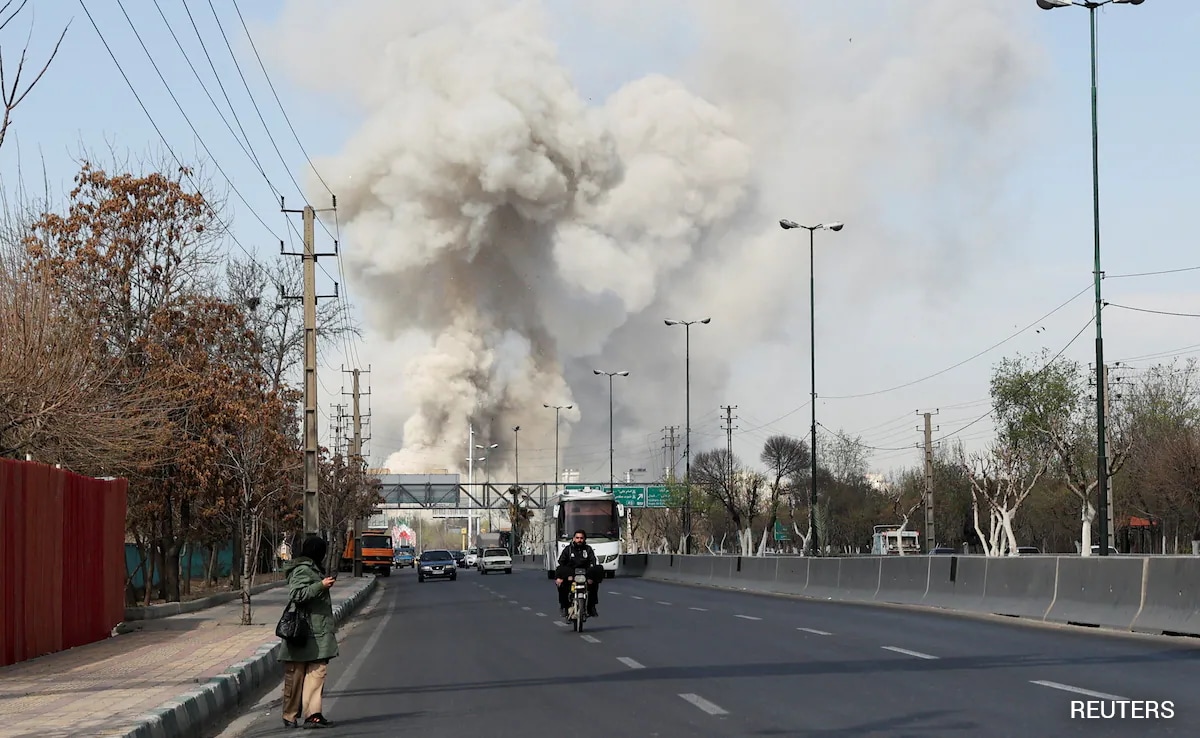
The recent uproar over satellite imagery firms allegedly withholding Middle East war photos at the behest of political figures isn't a scandal about censorship. It is a scandal about incompetence. The mainstream narrative screams about "transparency" and "democratic oversight," while the contrarian reality is far more cynical: we are watching the death throes of the illusion of secrets.
When a private company restricts high-resolution imagery under political pressure, they aren't protecting national security. They are protecting a legacy business model that relies on being the gatekeeper of a gate that has already been kicked off its hinges. The idea that a single firm can "hide" a war in 2026 is a joke. Building on this idea, you can also read: Stop Blaming the Pouch Why Schools Are Losing the War Against Magnetic Locks.
The Illusion of the Controlled Lens
The "lazy consensus" suggests that if Company A stops selling pictures of a conflict zone, the world goes blind. This assumes a unipolar world of orbital intelligence that hasn't existed since the early 2000s. We currently live in an era of proliferated space architecture. Between CubeSats, synthetic aperture radar (SAR), and international competitors in China, India, and the EU, the "shutter control" once enjoyed by the US government is a ghost.
By complying with requests to black out certain coordinates, these firms aren't "helping the mission." They are losing market share to agile international competitors who don't care about a phone call from a politician. If a US firm won't sell it, a competitor in a different jurisdiction will—and they’ll do it with less lag time. Experts at Engadget have provided expertise on this situation.
The SAR Revolution Renders "Pictures" Obsolete
Most of the moral hand-wringing focuses on optical imagery—the pretty pictures that look like Google Earth. This is yesterday's fight. Synthetic Aperture Radar (SAR) can "see" through clouds, smoke, and total darkness. It detects changes in the millimeter range.
While pundits argue over whether we should see a photo of a tank, SAR sensors are already mapping the volumetric displacement of soil from those tanks in real-time. You cannot "withhold" this data because it isn't a photograph in the traditional sense; it’s a data stream. To ask a company to withhold this information is like asking a weather station to stop reporting that it's raining while everyone is standing outside getting wet.
Why Privacy is a National Security Liability
Counter-intuitively, the more these companies try to sanitize the feed, the more they endanger the very troops they claim to protect. When a specific region is suddenly "blurred" or "unavailable," it serves as a massive digital flare.
Imagine a scenario where a 50-mile stretch of desert is suddenly under a "maintenance blackout" from a major provider. You don't need a PhD in intelligence to realize that is exactly where the high-value activity is happening. Total transparency acts as noise. Selective censorship acts as a signal. By trying to hide the needle, they are highlighting the haystack with a neon sign.
The Myth of "Actionable Intelligence" for the Masses
A common "People Also Ask" trope is: Does public access to satellite imagery help terrorists? The brutal honesty? Probably not as much as a basic drone from a hobby shop does. Strategic satellite imagery is about long-term patterns, logistics, and macro-movements. Tactics happen on the ground, under the canopy, or inside buildings where satellites can't reach. The "security risk" of a civilian seeing a 30cm resolution photo of a base is negligible compared to the risk of a military being blind to the fact that their adversaries are already using 15cm data from a non-aligned state.
I’ve seen companies blow millions on "compliance departments" designed to scrub imagery to satisfy government contracts. It’s theater. It’s a tax on the taxpayer to fund a department that deletes data everyone else already has.
The Business of Cowardice
From a business perspective, folding to political requests is a slow-motion suicide pact. Space is the new "Global Commons." If Western firms become known as unreliable narrators who edit the truth based on who is in the White House, they lose their status as the gold standard of data.
Trust is the only currency in the data business. If a hedge fund can’t trust your imagery because you might be "withholding" the very war that affects oil prices, they will move their capital to a provider that doesn't answer the phone when a politician calls.
Dismantling the "Trump Request" Narrative
Whether it’s a request from Trump, Biden, or any future administration, the focus on the person asking is a distraction. The problem is the infrastructure of compliance.
We are operating on Cold War logic in a Starlink world. In the 1980s, you could ground a U-2 plane or intercept a film canister. Today, data is a liquid. It fills every available space. You cannot "stop" the flow of information; you can only decide whether you want to be part of the pipeline or get washed away by it.
The Tactical Advantage of Radical Openness
The real "game" (to use a term I usually despise) is shifted toward Open Source Intelligence (OSINT). When everyone has the data, the advantage goes to the entity with the best processing power and the fastest analysis.
By withholding imagery, we are discouraging the development of these analysis tools in the private sector. We are creating a "protected" environment where the military doesn't have to worry about being watched by the public. This sounds nice for them, but it breeds sloppiness. If you know the world is watching in 4K, you practice better camouflage, better operational security, and better decoys. Censorship is a sedative for our own defense industry.
Stop Asking if We "Should" See the Photos
The question is flawed. It’s not about "should." It’s about "can't stop."
We need to move past the era of asking for permission to look at the planet. The technology has outpaced the legislation, and the legislation has outpaced the morality. If a private firm wants to survive the next decade, it needs to stop acting like an arm of the Department of Defense and start acting like a utility.
Utilities don't turn off the water because they don't like what you're washing. Satellite firms shouldn't turn off the pixels because they don't like what we're seeing.
The moment you acknowledge that a politician can edit your view of the world, you’ve admitted that your data isn't a product—it's a propaganda tool. And in the high-stakes world of global intelligence, propaganda is a low-value commodity.
Stop looking for the "hidden" photos. Start looking at who is trying to hide them, because their fear is the most accurate data point you’ll find all day.
Turn the cameras back on. All of them.