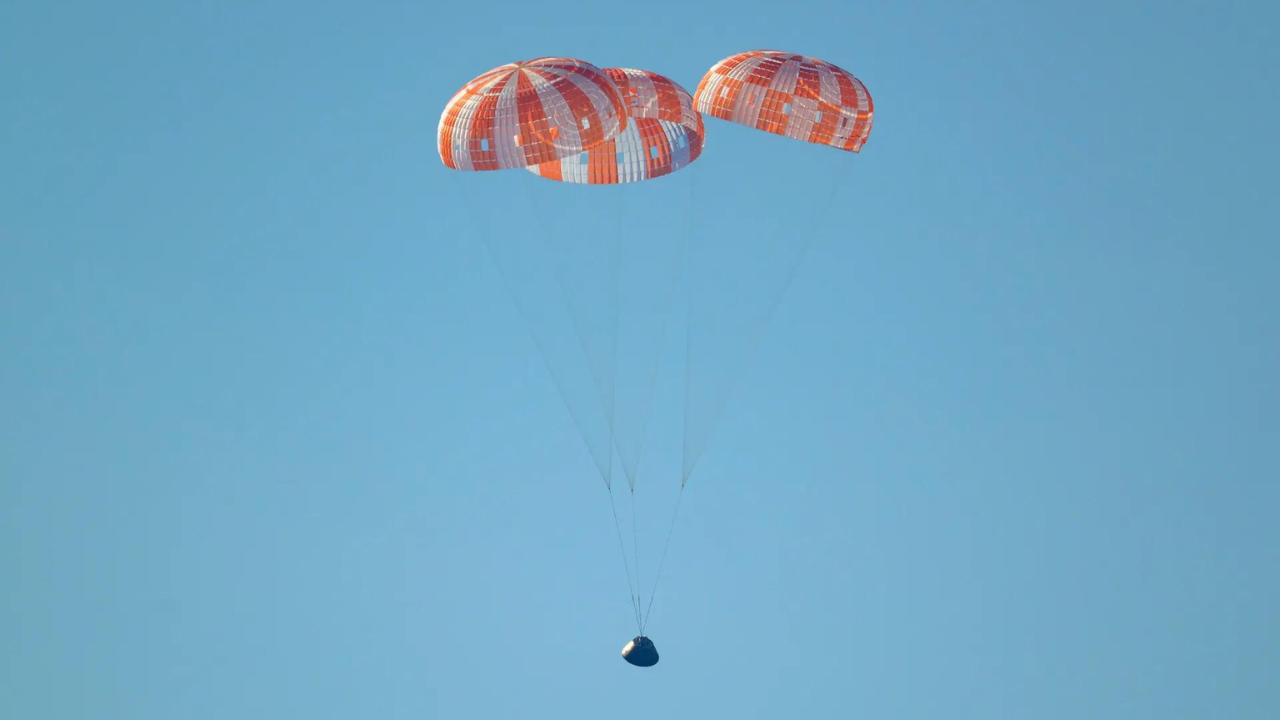
NASA didn’t stream the Artemis flight on Twitch to "inspire the next generation." They did it because they are losing the battle for relevance in a fragmented attention economy.
The prevailing narrative suggests that putting rocket launches next to League of Legends streamers is a brilliant move in democratic science communication. It’s framed as "meeting the audience where they are." That is a polite way of saying NASA has given up on being the destination and has settled for being a background notification on a platform designed for dopamine loops.
When you strip away the PR fluff, you see a legacy institution desperately trying to meme its way into a budget cycle. This isn't a victory for public interest; it’s the institutionalization of the "How do you do, fellow kids?" meme.
The Myth of the Relatable Rocket
The competitor’s view is simple: Twitch allows for "authentic engagement." They argue that the live chat, the emotes, and the informal tone make space exploration feel accessible.
They are wrong. Space exploration is, by definition, inaccessible. It is a feat of extreme engineering, physics, and life-threatening risk. By packaging it as "just another stream," NASA isn't humanizing science; they are devaluing the gravity of the achievement.
When you look at the $93 billion price tag for the Artemis program through 2025, a PogChamp emote in a Twitch chat feels less like engagement and more like a tragedy of scale. We are watching the most complex machine ever built by humans compete for views with a guy playing Valorant in his basement.
If your goal is to explain the Specific Impulse of an RS-25 engine or why the Orion Stage Adapter is a masterclass in weight distribution, Twitch is the worst possible medium. The platform’s architecture favors speed, sarcasm, and brevity. It does not favor the deep, slow-burn focus required to actually understand why we are going back to the Moon.
Stop Pretending Chat is a Classroom
The "People Also Ask" sections of the internet are filled with queries like "How does NASA make money?" or "Why should we care about Artemis?"
The standard answer is a laundry list of "spin-off technologies" like memory foam or scratch-resistant lenses. That’s the lazy answer. The brutal truth is that NASA exists to project national power and secure the high ground.
By pivoting to Twitch, NASA is trying to answer the "Why should we care?" question with "Because it's fun!" This is a tactical error. You don't spend billions of taxpayer dollars because something is "fun." You do it because it is necessary for geopolitical survival and scientific advancement.
The Problem With Streamer Logic
- Context Collapse: In a Twitch stream, the launch is just content. It sits in the same mental bucket as a speedrun or a prank video.
- Signal-to-Noise Failure: The "community" aspect of Twitch is a chaotic mess of spam. You cannot communicate the nuances of a Trans-Lunar Injection burn when the chat is moving at 100 messages per second.
- The Parasocial Trap: NASA is trying to build a parasocial relationship with Gen Z. But institutions aren't people. When NASA tries to act like a "creator," it loses the gravitas that makes its mission worth funding in the first place.
The Cost of Diluting the Brand
I’ve seen tech giants blow millions trying to "pivot to youth" by adopting the slang and platforms of the moment. It almost always fails because it smells like desperation.
NASA used to represent the "Right Stuff." It was the pinnacle of human capability. Now, it’s a Twitch partner.
This isn't just about optics. It's about the erosion of institutional authority. When you prioritize "watch hours" over "public understanding," you start making decisions based on what looks good on a thumbnail.
Take the SLS (Space Launch System) itself. It’s a Frankenstein’s monster of Shuttle-era parts, kept alive by political lobbying rather than pure engineering logic. It’s late. It’s over budget. But on Twitch, with the right filters and a high-energy host, it looks like the future. The medium allows NASA to hide the bureaucratic rot behind a curtain of digital hype.
Real Outreach vs. Performance
If NASA actually wanted to "democratize" space, they wouldn't focus on the platform; they would focus on the data.
True engagement isn't watching a grainy feed of a countdown. It’s providing open-source access to the telemetry in real-time. It’s creating high-fidelity, interactive simulations that allow students to actually solve the orbital mechanics problems the Artemis team faces.
Instead, we get a chat box.
Imagine a scenario where a student wants to understand the heat shield performance during re-entry. On a dedicated educational platform, they could see the live thermal data mapped against the $1650^\circ\text{C}$ (approximate) temperatures the craft endures. On Twitch, they see a "W" when the heat shield holds and an "L" if it doesn't.
We are trading literacy for "vibes."
The Private Sector Is Already Winning the War
While NASA is trying to figure out how to use emotes, SpaceX has already mastered the art of the "Event."
The difference is that SpaceX doesn't try to be your friend. They provide high-production value, clear technical explanations, and a sense of mission. They don't need Twitch-specific gimmicks because the sheer audacity of their engineering—like landing two boosters simultaneously—is the hook.
NASA’s move to Twitch is an admission that the SLS isn't exciting enough on its own. They think they need the "Twitch polish" to keep people from clicking away. They are wrong. If the mission is compelling, people will watch it on a black-and-white monitor in a basement.
The Actionable Pivot
NASA needs to stop being a "content creator" and go back to being an "authority."
- Kill the Cringe: Stop the informal, "u up?" style of social media management. It doesn't build trust; it builds eye-rolls.
- Own the Stack: Build a proprietary, high-data streaming interface. Don't outsource your public interface to a company owned by Amazon.
- Prioritize Depth: If 10,000 people deeply understand the mission, that is worth more than 1,000,000 people who just watched for the "hype."
We don't need a relatable NASA. We need a NASA that does the impossible and explains exactly how they did it, without the help of a chat moderator.
Space is cold, silent, and incredibly difficult. It is the antithesis of a Twitch stream. Stop trying to make the Moon "trending." Make it the goal again.
NASA is currently acting like a failing legacy media brand trying to survive the TikTok era. But NASA isn't a media brand. It’s an aerospace agency. Every minute spent worrying about "streamer collaborations" is a minute not spent fixing the systemic delays that have plagued the Artemis program for years.
The Moon doesn't care about your follower count. Neither should the people building the rockets to get there.
The Artemis Twitch stream wasn't a "howl at the Moon." It was a whimper for attention. If NASA wants the public to care, they should stop trying to be "ok" and start being undeniable.
Efficiency isn't found in a chat room. It’s found in the vacuum of space, where there is no room for performance art.
Put down the controller. Build the rocket.