Carl Sagan played the press like a Stradivarius, and nearly fifty years later, science writers are still falling for the trick.
Every few months, a recycled clickbait headline surfaces claiming NASA sent a cosmic greeting card to extraterrestrials aboard Voyager 1. They breathlessly recite the tracklist of the Golden Record. Chuck Berry. Bach. Whale songs. Greetings in 55 languages. A map of pulsars pointing straight back to Earth. They frame it as humanity’s grand, romantic attempt to say hello to the cosmos.
That narrative is pure theater.
The Voyager Golden Record is not an interstellar communication device. It is an absurdly expensive, gold-plated time capsule designed almost entirely for domestic consumption here on Earth. If you actually look at the astrophysics, the engineering constraints, and the history of NASA’s public relations strategy during the post-Apollo budget cuts, the "message to aliens" story collapses under its own weight.
The Physics of a Message in a Bottle
Let’s strip away the romance and look at the math.
Voyager 1 is currently hurtling through interstellar space at roughly 38,000 miles per hour. At that blistering speed, it will take the spacecraft approximately 40,000 years just to pass within 1.6 light-years of Gliese 445, a red dwarf star in the constellation Camelopardalis. It isn't even headed directly at the star. It is just passing through the neighborhood.
Space is overwhelmingly, incomprehensibly empty. The odds of a physical object the size of a subcompact car colliding with—or even being detected by—an intelligent civilization in the void between stars are effectively zero.
I have spent years dissecting aerospace communications architecture and sitting in rooms where engineers argue over signal-to-noise ratios down to the decimal. When serious scientists actually try to contact extraterrestrial intelligence, they do not strap a phonograph record to a piece of aluminum and throw it into the dark. They use radio telescopes. Electromagnetic radiation travels at the speed of light—roughly 186,000 miles per second—and washes over millions of star systems simultaneously. The Arecibo message, beamed toward the globular star cluster M13 in 1974, traveled farther in three minutes than Voyager 1 will travel in its entire functional existence.
Sending a physical record to communicate with aliens is like trying to send an email by carving your message onto a grain of sand and dropping it into the Mariana Trench.
Even if an alien fleet somehow intercepted Voyager 1 ten million years from now, look at what they actually have to work with. The Golden Record is a 12-inch gold-plated copper phonograph disk. It requires a stylus, a cartridge, and a specific rotational speed (16 2/3 revolutions per minute) to extract analog audio and encoded video signals.
Yes, the aluminum cover includes pictograms explaining how to play the record using the fundamental transition period of a hydrogen atom as a unit of time. Critics and fans alike praise this as a masterpiece of universal cryptography. Yet cognitive scientists and semioticians have spent decades pointing out that the pictograms rely heavily on human visual conventions. Arrows, binary lines, and the very concept of a stylized diagram assume an alien species possesses eyes that perceive the same electromagnetic spectrum we do, alongside a brain that processes two-dimensional abstractions the way primates do.
The Real Target Audience Was Congress
If the Golden Record was functionally useless as an interstellar beacon, why did NASA spend the time, weight allowance, and political capital to bolt it onto both Voyager probes?
Follow the money.
In the mid-1970s, NASA was bleeding public interest and congressional funding. The Apollo moon landings were over. Skylab was struggling. The Space Shuttle program was bogged down in development delays and budget overruns. To the average American taxpayer, robotic probes flying past Jupiter and Saturn sounded like dry, expensive academic exercises.
Carl Sagan, the undisputed master of space-age public relations, understood this problem intuitively. Sagan didn't just want to do science; he wanted to build a mythos that would keep taxpayers signing checks. When NASA approached him to assemble a message for the Voyager mission, Sagan saw an opportunity to hijack the global news cycle.
He had six weeks to pull it together. Along with Frank Drake, Ann Druyan, Timothy Ferris, and Jon Lomberg, Sagan curated a greatest-hits compilation of human civilization. The media ate it up. Suddenly, an unmanned telemetry mission to the outer planets wasn't about magnetometers and plasma wave subsystems anymore. It was about humanity's soul sailing into the stars.
The Golden Record wasn't built for aliens in the Andromeda galaxy. It was built for journalists in New York and senators in Washington.
It forced humanity to look in a mirror. By asking what we would show an alien, Sagan forced us to confront how we wanted to present ourselves. Notice what got left off the record. There are no images of war, poverty, disease, or nuclear devastation. There is no mention of the Holocaust, the Cold War, or environmental collapse. Sagan and his committee scrubbed the darker half of human nature from the final cut, presenting a sanitized, aspirational fantasy of a peaceful, unified planet.
As a mirror for humanity, the Golden Record is a triumph of psychological engineering. As an actual message to extraterrestrials, it is a carefully curated lie.
Dismantling the Pulsar Map Myth
When defenders of the "message to aliens" narrative get cornered on the low probability of interception, they usually pivot to the pulsar map etched onto the record's cover. They claim this map—originally designed by Frank Drake for the Pioneer plaques—gives aliens exact directions to Earth.
Here is the reality: that map is already going out of date, and it might actually be a strategic liability.
Pulsars are rapidly spinning neutron stars that emit beams of electromagnetic radiation at ultra-precise intervals. Drake’s map uses 14 known pulsars, radiating from a central point representing our Sun, with binary lines indicating their pulse frequencies. In theory, an advanced civilization could use those frequencies to triangulate Earth’s position in the Milky Way.
There are two massive flaws with this.
First, pulsars slow down over time, and their beams are narrow. Depending on an alien observer's angle relative to the pulsar's rotational axis, many of the pulsars on Drake’s map might not even be visible from their vantage point. Over the hundreds of thousands of years it will take Voyager to drift between stars, stellar drift and pulsar spin-down will degrade the map's accuracy.
Second, and far more controversial, is the question of whether we should be handing out our home address at all.
Before his death, physicist Stephen Hawking famously warned against actively broadcasting our location to the cosmos. He compared a potential encounter between humans and an advanced extraterrestrial civilization to the arrival of Christopher Columbus in the Americas—a meeting that did not turn out well for the native population. This is the core premise of the "Dark Forest" hypothesis, popularized by sci-fi author Liu Cixin: in a universe with finite resources and unknowable intentions, any civilization that reveals its location is painting a target on its back.
Sagan bypassed global consensus entirely. Nobody voted on whether to put a map to Earth on Voyager 1. A small committee of academics in Ithaca, New York, unilaterally decided to broadcast our coordinates to the galaxy without asking the rest of the human race if they wanted visitors.
What People Actually Get Wrong About Voyager
If you look at the questions people constantly type into search engines about Voyager 1, almost every single one is built on a flawed premise. Let's tear them down.
Can aliens actually hear the Golden Record right now?
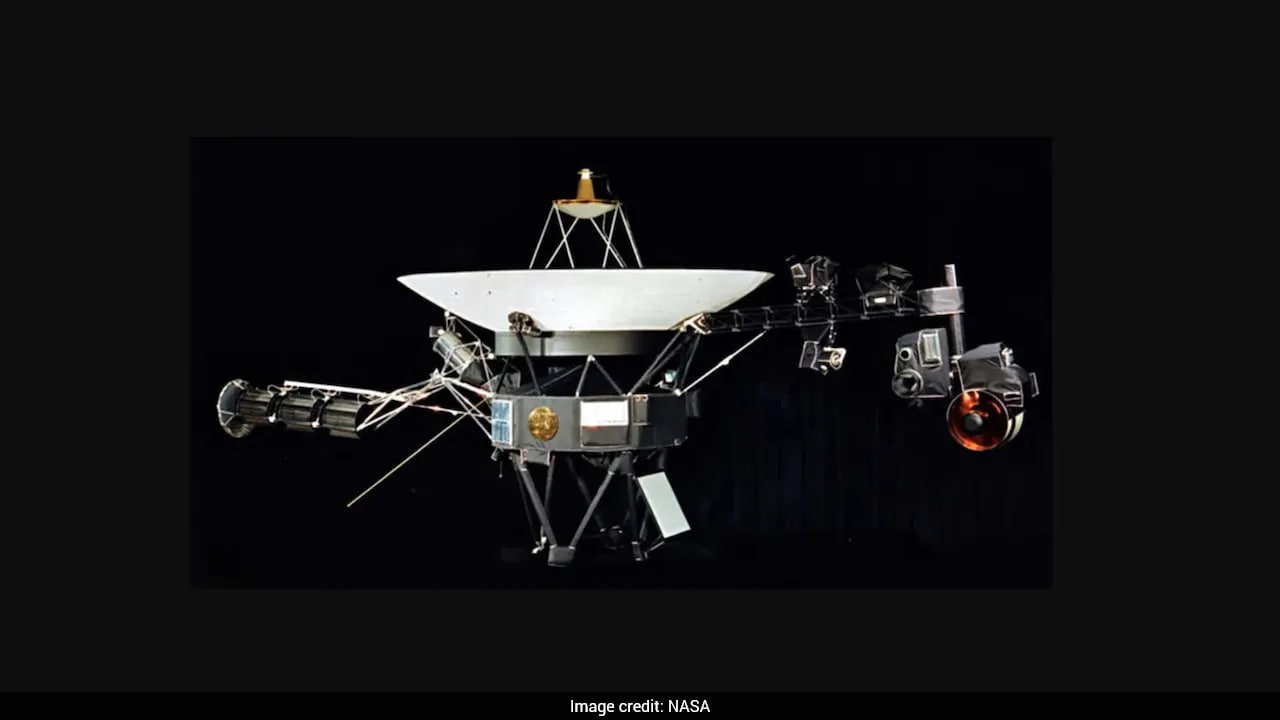
No. The Golden Record is not broadcasting a signal. It is a physical piece of metal bolted to the side of the spacecraft, sitting in complete silence in a vacuum. Nothing is playing it. Nothing is transmitting its contents. Voyager 1’s radio transmitter—which runs on a decaying plutonium-238 power source—only sends scientific telemetry and engineering data back to NASA’s Deep Space Network here on Earth.
Will Voyager 1 reach another star system soon?
Not even close. People struggle to grasp astronomical distances because our brains evolved to measure miles, not light-years. Voyager 1 entered interstellar space in 2012, which simply means it passed the heliopause—the boundary where the Sun’s solar wind is stopped by the interstellar medium. It has not left the Solar System. To do that, it has to cross the Oort Cloud, a massive spherical shell of icy debris surrounding our Sun. It will take Voyager 1 roughly 300 years just to reach the inner edge of the Oort Cloud, and another 30,000 years to exit the other side.
Is the Golden Record still intact?
Yes, and this is the one part of the story where the engineering actually lives up to the hype. NASA engineers encased the copper disk in an aluminum jacket and electroplated a tiny, ultra-pure sample of uranium-238 onto the cover. Because uranium-238 has a half-life of 4.468 billion years, any future discoverer could measure the ratio of uranium to its decay products (thorium and lead) to determine precisely how long the spacecraft has been traveling. Protected from micrometeorites by its aluminum shield, the record itself will easily outlast the Earth's oceans, surviving for a billion years or more after our Sun expands into a red giant and incinerates the inner planets.
The Uncomfortable Truth About Interstellar Messaging
To be fair to Sagan and the Voyager team, their gambit worked. You are reading about a 1977 unmanned space probe right now because they put Chuck Berry on a gold record. Without that PR stunt, Voyager would likely be remembered only by planetary scientists and aerospace historians, relegated to the same dusty footnotes as the Mariner or Pioneer missions.
I will admit the downside to my own cynicism: if space agencies only ever funded purely utilitarian engineering without any poetic or symbolic hooks, public support for deep-space exploration would evaporate overnight. Humans do not rally behind spectrometer readings; they rally behind stories. Sagan gave the species a story it desperately wanted to believe.
But we need to stop confusing the story with the science.
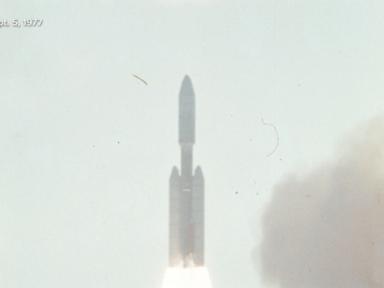
When media outlets recycle the "NASA sent a message to aliens" trope, they dumb down the actual triumph of the Voyager mission. Voyager 1 didn't need a gold-plated gimmick to be one of the greatest achievements in human history. Its nuclear batteries are still pumping out power nearly five decades after launch, running on less computing memory than a cheap key fob, sending back data from over 15 billion miles away. That is the miracle. Not the phonograph.
Stop treating the Golden Record like an interstellar voicemail. Aliens are never going to listen to "Johnny B. Goode." They are never going to decode Jimmy Carter’s diplomatic platitudes.
The Golden Record wasn't sent into space so aliens could find us. It was built so we wouldn't forget ourselves.