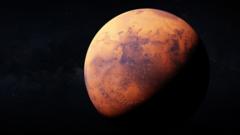
Sending humans to Mars is a logistical nightmare that would make most rocket scientists want to retire early. We aren't just talking about a long flight. We're talking about a multi-year journey through a radiation-filled void where there's no "abort" button and no resupply ship coming to save you if a bolt shakes loose. That's why NASA isn't heading straight for the Red Planet. They're going back to the Moon first, and honestly, it’s the only way this whole plan doesn't end in disaster.
The Artemis program isn't a nostalgia trip. It isn't about planting another flag or proving we can do what we already did in 1969. It’s about building a gas station, a laboratory, and a training ground in our own backyard. If you want to survive a trek across the Sahara, you don't start by walking into the dunes. You practice in the local desert first. The Moon is that desert.
The Moon is our high stakes testing ground
Space is trying to kill us. Between the vacuum, the extreme temperature swings, and the cosmic radiation that shreds DNA, it’s a miracle we’ve made it this far. When the Apollo astronauts went to the Moon, they stayed for a few days. They lived out of their landing modules like they were on a rugged camping trip. Mars requires staying for years.
NASA’s current strategy focuses on the Gateway—a small space station that will orbit the Moon. Think of it as a staging area. Instead of launching a massive, heavy ship all the way from Earth's surface to Mars, which requires an insane amount of fuel just to escape our gravity, we can assemble and test things at the Gateway. We need to know if life support systems can run for 500 days without breaking down. On the International Space Station (ISS), if a water recycler fails, a cargo ship can bring a spare in weeks. On the way to Mars, you're on your own.
The lunar surface also provides a unique opportunity to test "In-Situ Resource Utilization" or ISRU. That’s a fancy way of saying "living off the land." Shipping water and oxygen from Earth costs thousands of dollars per pound. If we can mine water ice from the Moon’s shadowed craters and turn it into drinking water and rocket fuel (hydrogen and oxygen), the economics of space travel change forever.
Why Mars is the actual end goal
Mars is the only other place in our solar system where humans could potentially live long-term. Venus is a pressure cooker of acid rain. Mercury is a scorched rock. The moons of Jupiter and Saturn are way too far away for our current tech. Mars has a day-night cycle similar to ours, enough gravity to keep our bones from turning into mush too quickly, and an atmosphere—though thin—that provides some protection.
But the distance is staggering. At its closest, Mars is about 33.9 million miles away. The Moon is only about 239,000 miles away. If something goes wrong on the Moon, you can be home in three days. If something goes wrong on the way to Mars, you’re looking at a nine-month return trip, assuming the orbital mechanics even allow for it.
Radiation is the silent killer
One of the biggest hurdles nobody likes to talk about is solar radiation. Outside Earth’s magnetic field, astronauts are bombarded by galactic cosmic rays. A trip to Mars could expose a crew to radiation levels that significantly increase cancer risks or cause acute radiation sickness. By using the Moon as a base, NASA can test new shielding materials and medical treatments in a deep-space environment while still being close enough to help if someone gets sick.
The technology we have to master right now
We can't get to Mars with 1960s tech. We need a massive leap in how we move and survive.
- Nuclear Thermal Propulsion: Standard chemical rockets are slow. NASA and DARPA are currently working on nuclear engines that could cut the travel time to Mars in half. Shorter trips mean less radiation and less food needed.
- Autonomy and AI: Communication delays between Earth and Mars can be up to 20 minutes one way. You can't "joy-stick" a landing from Houston. The ships have to be smart enough to fix themselves and land themselves.
- Closed-Loop Life Support: We need systems that recycle 98% of all water and air. Right now, we’re good, but we aren’t "three-years-without-a-refill" good.
Stop thinking of the Moon as a distraction
Some critics argue that the Moon is a waste of money and we should go "Mars Direct." They’re wrong. Going straight to Mars without a lunar pitstop is a recipe for a very expensive graveyard. The Moon allows us to fail small so we don't fail big.
NASA is also using the Moon to build an international coalition. The Artemis Accords have dozens of countries signed on. This isn't just the US anymore; it's a global effort to establish a permanent human presence off-world. By the time we actually put boots on Martian soil, we’ll have a decade of experience living on the Moon. We'll know how to handle lunar dust (which is basically tiny shards of glass), how to manage long-term isolation, and how to keep a habitat pressurized in a vacuum.
Practical steps for the space enthusiast
If you want to keep up with how this is actually unfolding, stop watching sci-fi movies and start looking at the hardware.
- Track the progress of the SLS (Space Launch System) and SpaceX’s Starship. These are the two horses in the race that will actually carry the weight.
- Watch the results of the VIPER rover mission. It’s designed to scout for water at the Moon's South Pole. If it finds what we think is there, the path to Mars gets a lot shorter.
- Monitor the "Lunar Gateway" assembly schedule. The moment the first modules launch is the moment the Mars mission becomes a physical reality rather than a PowerPoint presentation.
The transition from the Moon to Mars won't be a single jump. It’s a slow, methodical expansion. We are becoming a multi-planet species, but we're doing it one rock at a time. The Moon is the door. Mars is the world on the other side.