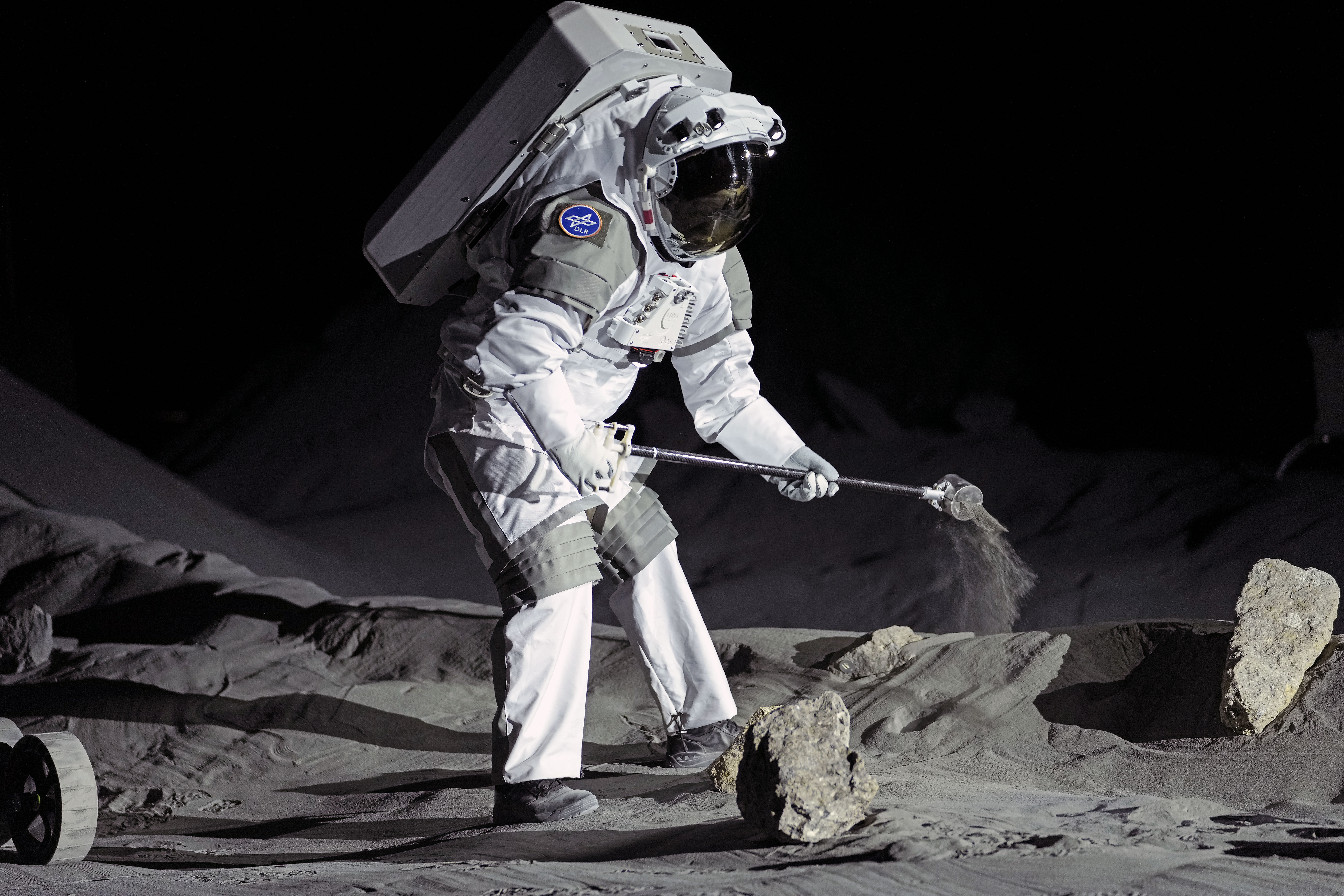
The moon isn't just a glowing rock for poets and dreamers anymore. It's becoming a construction site. NASA recently signaled a massive shift in its lunar ambitions, committing roughly $20 billion to lay the literal groundwork for a permanent human presence. We aren't talking about another "flags and footprints" mission like the Apollo era. This is about staying. It’s about building. It's about turning the lunar surface into a functional outpost that serves as a pit stop for Mars.
If you think this is just another government money pit, you're missing the bigger picture. The Artemis program has moved past the theoretical phase. We're seeing hardware being tested, contracts being signed, and a legitimate supply chain forming in orbit. The $20 billion price tag sounds staggering, but when you break down the logistics of hauling life-support systems 238,000 miles away, it starts to look like a bargain.
The lunar base is a survival test for Mars
Why the moon? Why now? The answer is simple. If we can't survive on a rock three days away from Earth, we have zero chance of surviving a three-year round trip to Mars. The moon is our sandbox. It's where we'll learn to extract water from ice hidden in shadowed craters. It's where we'll test habitats that can shield astronauts from solar radiation that would otherwise fry human DNA.
NASA’s strategy relies on the Artemis Base Camp. This isn't a single building. It's a collection of infrastructure. You've got the Lunar Terrain Vehicle (LTV) for roaming, a mobile habitation platform, and a fixed foundation for long-term stays. The agency isn't doing this alone, either. They've tapped private companies like SpaceX and Blue Origin to handle the heavy lifting. This hybrid model—government oversight mixed with private-sector speed—is the only reason this mission has a shot at succeeding where previous attempts stalled.
Finding water in the dark
The South Pole of the moon is the ultimate real estate. Why? Because that’s where the ice is. We’ve known for years that permanently shadowed regions (PSRs) contain water ice. That ice is more than just a drink for thirsty astronauts. It's oxygen. It's liquid hydrogen for rocket fuel.
If we can mine that ice, the moon becomes a gas station in space. Launching fuel from Earth’s heavy gravity well is incredibly expensive. It’s like trying to start a cross-country road trip but having to carry every gallon of gas you’ll need for the entire journey in your trunk. It doesn’t work. If we get the fuel from the moon, the economics of space travel flip overnight.
The cost of doing business in a vacuum
Critics love to point at the $20 billion figure and complain about problems on Earth. I get it. But space spending doesn't happen in space. Every cent of that money is spent right here on the ground. It goes to engineers in Alabama, software developers in California, and technicians in Florida. It drives materials science breakthroughs that eventually trickle down to your smartphone and your hospital's MRI machine.
The Artemis program is expensive because the environment is unforgiving. You're dealing with temperatures that swing from 250°F in the sun to -360°F in the shade. Then there's the dust. Lunar regolith isn't like beach sand. It’s sharp, abrasive, and clings to everything because of static electricity. It eats through seals and ruins joints. Solving the "dust problem" alone requires millions in R&D.
A different kind of space race
This isn't 1969. We aren't just racing the Soviets for bragging rights. Today, the competition is more complex. China has its own aggressive lunar plans. Private corporations want to mine rare Earth elements and Helium-3. The $20 billion investment is a move to ensure the U.S. and its partners set the "rules of the road" for lunar commerce.
If we aren't there to help establish international norms, someone else will. NASA’s Artemis Accords are an attempt to create a framework for peaceful cooperation. It’s about making sure the moon doesn’t become the Wild West. You want clear boundaries on who owns what and how resources are shared.
Living in a tin can
What does life actually look like on a $20 billion lunar base? It's cramped. It's noisy. You're constantly monitoring your CO2 levels and radiation dosage. The initial habitats will likely be pressurized modules delivered by commercial landers. Think of them as high-tech shipping containers.
Eventually, we’ll stop bringing everything from home. NASA is investigating 3D-printing technologies that use lunar soil to create "mooncrete." If we can print structures on-site, we can build bigger, safer, and more permanent dwellings. This is the "In Situ Resource Utilization" (ISRU) that experts talk about. It's the difference between camping and colonizing.
The Gateway connection
You can't talk about the lunar base without mentioning the Lunar Gateway. This is the small space station that will orbit the moon. It acts as a communication hub and a transfer point for astronauts moving between the Orion spacecraft and the lunar landers.
Some argue the Gateway is an unnecessary detour. I disagree. It provides a persistent presence in lunar orbit. It means we don't have to start from scratch every time we send a crew down. It’s a literal stepping stone. Without it, the logistics of maintaining a surface base become a nightmare of timed launches and risky maneuvers.
What happens if we fail
Failure isn't just about a lost budget. If the Artemis program collapses, we likely won't try again for another fifty years. The momentum we have right now is precious. We have the rockets. We have the landers in development. We have a global coalition of nations signed on.
The biggest risk isn't the technology. It's the politics. Budget cycles change. Administrations flip. Space projects are easy targets for cuts because they take a long time to show results. But $20 billion is a drop in the bucket compared to the total federal budget. It’s an investment in our status as a spacefaring species.
Stop thinking about the moon as a destination. It's a laboratory. It's a shipyard. It's the first floor of a building that eventually reaches the stars.
You should keep a close eye on the upcoming uncrewed Artemis missions. These aren't just tests; they're the delivery trucks for the future of our species. Check the NASA launch schedule and watch the progress of the Starship HLS lander trials. That’s where the real action is happening right now. We're going back, and this time, we're bringing the tools to stay.



