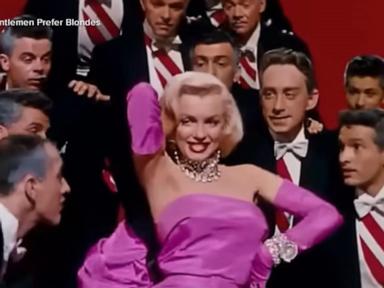
The entertainment media loves a tragic, powerless woman. For decades, the standard retrospective on Marilyn Monroe has followed a tired, copy-paste script: she was a helpless victim of the studio system, chewed up and spit out by predatory executives, leaving behind nothing but a cautionary tale and some iconic imagery. They paint her legacy as a triumph of sheer aesthetic endurance over personal agency.
They are completely wrong. If you enjoyed this article, you might want to look at: this related article.
By framing Monroe strictly as a tragic casualty, modern commentators miss the actual blueprint she left behind. She was not a passive casualty of the old Hollywood studio system; she was one of its most calculated destroyers. The lazy consensus reduces her to an exploited blonde bombshell. The reality is far more disruptive: Monroe was a brilliant, cutthroat strategist who weaponized her own commodification to break the back of the major studios.
The Illusion of the Passive Victim
The conventional narrative insists Monroe was a puppet controlled by Twentieth Century-Fox. This tells a comforting story for critics who want to view old Hollywood through a lens of pure, uninterrupted exploitation. It fails to account for basic industry mechanics. For another look on this event, check out the latest update from The New York Times.
Look at the actual data from 1954. At the absolute peak of her box-office power, Monroe walked off the lot. She refused to shoot the musical Pink Tights. She was making a fraction of what her male co-stars earned, and she knew her market value far exceeded her contract. In an era when studios routinely blacklisted rebellious talent into oblivion, Monroe did something unthinkable. She packed her bags, moved to New York, and went to war.
Imagine a scenario where a mid-level tech employee decides to strike on their own to challenge a monopoly. They would get crushed. But Monroe wasn't mid-level; she understood supply and demand better than the executives running Fox. Her holdout forced the studio to capitulate, granting her a new contract that gave her approval over directors, cinematographers, and stories. That is not the resume of a victim. That is the execution of a high-stakes corporate coup.
Marilyn Monroe Productions and the Death of the Studio Monopoly
Most retrospectives conveniently gloss over December 1954. That was the month Monroe formed Marilyn Monroe Productions (MMP) with photographer Milton Greene.
To understand why this matters, you have to understand the studio system of the 1950s. Actors were literal property. They were bound by seven-year option contracts. The studios dictated what they wore, who they dated, and what films they made. If an actor refused a role, they were suspended without pay, and that suspended time was tacked onto the end of their contract.
Monroe became only the second woman in Hollywood history—after Mary Pickford—to launch her own independent production company.
The Structural Shift
By creating MMP, Monroe didn't just look for better roles; she attacked the structural foundation of Hollywood.
- Financial Control: She bypassed studio overhead, ensuring her company retained a massive share of film profits.
- Creative Autonomy: She secured the rights to choose her own projects, leading directly to The Prince and the Showgirl.
- Precedent Setting: She proved to every contract player in Los Angeles that the studios needed the stars more than the stars needed the studios.
When she forced Fox to sign a new deal with her production company in 1955, she effectively broke the studio's monopoly on her career. Olivia de Havilland may have won the legal battle against the seven-year contract in court, but Monroe won the economic war on the ground.
The Method Acting Rebrand was a Corporate Pivot
Commentators love to condescend to Monroe’s time at the Actors Studio in New York. They frame her studies under Lee Strasberg as a desperate, pathetic plea to be taken seriously by the intellectual elite.
This view shows a profound ignorance of brand management. Monroe didn't go to New York to escape her blonde image; she went to intellectualize it.
She recognized that beauty has a strict depreciation curve in Hollywood. To survive long-term, she needed a radical brand pivot. By aligning herself with Strasberg, Cheryl Crawford, and intellectual giants like Arthur Miller, she infused her hyper-sexualized public persona with high-art credibility.
[Traditional Persona: Bombshell]
       + [New York Pivot: Method Acting/Intellectualism]
       = [The Indestructible Icon: High-Art Commodity]
It was a masterclass in audience repositioning. She returned to Hollywood not as a studio-created starlet, but as an artist who condescended to work with the studios. Her performance in Bus Stop (1956) was the direct result of this pivot. Critics who had spent years dismissing her as a passing fad suddenly had to grapple with a performer who possessed elite psychological depth. She engineered that shift herself.
Dismantling the "People Also Ask" Fables
The internet is flooded with soft-focused queries about Monroe that keep the myth of her helplessness alive. Let's dismantle the premises of these flawed questions.
"Was Marilyn Monroe exploited by Hollywood?"
The question assumes exploitation is a one-way street. Of course the industry sought to exploit her; that is what Hollywood does to everyone. The real question is whether she exploited them back.
She understood exactly what the public wanted and she charged a premium for it. She explicitly crafted the "Marilyn" persona as an external business asset. In private conversations recorded by her close associates, she frequently referred to "Marilyn" in the third person, treating the character as a highly profitable product line. She traded her image for unprecedented industry leverage. If that is exploitation, it was a mutual exploitation where she dictated the terms.
"Why couldn't Marilyn Monroe find happiness despite her fame?"
This question reduces a complex, ambitious professional to a cliché melodramatic trope. It pathologizes her life based on her tragic end, working backward to paint her entire existence as miserable.
Monroe experienced intense personal struggles, but framing her life solely through the lens of sadness erases her immense professional victories. She found profound satisfaction in her work, her autonomy, and her capacity to outmaneuver the most powerful men in media. Stop measuring a pioneering mogul's worth by her marital status or her tragic death.
The Cost of the Contrarian Take
Bluntly assessing Monroe's power requires acknowledging the dark side of her strategy. Weaponizing your own objectification is an exhausting, dangerous game.
To maintain her leverage over the studios, she had to continuously feed the monster she created. The "Marilyn" asset required constant maintenance, public performances, and an intense emotional toll. By separating her true self from her corporate persona, she created a psychological rift that undoubtedly contributed to her personal isolation.
Her strategy is not a template for a peaceful life. It is a blueprint for institutional warfare. She won the war against the studios, but the ammunition she used was her own identity.
The Real Legacy They Refuse to Teach
The true lasting impact of Marilyn Monroe on Hollywood is not her white dress blowing over a subway grate, nor is it her breathless rendition of "Happy Birthday."
Her legacy is the modern entertainment economy.
Every time a top-tier actress launches her own production banner to control her narrative—whether it’s Reese Witherspoon changing the industry with Hello Sunshine, or Margot Robbie producing Barbie to dictate her own blockbuster path—they are operating within the infrastructure that Monroe built.
Monroe pioneered the transition from actor-as-employee to actor-as-enterprise. She showed that a star could be the CEO of their own likeness.
The industry keeps pushing the narrative of the tragic, broken Marilyn because a broken victim is safe. A broken victim doesn't inspire contract renegotiations. A broken victim doesn't teach young talent how to seize equity, demand creative control, or hold a multi-million-dollar corporation hostage.
Stop mourning the fragile blonde caricature the studios sold you. Start studying the corporate raider who brought them to their knees.