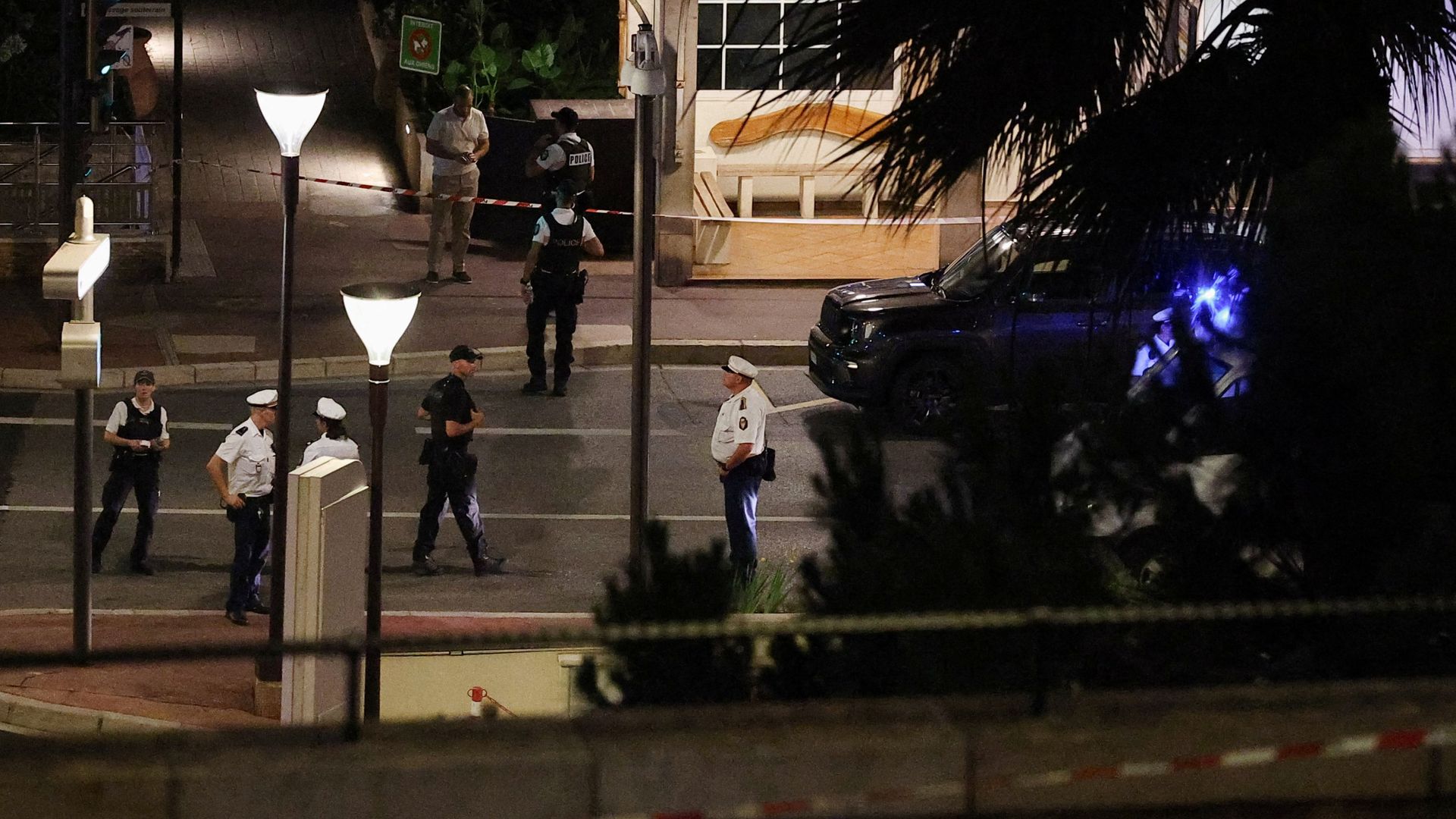
Monaco has long traded on the illusion of total invulnerability. That illusion evaporated on Monday when a crude makeshift bomb detonated in a commercial district just blocks away from the iconic Monte Carlo Casino, leaving three people seriously injured. While local authorities scrambled to frame the incident as an isolated anomaly, the explosion exposes a systemic vulnerability in the principality’s heavily surveilled paradise. This was not an act of international terrorism, but rather a targeted, low-tech assault that high-tech surveillance networks completely failed to prevent.
The blast occurred at approximately 11:30 AM inside a service corridor of a multi-use commercial building on the Avenue des Spélugues. The three victims, all maintenance workers employed by a local contracting firm, suffered severe shrapnel wounds and significant burns. They remain hospitalized in stable but critical condition.
Security services quickly cordoned off the area, deploying bomb disposal units and canine teams. Yet, the physical damage to the building was minor compared to the structural damage done to Monaco’s reputation as the safest enclave for the global elite.
The Surveillance Blind Spot
Monaco boasts one of the highest police-to-population ratios in the world. Its streets are blanketed by a dense network of high-definition cameras equipped with advanced facial recognition software. If you drop a candy wrapper on the pavement in Monte Carlo, the state likely knows your identity before the paper hits the ground.
Yet, this multi-million-euro security apparatus failed to stop a rudimentary explosive device from being placed inside a commercial hub.
The failure highlights a critical flaw in modern corporate and state security. Sophisticated algorithms are designed to detect known threats, flag anomalous behavior on public streets, and track blacklisted individuals. They are remarkably ineffective against a threat that originates from within the supply chain or via unmonitored service entrances. The makeshift bomb—constructed using easily obtainable industrial components and a simple mechanical timer—was brought into the facility without triggering a single automated alarm.
Initial forensic analysis indicates the device was left in a high-traffic utility zone, a area where delivery drivers, contractors, and maintenance staff mingle daily without rigorous background checks. The system is designed to look outward, watching for external predators, leaving the interior soft underbelly entirely exposed.
The Shadow Economy of Extortion
While official state channels have been tight-lipped regarding a motive, sources close to the initial police investigation confirm that the blast bears the hallmarks of a localized extortion racket. For years, the Mediterranean coast has seen an undercurrent of organized crime syndicates demanding protection money from luxury construction firms, high-end restaurateurs, and property management companies.
Most of these incidents are settled quietly. Cash changes hands, non-disclosure agreements are signed, and the public remains none the wiser.
When a business refuses to play by these rules, violence follows. The Avenue des Spélugues explosion appears to be a lethal calling card meant to enforce compliance across the sector. By targeting a service corridor rather than a high-profile casino floor, the perpetrators sent a precise message to the business community without drawing the level of international counter-terrorism intervention that a direct attack on tourists would provoke.
The financial stakes in Monaco are astronomically high, making it a lucrative target for sophisticated extortionists. The principality’s real estate market features some of the most expensive square footage on earth. When millions are on the line for a single renovation project, a minor delay caused by "security concerns" can ruin a contractor. Criminal organizations understand this leverage and exploit it ruthlessly.
A History of Quiet Compromises
This is not the first time the French Riviera has wrestled with the intersection of high finance and low-level brutality. Neighboring cities like Nice and Cannes have faced long-standing challenges with organized crime infiltration into public works and private security contracts. Monaco has historically insulated itself from this reality through sheer financial segregation and aggressive policing.
The strategy worked until it didn't. By treating security as a matter of technological dominance rather than human intelligence, the principality allowed a blind spot to grow. Local intelligence networks have become overly reliant on digital feeds, neglecting the old-school investigative work required to map out the criminal syndicates operating just across the French border in Alpes-Maritimes.
The Cost of the Illusion
The economic fallout from the blast could reshape how ultra-high-net-worth individuals view the enclave. Monaco's primary commodity is safety. The wealthy pay a premium via exorbitant real estate prices and lifestyle costs specifically because they believe they are buying immunity from the chaos of the outside world.
Monaco Security Metrics vs. Emerging Vulnerabilities
+------------------------------------+---------------------------------------+
| Traditional Security Strengths     | Overlooked Operational Risks         |
+------------------------------------+---------------------------------------+
| 1 cop per 70 residents             | Reliance on external service firms    |
| Total public CCTV saturation       | Unmonitored private service corridors |
| Strict border entry checkpoints    | Cross-border organized crime networks |
+------------------------------------+---------------------------------------+
If that safety is revealed to be a veneer, the capital flight could be swift. Insurance premiums for commercial properties in the principality are already projected to spike following Monday's detonation. Underwriters are forced to reassess the risk profile of an entire jurisdiction that was previously rated as near-zero risk.
Furthermore, private security firms operating within Monaco are facing immediate scrutiny. Many of these agencies rely on retired law enforcement personnel who are adept at crowd control and executive protection but lack the training to counter asymmetric threats or detect improvised explosive devices hidden in routine commercial deliveries.
Rethinking the Perimeter
Defeating this specific breed of criminal enterprise requires a fundamental shift away from passive technological surveillance toward active human intelligence and stringent supply chain auditing.
Every single individual entering a commercial property—regardless of whether they carry a clipboard, a tool belt, or a designer briefcase—must be subjected to identical verification protocols. The concept of a "trusted insider" is a vulnerability that sophisticated actors will always exploit.
Physical security structures must also change. Commercial buildings need to implement blast-resistant containment zones for incoming mail and courier packages, separating public-facing areas from the mechanical infrastructure that keeps these facilities running.
The blast on Avenue des Spélugues proves that walls, cameras, and facial recognition are no longer enough to guarantee safety when the threat walks through the back door with a badge and a delivery manifest.