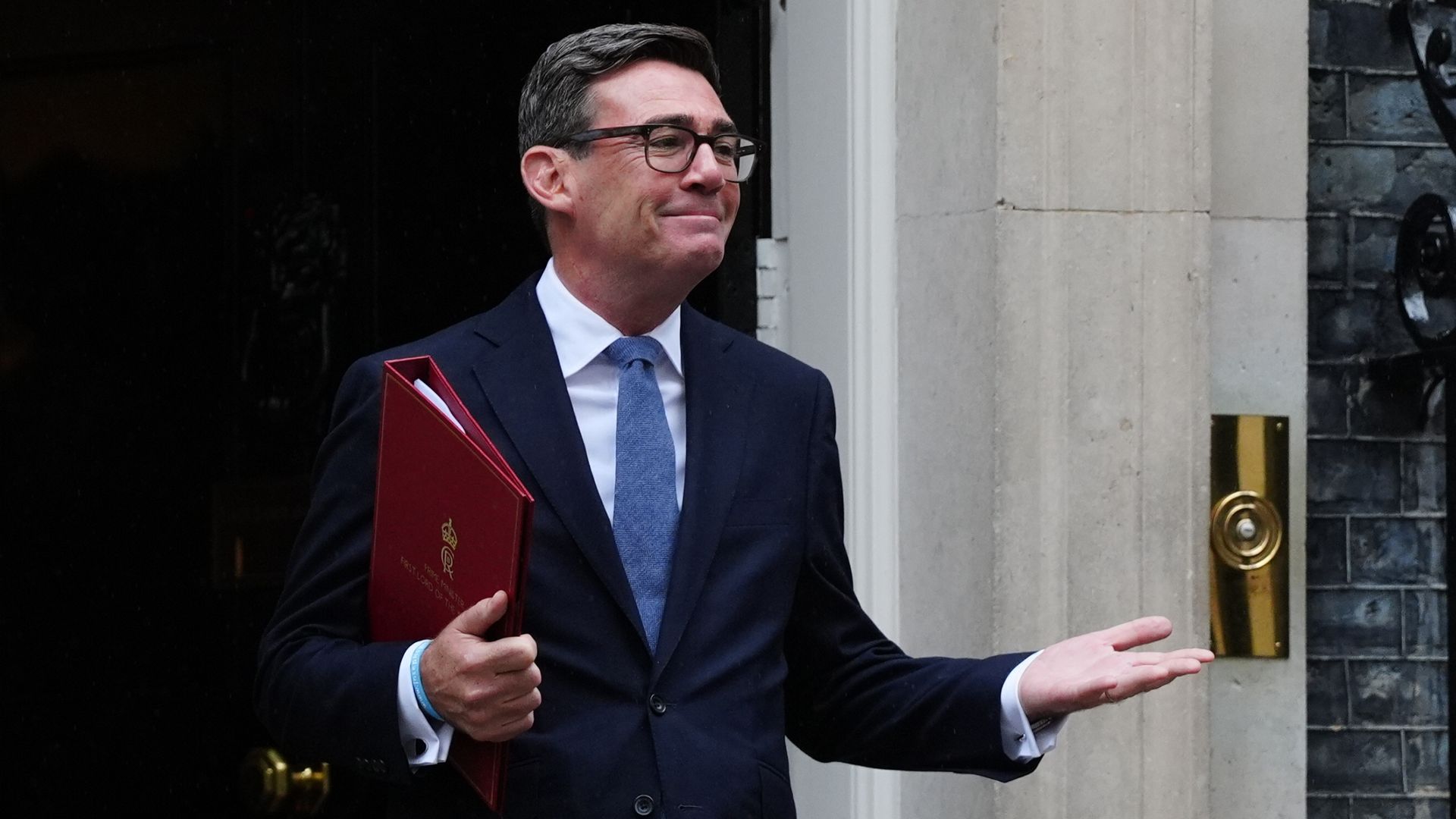
Andy Burnham's political survival has never been a matter of ordinary career progression. Since ascending to Number Ten, the former Greater Manchester mayor has occupied a unique space in British public life, defined by an initial wave of public goodwill that pollsters have dubbed the Burnham bounce. Yet beneath the surface sheen of personal popularity lies a more complicated political reality. Public favourability ratings hover near forty-six percent, keeping him ahead of his fractured parliamentary opposition, but the accompanying spike in disapproval numbers signals the honeymoon phase is burning off. To understand why Burnham commands this strange political gravity, one must look past the glossy profiles and examine the structural machinery of how he built his brand.
The Anatomy of a Political Brand
For years, mainstream political analysts treated Burnham as an anomaly. A classic product of the old Labour apparatus who managed to reinvent himself as an insurgent local voice, his tenure running Greater Manchester transformed him from a bruised leadership contender into a regional powerhouse. He learned early that the public responds less to party dogma and more to visible territorial defiance. When he squared off against central government authorities over pandemic lockdowns and transport funding, he was not merely negotiating grants. He was performing a specific kind of regional protectionism that resonated far beyond the Pennines.
This performance became his political anchor. By branding himself as a champion of municipal autonomy through projects like the Bee Network, he manufactured a distinct political identity that stood apart from Westminster stagnation. Voters grew tired of distant technocrats who spoke in clipped corporate euphemisms. Burnham spoke with a familiar, weary cadence that suggested he understood why ordinary high streets were decaying. It was an authentic-seeming populism of the left, contrasting sharply with the chaotic populist theatrics of the political right.
Yet political branding is a depreciating asset once it enters the crucible of national executive power. Entering Downing Street means trading the comfortable outsider status of a regional mayor for the relentless accountability of a sitting prime minister. The very qualities that made him popular in the North—his willingness to pick public fights with Whitehall and his insistence on localized governance—suddenly face the sobering counter-weight of national Treasury constraints and intractable public sector crises.
Beyond the Regional Mythos
The transition from regional tribune to national executive exposes the inherent contradictions of the Burnham phenomenon. Critics often mistake his widespread name recognition for deep-seated ideological loyalty. In truth, much of his support stems from negative partisanship against alternative leaders rather than uncritical adoration of his policy agenda. When pollsters track his approval, they capture a public desperate for stability rather than a populace enthralled by radical socialism.
Consider the ambitious pledges that defined his early weeks in office, most notably his high-profile crusade to eradicate rough sleeping. It was a classic Burnham maneuver: highly visible, emotionally resonant, and anchored by substantial funding allocations totaling hundreds of millions of pounds. But intent and execution inhabit different universes in British public administration. Local authority housing departments are chronically overstretched, and municipal partners warn that simply throwing capital at emergency shelter fails to address the underlying structural housing shortage.
When the inevitable friction occurs between grand political declarations and municipal delivery limitations, public patience frays. The recent uptick in unfavorable ratings YouGov trackers recorded demonstrates that the electorate is keeping score. People want to believe in a leader who cares about destitution and crumbling infrastructure, but they have grown cynical after decades of unfulfilled promises. Burnham is riding a wave of provisional trust, a currency that evaporates the moment concrete results stall.
The Machinery of Public Expectation
To evaluate Burnham's true political standing, one must examine the mechanics of voter psychology in a post-consensus era. The electorate no longer divides neatly along traditional class or geographic lines. Instead, voters split between those who believe institutional reform can still deliver incremental improvements and those who have embraced systemic cynicism. Burnham occupies a delicate middle ground in this ideological civil war.
He is fundamentally a reformist who believes state power can be harnessed for social good, a stance that alienates the libertarian right while simultaneously frustrating the impatient radical left. His cautious fiscal discipline keeps him tethered to orthodox financial boundaries. He refuses to promise fiscal magic tricks, recognizing that voters punish broken spending pledges more severely than modest ambitions.
This pragmatism is both his shield and his vulnerability. By dampening radical expectations, he avoids the catastrophic credibility crashes that destroyed his predecessors. However, dampening expectations also caps enthusiasm. A politician who wins power largely by convincing the public he is less objectionable than the alternative enters office without a blank check for transformation. Every policy compromise becomes a battleground where his populist credentials face erosion.
The Parliamentary Labyrinth and Institutional Friction
Moving from the executive autonomy of a combined authority mayor to the claustrophobic corridors of Westminster has introduced entirely new vectors of political friction. In Manchester, Burnham operated with executive leverage that bypassed much of the procedural gridlock defining central government. He could broker deals, marshal regional stakeholders, and project authority without facing daily parliamentary rebellion from his own backbenches. Westminster operates under entirely different rules, where party management requires constant negotiation with factions whose ideological motivations rarely align with pragmatic local government administration.
Backbench management is an art form that has tripped up far more experienced operators than Burnham. His cabinet appointments reflect an uneasy balancing act between party unity and ideological appeasement, creating internal friction that periodically spills into public view. When government policies face resistance from civil service inertia or legislative pushback in the House of Lords, the swift, decisive administrative style that defined his mayoral tenure frequently bogs down in procedural quagmires.
This institutional friction threatens to erode the core narrative of competence that propelled him to power. Voters who supported him expecting rapid transformation grow restless when legislative progress slows to a crawl. The gap between executive intent and parliamentary outcome is where political momentum goes to die. If Burnham cannot master the internal mechanics of the parliamentary party and bend the civil service to his strategic vision, his premiership risks becoming defined by paralysis rather than progress.
The Coming Collision With Reality
As the political cycle grinds forward, Burnham faces structural hazards that no amount of personal charm can charm away. Prison overcrowding remains a ticking time bomb within the justice system, regional economic disparities stubbornly resist piecemeal investment, and the deep-seated pressures on the National Health Service continue to defy easy fixes. Each of these files carries toxic political fallout.
Furthermore, the opposition landscape, though currently fractured, remains volatile. While Nigel Farage's Reform UK struggles with internal controversies and public disapproval, their core narrative on immigration and institutional decay continues to capture a significant share of working-class anxiety. Meanwhile, the Conservative leadership under Kemi Badenoch attempts to stabilize its base by positioning itself as the true defender of fiscal conservatism and traditional British identity. Burnham cannot afford to take his current polling advantage as permanent armor.
The real test of his premiership will not be whether he can sustain his personal charm rating during a honeymoon phase. The test is whether he can institutionalize a new model of governance that bridges the gap between central authority and local empowerment before public disillusionment sets in. If his regional reforms fail to scale nationally, the very attributes that carried him to Number Ten will be turned against him by a public that feels betrayed once more. Politics remains a brutal trade where yesterday's savior is tomorrow's cautionary tale, and Andy Burnham is walking a razor-thin line between enduring legacy and swift obsolescence.