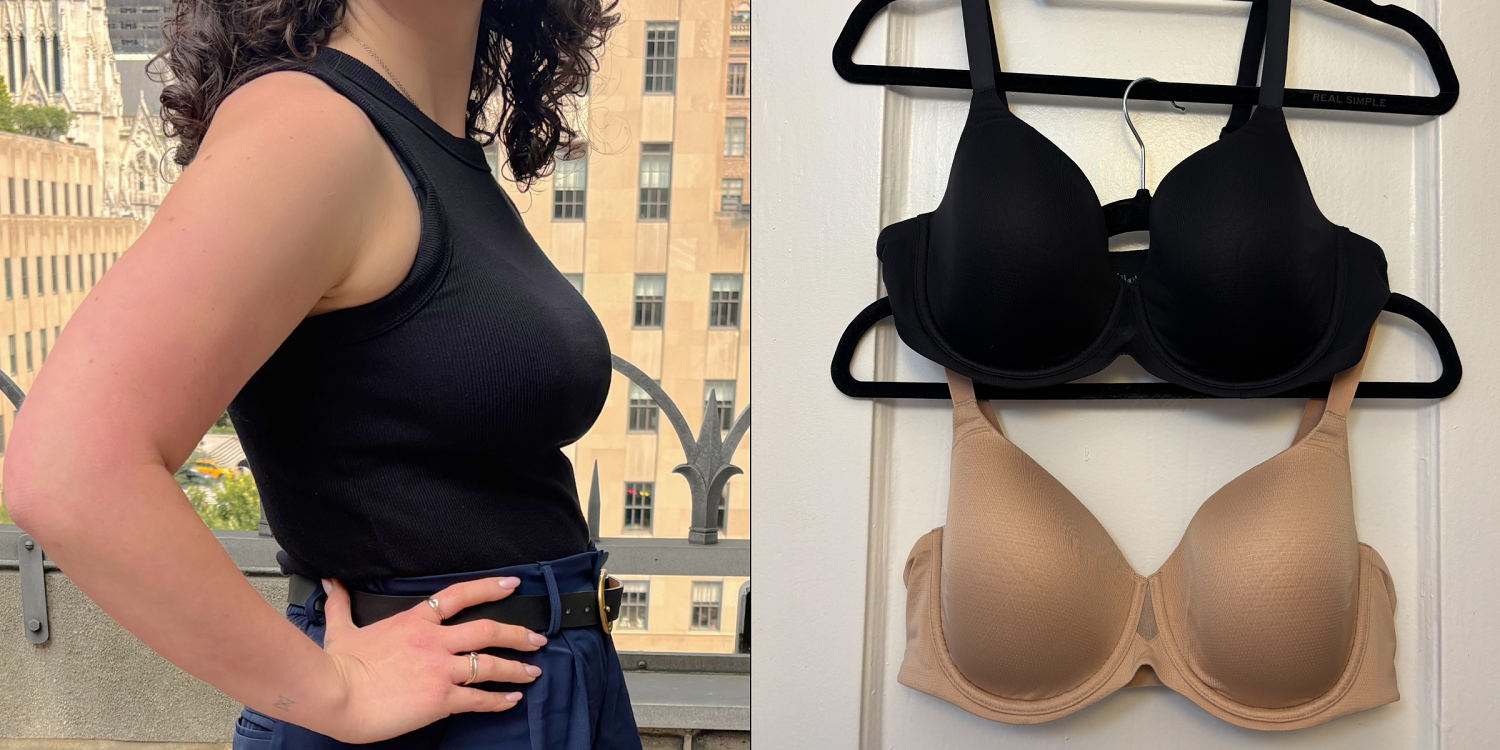
The immediate answer is simple: no, ThirdLove’s TempSync cooling bra will not feel like an ice pack against your chest. If you purchase it expecting a sudden drop in temperature, you will be disappointed. However, the science behind its 37.5 Technology—which embeds active volcanic minerals into the fibers—does work. By accelerating moisture evaporation at the vapor stage before liquid sweat forms, the bra prevents the clammy, heat-trapping microclimate that plagues traditional synthetic lingerie. It is a masterclass in moisture management, not active refrigeration.
To understand why the intimate apparel industry is suddenly obsessed with thermoregulation, one must look at the demographics. For decades, lingerie marketing was built entirely on sex appeal and structural lift. But as the consumer base ages, a massive, underserved market has come to the forefront: menopausal and perimenopausal women dealing with vasomotor symptoms, commonly known as hot flashes.
When a hot flash strikes, skin temperature can spike rapidly, followed by a torrent of perspiration. Standard synthetic bras, typically made of dense polyester or heavy nylon, act like wet wetsuits under these conditions. They trap the heat, hold the moisture, and refuse to dry.
Enter the "cooling" bra category. It is an industry sector now flooded with promises of instant relief, but very few brands are willing to explain the physical limitations of their fabrics.
The Chemistry of Volcanic Sand and Sweat
To evaluate ThirdLove’s claims, we have to look closely at Cocona Labs, the creators of 37.5 Technology. This is not a chemical coating sprayed onto finished fabric that will eventually wash down the drain. Instead, it is a material science formulation where active particles derived from volcanic sand and activated carbon from coconut shells are permanently embedded directly into the polyester or nylon polymer matrix before it is spun into yarn.
The technology gets its name from two human physiological constants: the body's ideal core temperature of $37.5^\circ\text{C}$ and the ideal relative humidity of the skin microclimate, which is $37.5%$.
These embedded mineral particles perform two distinct thermodynamic tasks:
- Infrared Absorption: Your body constantly emits infrared energy. When you are cool, these mineral particles absorb this energy and reflect it back to help keep you warm.
- Evaporative Driving Force: When you heat up and start to produce moisture vapor, the particles absorb that infrared energy and use it to accelerate the evaporation process. They pull the water molecules away from your skin before they have a chance to condense into liquid sweat.
This distinction is where most consumers get confused. If you touch a piece of metal, it feels cold because of thermal conductivity—it rapidly pulls heat away from your fingers.
The TempSync bra does not do this. If you hold it in your hand, it feels like a standard, lightweight synthetic garment. The magic only happens when you wear it under load, when your body heat begins to rise, and the microclimate between your skin and the fabric starts to humidify.
The Great Undergarment Marketing Illusion
The intimate apparel sector has a long history of dressing up basic synthetics in fancy scientific jargon. For years, "moisture-wicking" was the catch-all term. But traditional wicking is passive.
Standard wicking fabrics simply spread liquid sweat across a larger surface area so it can dry. The problem is that the sweat has already become a liquid, meaning you are already wet, cold, and uncomfortable.
[Traditional Wicking]
Skin Heat -> Sweat Forms -> Fabric Absorbs Liquid -> Slow Evaporation -> Clammy Feel

[37.5 Thermoregulation]
Skin Heat -> Vapor Formed -> Minerals Absorb Infrared -> Rapid Vapor Evaporation -> Dry Feel
By targeting the vapor stage rather than the liquid stage, the TempSync material tries to prevent the wetness from occurring in the first place.
But there is a major catch that no marketing department wants to admit. A bra is not just a flat sheet of high-tech fabric. It is a complex, three-dimensional engineering challenge consisting of cups, bands, straps, and hardware.
If a brand uses a highly breathable, thermoregulating fabric for the wings of the bra, but backpapers the cups with dense, non-breathable polyurethane foam, the overall cooling effect is almost entirely neutralized.
In the TempSync T-Shirt Bra, ThirdLove attempts to bypass this structural bottleneck by using perforated foam cups.
If you hold the cups up to a window, you can see a grid of tiny pinpricks that allow light—and more importantly, air—to pass through. Without these perforations, the breast tissue, which contains a high concentration of sweat glands, would remain trapped behind an impermeable wall of synthetic padding.
The Engineering Failures of the Modern Bra
Even the most advanced yarn cannot save a bra that is structurally flawed. Many modern bras fail their wearers because of a fundamental misunderstanding of tension and surface area.
When a bra band is too tight, it compresses the skin, restricting blood flow and trapping localized heat. When a bra relies on thick, heavy elastic bands to provide support rather than a properly fitted underwire, that elastic acts like a heavy tourniquet that gathers moisture underneath the bust.
The TempSync line is offered in both wired and wireless versions. While wireless bras are highly praised for comfort, they present a thermoregulation challenge.
Without an underwire to lift and separate the breast tissue, skin-on-skin contact increases. This creates a hot zone where sweat pools and cannot evaporate.
If you have a larger cup size, the wireless version of a cooling bra will almost certainly perform worse than the wired version, simply because the physical separation of tissue is required to let air circulate.
Furthermore, we must look at the fiber blend. The TempSync fabric is composed of:
- 83% 37.5 nylon
- 12% spandex
- 5% regular nylon
Spandex is highly stretchable and comfortable, but it is notoriously bad at handling heat. It acts as an insulator and retains moisture. By keeping the spandex percentage relatively low and relying on the mineral-infused nylon for the bulk of the garment, the fabric manages to maintain its structural integrity without turning into a heat trap.
Performance in the Field
To evaluate how this fabric performs over a long period, we have to look at the wear-and-wash cycle. Many consumer products that claim antibacterial or cooling properties rely on chemical surface washes.
These washes are temporary. After ten or fifteen trips through a washing machine, the microscopic chemical layer washes away, leaving you with a basic, expensive synthetic garment.
Because the active mineral particles in 37.5 Technology are locked inside the polymer fibers, they do not wash out. They are physically part of the yarn.
However, synthetic fibers have an inherent weakness: they love oil. Sebaceous glands on the chest secrete sebum, which easily binds to synthetic fibers like nylon and polyester.
Over months of wear, these body oils, along with laundry detergents and fabric softeners, can coat the embedded mineral particles. Once coated in a thin layer of oil or wax, the minerals lose their ability to interact with infrared energy and moisture vapor.
To maintain the performance of any cooling bra, you must wash it correctly. Using fabric softeners is the fastest way to ruin the technology. Softeners leave a waxy, water-repellent film over the fibers, completely blocking the pores of the fabric and rendering the volcanic minerals useless.
Decoupling Hype From Utility
Is a thermoregulating bra worth the investment? That depends entirely on your expectations.
If you are looking for an active cooling sensation that mimics a cold compress, you will not find it here. No passive textile can create energy or lower temperature below the ambient air without a power source.
If you are looking for a garment that prevents the build-up of swampy, trapped moisture during a sudden hot flash or a humid summer commute, the science behind the mineral-embedded fibers is legitimate.
The real victory of this design is not that it makes you cold, but that it stops you from staying wet. By moving moisture away in its vapor state, it breaks the cycle of sweat-chill-sweat that makes synthetic underwear so miserable to wear.
The textile industry will continue to market "cooling" as a miracle, but smart consumers should look past the hyperbole and focus on the mechanics of fiber construction and physical ventilation.