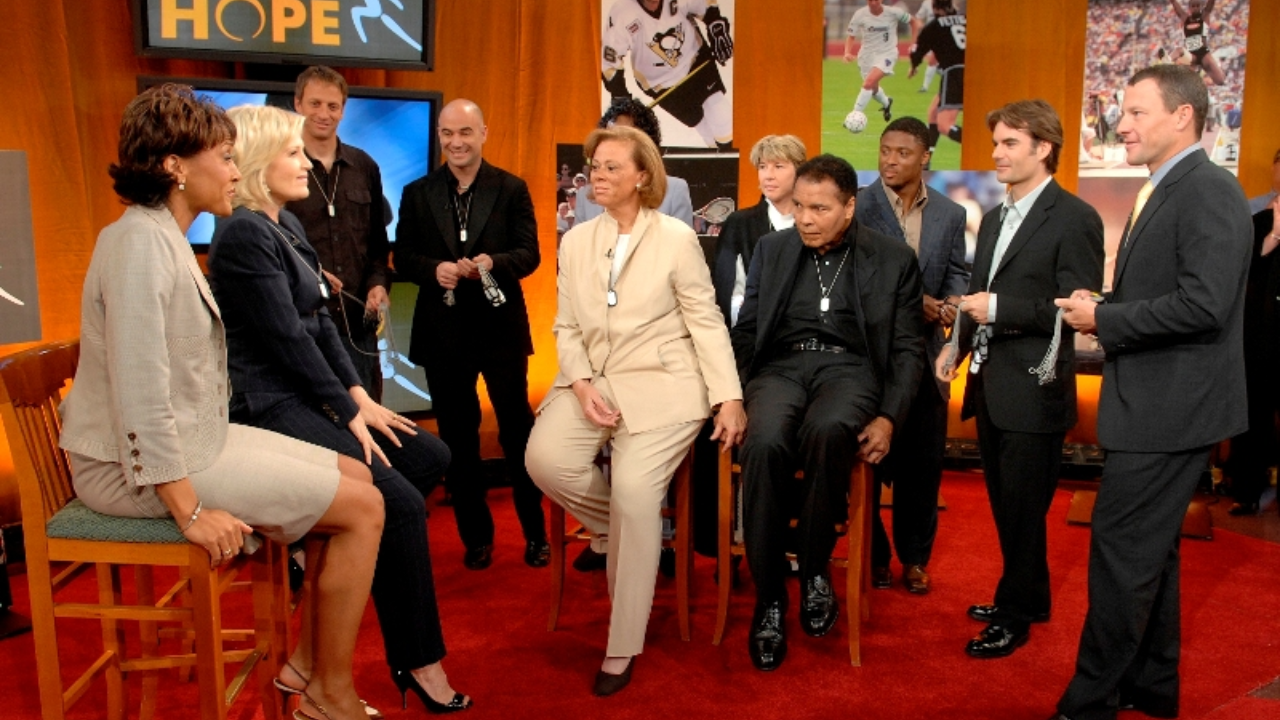
When professional athletes retire, most people expect them to buy golf club memberships, sit on television panels, or quietly fade into corporate boardrooms. They don't expect them to rewrite the entire playbook for how sports stars engage with society. Back in 2006, a powerhouse group of iconic competitors decided that writing checks wasn't enough. Muhammad Ali, Mia Hamm, Andre Agassi, Tony Hawk, Cal Ripken Jr., Michelle Kwan, and several other legendary figures looked at the massive cultural megaphone they possessed and realized it was deeply underutilized. They built Athletes for Hope not as another vanity charity, but as a systematic bridge connecting sports stars directly to grassroots community needs, children's hospitals, and educational equity.
Most people misunderstand athlete philanthropy. Fans assume that a star player signing a million-dollar check solves a community problem. It doesn't. Money without personal engagement creates distance instead of connection. The founders of Athletes for Hope understood this reality deeply. They saw athletes struggling to find meaningful ways to give back because traditional charity structures often treated them as walking wallets rather than active participants.
The Breaking Point in Sports Charity
Before 2006, athlete philanthropy was mostly transactional. A team would host an annual gala, players would pose for photos with giant cardboard checks, and everyone would return to their normal lives. The community felt the disconnect. Athletes wanted to do more, but they lacked an organized infrastructure to guide them safely and effectively into sustained volunteer work.
If you talk to veteran athletes who played through the late nineties and early thousands, they will tell you about the utter chaos of trying to do good work independently. You have zero staff, infinite requests for money, and no guidance on where your time creates actual value. You want to visit kids in a local hospital, but navigating liability, scheduling, and security turns into a logistical nightmare. Most stars simply gave up or delegated the entire process to wealth managers who treated charity as a tax strategy.
Muhammad Ali spent decades proving that an athlete's voice carries more weight than any politician's speech. But Ali was an outlier. Most players didn't know how to channel their influence after the final whistle blew. They needed a framework. They needed an organization that treated community service with the same discipline, strategy, and dedication that went into winning championships.
The Founders and Their Vision
You cannot look at the founding roster of Athletes for Hope without recognizing the sheer magnitude of competitive grit represented in that room. You had Muhammad Ali, whose global humanitarian work set the gold standard for athlete activism. You had Mia Hamm, who revolutionized women's soccer and spent her career fighting for equality and youth sports access. You had Andre Agassi, who had already begun pouring millions into his charter school foundation in Las Vegas.
Alongside them stood Tony Hawk, whose skateboarding empire was matched by his dedication to building public skateparks in underserved neighborhoods. Cal Ripken Jr. brought his legendary ironman durability and a lifelong commitment to youth baseball literacy. Michelle Kwan translated her Olympic grace into global diplomacy and youth development work.
These weren't figureheads lending their names to a letterhead. They were active architects of a new standard. They recognized that athletes possess a unique form of cultural currency. Fans don't just admire athletes; they mirror them. When a superstar walks into a middle school classroom or spends a Saturday morning mentoring kids at a community center, the psychological impact on those children is staggering.
The founders wanted to institutionalize that impact. They created a training ground where professional, Olympic, Paralympic, and collegiate athletes could learn how to be effective community leaders. They wanted to turn raw fame into focused, measurable social good.
How Athletes for Hope Operates on the Ground
Theory is easy. Execution is brutal. What makes Athletes for Hope distinct is its operational model. Instead of inventing new programs from scratch, the organization partners with established community groups, schools, and hospitals across the United States.
When a rookie player enters a professional sports league today, they are often overwhelmed by the transition from college to the big leagues. Athletes for Hope steps in right at that critical juncture. They provide workshops on values-based giving, media training for social causes, and direct placement into volunteer networks.
Consider how hospital visits work under this structured approach. Instead of an athlete dropping in unannounced, disrupting medical staff, and leaving after five minutes for a photo op, the organization trains athletes on how to interact with sick children, how to speak with anxious parents, and how to maintain consistency over months or years. Kids in hospitals don't need a quick drive-by celebrity wave. They need someone who remembers their name, visits them repeatedly, and treats them like a normal human being rather than a charity case.
The organization also focuses heavily on collegiate athletics. College sports programs are breeding grounds for future professional stars and community leaders. By embedding philanthropic training into collegiate athletic departments, Athletes for Hope ensures that young competitors understand their civic responsibilities before they ever sign a multi-million-dollar professional contract.
The Evolution of Athlete Activism
The sports world has changed dramatically since 2006. Social media has given every athlete a direct line to millions of fans, bypassing traditional media gatekeepers entirely. While this direct access has democratized athlete voice, it has also cheapened it. Social media activism often devolves into performative posting, quick hashtag campaigns, and polarized online debates that generate clicks without changing a single life on the ground.
Organizations like Athletes for Hope provide an essential anchor in a noisy digital era. They pull athletes away from the screen and put them back in the room where actual human connection happens. You cannot mentor a struggling student via an Instagram post. You cannot rebuild a community park through a viral thread.
Today, the scope of the organization covers mental health advocacy, social justice initiatives, disaster relief, and educational equity. Athletes are no longer just supporting local charities; they are demanding systemic change within their own industries and hometowns. They are speaking out on mental health struggles, funding community violence-prevention programs, and using their financial muscle to back sustainable local businesses.
What Most People Miss About Athlete Philanthropy
Critics often dismiss athlete charity as a PR stunt. Sometimes, they are right. When a major sports franchise donates a check to a charity on television right before a contract negotiation, skepticism is entirely warranted.
However, dismissing all athlete philanthropy as marketing cynicism misses the deeper truth. Athletes are human beings shaped by intense pressure, high public visibility, and often humble beginnings. Many come from neighborhoods where community infrastructure was crumbling or nonexistent. When they achieve wealth and fame, the urge to give back is rarely fake. It comes from a visceral memory of what it felt like to need help and not know where to turn.
The brilliance of what Ali, Hamm, and their co-founders built is that it channels genuine goodwill into structured, measurable outcomes. Goodwill without structure burns out. Passion without training leads to fatigue. Athletes for Hope built a durable engine that keeps athletes engaged long after their playing days are over.
Why This Legacy Matters Right Now
We live in a deeply fractured society where trust in major institutions is at an all-time low. People don't trust politicians, corporations, or media conglomerates. But people still trust sports. Sports remain one of the few cultural touchstones that can bridge ideological divides, bring diverse communities into the same stadium, and spark national conversations.
When an athlete uses that platform responsibly, the ripple effect is immense. Young people watch how their favorite stars treat others, how they handle adversity, and where they choose to invest their time and money.
The founders of Athletes for Hope understood that the final score on the scoreboard is temporary. What remains long after the stadium lights are turned off is how a person used their power to lift others up. Muhammad Ali proved that a champion can fight inside the ring and for justice outside of it. Mia Hamm proved that excellence on the pitch translates directly into breaking barriers for the next generation.
If you want to understand modern sports culture, don't just look at the salary caps, trade deadlines, and championship rings. Look at the locker rooms where young players are learning how to be citizens of the world. That quiet revolution started back in 2006, and its impact is still echoing across every community where an athlete decides to show up, roll up their sleeves, and do the hard, unglamorous work of making things better.