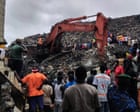
The rain in Conakry does not merely fall; it arrives with the weight of an ocean dropped from the sky. It smells of hot dust, rotting organic matter, and the metallic tang of approaching storms. For most, the wet season is a relief from the stifling coastal heat. But for the people living in the shadow of the Conakry dump, the monsoon is a countdown.
We do not talk enough about where things go when we throw them away. Out of sight, out of mind. Modern cities are designed around the illusion of disappearance. You bag your trash, you carry it to the curb, and a truck whisks it away to a geographical abstraction. But in Conakry, the capital of Guinea, that abstraction has a name, a location, and a terrifying height. The Conakry waste mound is not a landfill in the modern engineering sense. It is a towering, uncontrolled mountain of refuse, a jagged monument to urban growth and municipal neglect that looms directly over the densely packed neighborhoods of the capital. If you found value in this piece, you should look at: this related article.
Imagine living beneath a cliff made entirely of discarded plastic, decomposing food, industrial runoff, and wet soil. Every time the skies open up, that cliff drinks the water. It grows heavier. It shifts.
Thirty lives. For another perspective on this development, check out the recent coverage from BBC News.
That is the official tally released by the government after the latest landslide swept through the settlement below. Thirty human beings who woke up, brewed morning tea, listened to the thunder roll off the Atlantic, and were buried under the city’s discarded history.
Numbers are shields. They protect our empathy from the unbearable magnitude of tragedy. When we hear thirty, our brains process a statistic. We nod, register the gravity, and scroll to the next headline. But let us strip away the bureaucratic distance. Let us look at what a mountain of waste actually is.
(Note: To understand the mechanics of this disaster, consider a simplified physical analogy: imagine stacking wet sand on a steep incline until the friction holding it together fails entirely. Now replace the sand with organic waste, plastic sheeting, and heavy debris saturated by torrential rains.)
Consider a hypothetical resident named Fatoumata. She lives fifty meters from the base of the mound. Her home is constructed from corrugated sheet metal and reclaimed wood—structures that offer shelter against the sun but zero resistance against a rolling wall of dense, heavy garbage. When the slope gave way, there was no sirens' warning. There was only a low, visceral groan of shifting earth and plastic, followed by a rush of grey mud and debris that swallowed the morning light.
Why do people live there? This is the question outsiders always ask, laden with the quiet judgment of safety. The answer is painfully simple. Economics does not leave room for choices; it leaves room for margins. The waste mound is a magnet for survival. Thousands of informal workers comb through the mountain daily, salvaging scrap metal, plastic bottles, and anything of resellable value to scrape together enough Guinean francs to feed their families. The danger is visible, constant, and loud. But hunger is louder.
Municipal authorities have promised closures, relocations, and better waste management protocols for years. Yet the mountain remains, swelling daily with the refuse of a growing metropolis. Urbanization in West Africa has outpaced infrastructure by decades. Cities expand faster than civic planning can track, leaving vulnerable populations to occupy the high-risk buffers between civilization and catastrophe.
When the dust settles and the international news cycle pivots elsewhere, the mound will still be there. The rains will return next year. The leachate will continue to seep into the local water table, quietly poisoning the wells that families rely on. The scrap collectors will climb back up the slopes, because the alternative to the danger is starvation.
We cling to the comfort of distance. We tell ourselves that this is an isolated crisis in a distant corner of the world, unrelated to our own consumption patterns. But every plastic wrapper, every discarded item, every ounce of waste generated in a modern economy feeds the global chain of disposal. The mountain in Conakry is built collectively.
Silence follows the rescue operations. The sirens fade. The Red Cross tents are packed away. But in the quiet hours before dawn, when the tropical rain beats a relentless rhythm against the tin roofs of the capital, the people living at the bottom of the slope listen closely to the earth. They wait to see if the mountain will move again.