The image went viral because it looked like pure spontaneity. A triumphant footballer, fresh off a historic knockout victory against a European powerhouse, rushing into the stands to plant a kiss on his mother’s forehead. When Morocco defeated the Netherlands, the cameras captured Sofyan Amrabat embracing his mother, creating a picture-perfect moment of familial devotion that dominated social media feeds for days.
But reducing this moment to a heartwarming family snapshot misses the entire structural reality of modern international football. That embrace was not just a personal celebration. It was the visible result of a massive, decades-long, state-funded geopolitical scouting operation. Also making headlines recently: Why Germany Crashed Out of the 2026 World Cup and How France Can Avoid the Same Trap.
Morocco did not just beat the Netherlands on the pitch. They systematically extracted the talent nurtured by the Dutch youth academy system and weaponized it against them. The viral hug was the end product of a highly calculated, aggressive strategy designed to convince dual-nationality players born in Europe to reject their countries of birth in favor of their ancestral homeland.
The Reverse Brain Drain of European Football
For decades, the flow of footballing talent followed a predictable colonial and economic migration pattern. Elite talent moved from Africa to Europe. European clubs refined that talent, and European national teams reaped the benefits by integrating the children of immigrants into their squads. Additional insights regarding the matter are covered by Sky Sports.
Morocco completely flipped this power dynamic.
The Royal Moroccan Football Federation (FRMF) realized that trying to match the multi-million-euro infrastructure of Dutch, French, or Belgian academies from scratch would take generations. Instead, they decided to treat Western Europe as their own external academy system.
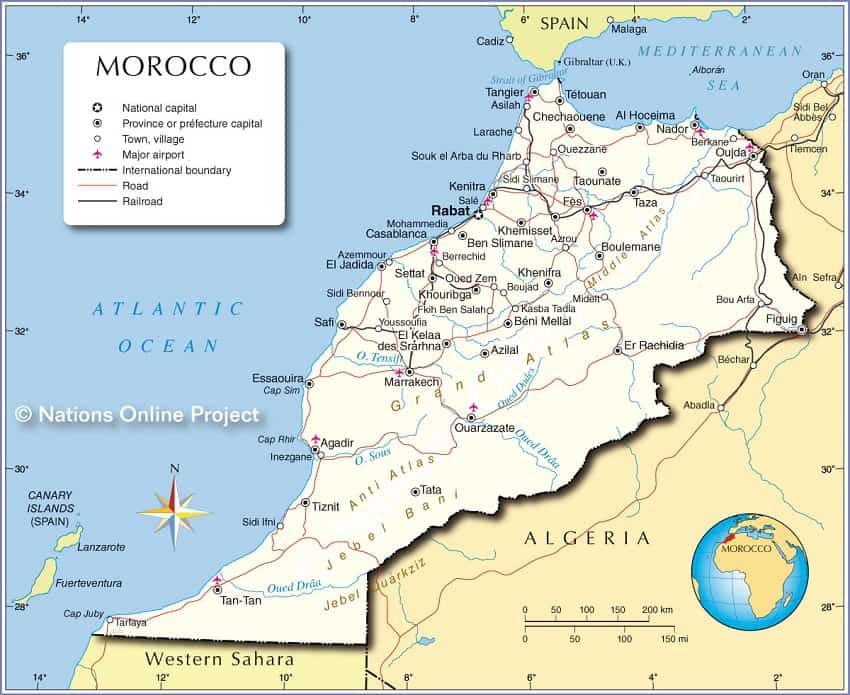
The strategy hinges on an undeniable demographic reality. Millions of Moroccans live in Europe, concentrated heavily in France, Belgium, the Netherlands, and Spain. Their children grow up inside the finest football training institutions in the world. By targeting these players early, Morocco effectively allows European taxpayers and European clubs to fund the development of their national team.
This is not a casual scouting network. It is a sophisticated diplomatic operation. The FRMF employs a web of full-time scouts stationed permanently across Europe, tasked with tracking every single player of Moroccan descent from as young as 13 years old. They do not just watch matches; they build deep relationships with the players' extended families.
The Dutch Blueprint and the Battle for Amrabat
The Netherlands has been the primary battleground for this tug-of-war. The Dutch football system, famed for its Total Football philosophy, excels at producing technically gifted midfielders. Sofyan Amrabat is the quintessential product of this environment. Born in Huizen, Netherlands, he came through the ranks at FC Utrecht.
Amrabat actually represented the Netherlands at the Under-15 level. Under the old footballing paradigm, his progression to the senior Dutch national team would have been a formality.
Morocco intervened by changing the nature of the pitch. While the Dutch football association (KNVB) treated young dual-nationality players with a bureaucratic neutrality—assuming the prestige of the Oranje shirt would be enough—Morocco made it personal. They deployed former international players to speak with Amrabat, emphasizing identity, heritage, and the chance to become national icons rather than just another cog in a European machine.
When Amrabat made the final switch, it sent shockwaves through Zeist, the headquarters of Dutch football. It was not an isolated incident. Hakim Ziyech, Noussair Mazraoui, and Oussama Idrissi all followed similar trajectories, choosing Rabat over Amsterdam.
National Identity as a Competitive Advantage
The traditional argument from European commentators often carries a subtext of resentment, suggesting that players choose Morocco only when they fear they are not good enough to make the cut for France or the Netherlands. The data proves this argument entirely false. Achraf Hakimi was born in Madrid and was heavily scouted by Spain. Ziyech was openly courted by the Dutch senior squad. They chose Morocco because the FRMF offered something Europe could not copy: an appeals process rooted in emotional and cultural alignment.
European football associations have historically struggled to manage the complex identities of second- and third-generation immigrants. Players often speak of feeling Dutch or French when they win, but being labeled Moroccan or Algerian the moment their performance drops.
Morocco exploited this psychological fault line. Their pitch to players is simple: Europe views you as an immigrant; we view you as a son.
The Royal Decree and Financial Backing
This emotional appeals process is backed by staggering financial investments. King Mohammed VI took a personal interest in football as a tool for national prestige, leading to the construction of the Mohammed VI Football Academy near Rabat, a facility costing tens of millions of dollars.
More importantly, the funding allowed the federation to fly players’ families to major tournaments, ensuring that the camp environment felt less like a corporate corporate retreat and more like a family gathering. When players see their mothers accommodated in the team hotel and treated as VIPs by the federation president, the psychological bond strengthens. It creates an environment where players are willing to run themselves into the ground.
The Friction in the System
This model is not without deep internal friction. The reliance on the diaspora has created a distinct cultural divide within Moroccan football that the federation must constantly manage.
- The Linguistic Barrier: Squads are often a chaotic mix of Dutch, French, Spanish, English, and Arabic. Managers must be fluent in multiple languages just to give tactical instructions during a water break.
- The Home-Grown Resentment: Local players coming through the Moroccan domestic league, the Botola, face an incredibly steep path to the national team. They are competing against players who have benefited from European nutrition, infrastructure, and coaching since childhood.
- The Tactical Clash: Merging the rigid, positional play taught in Dutch academies with the flair of French-Moroccan wingers and the physicality of domestic defenders requires immense managerial dexterity.
If the manager cannot bridge these divides, the squad quickly splinter into cliques based on country of birth. The success of the current era is less about the talent itself and more about the delicate engineering required to make a Dutch-born midfielder understand the run of a Spanish-born full-back.
A New Map for Global Sport
What Morocco has built is a template that other nations are already frantically copying. The world is watching a democratization of international football, driven not by domestic wealth, but by migration patterns.
Countries across Africa and the Americas are realizing that their truest sporting assets might live thousands of miles outside their borders. The old order, where a handful of Western European nations dominated the sport simply by hoarding infrastructure, is cracking.
The next time a broadcast cuts to a Moroccan player crying in the arms of his mother after a massive international upset, look past the sentimentality. You are watching the execution of a cold-blooded strategy that turned migration into a sporting superpower.