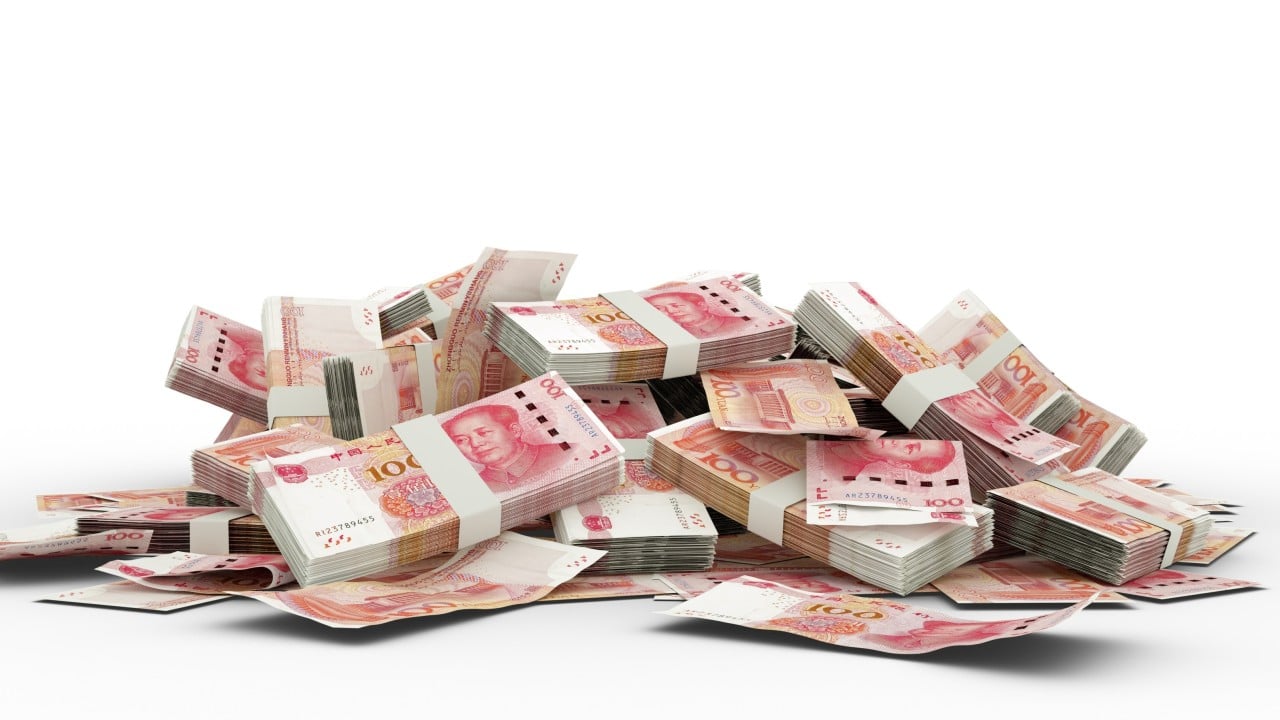
Moody’s just handed China a credit outlook upgrade during a period of global kinetic conflict, and the financial press is swallowing the bait. The prevailing narrative suggests that because China is "stable" relative to the chaos of a Middle Eastern war, its sovereign debt is suddenly a safe harbor. This isn't just wrong. It’s a fundamental misreading of how credit risk functions in a multipolar world.
The consensus argues that Beijing’s fiscal stimulus and "orderly" management of its property crisis justify a rosier outlook. They point to the Iran-Israel escalation as a reason for capital to flee toward the perceived safety of the Renminbi. I’ve spent two decades watching analysts mistake a controlled burn for a fire suppression system. What Moody’s calls "resilience," a seasoned credit officer sees as the desperate consolidation of a cracking foundation.
The Mirage of Geopolitical Neutrality
The idea that China benefits from "Iran war shocks" is a fantasy built on outdated trade maps. China is the world’s largest importer of crude oil. Any sustained disruption in the Strait of Hormuz doesn't just "shock" the West; it strangulates Chinese manufacturing margins.
When the street cheers a credit upgrade because China isn't the one dropping the bombs, they ignore the math of the energy balance sheet. Moody's is effectively rewarding China for being a bystander while ignoring the fact that the bystander is about to lose its cheapest energy source. This isn't a strategic advantage. It is a slow-motion supply chain disaster.
Stimulus is Not Solvency
Beijing recently signaled a massive shift in local government debt management, swapping "hidden" debt for formal provincial bonds. The mainstream view? This provides clarity and reduces risk.
The reality? It’s a shell game. You cannot fix a debt crisis by moving the liability from the left pocket to the right pocket while the pants are on fire.
Local Government Financing Vehicles (LGFVs) represent a black hole estimated at $9 trillion. By bringing this onto the official balance sheet, the CCP isn't "managing" the risk; they are nationalizing it. This tethers the sovereign credit rating of the central government to the catastrophic failures of provincial vanity projects and ghost cities.
In any other market, if a corporation absorbed its bankrupt subsidiaries to hide their defaults, the rating agencies would downgrade them to junk. When China does it, Moody's calls it a "positive outlook."
Why the "Safe Haven" Argument Fails
Capital flows aren't moving to China because it’s healthy. They are moving because the options elsewhere are currently worse. This is the "Least Ugly Contest" theory of economics, and it’s a dangerous way to price long-term debt.
- Yield Traps: The spread between Chinese bonds and US Treasuries has compressed, but the risk premium remains opaque.
- Liquidity Illusions: Try pulling $500 million out of the Chinese market during a true flash crash. You’ll find the "orderly market" becomes a locked room very quickly.
- The Demographics Tax: No amount of stimulus can offset a shrinking workforce. Every yuan spent on debt service today is a yuan stolen from a pension fund that won't be able to support a greying population in 2030.
The Dangerous Math of the $5$ Trillion Property Hole
Let’s look at the actual mechanics of the property sector "recovery" that Moody's is so bullish on. The "White List" mechanism for funding stalled projects is touted as the savior of the industry.
It’s actually a forced lending mandate.
State-owned banks are being ordered to throw good money after bad to prevent social unrest. This doesn't create value. It erodes the Tier 1 capital ratios of the very banks that are supposed to be the bedrock of the economy. If you want to understand the real credit outlook, stop looking at the sovereign rating and start looking at the balance sheets of the "Big Four" banks. They are being used as fiscal proxies, which means the sovereign rating is effectively a lie.
The true leverage is hidden in the banking sector’s mandatory "patriotism."
De-dollarization is a Double-Edged Sword
The contrarian truth about the rise of the Yuan in trade settlements—often cited as a reason for China’s "rising" status—is that it creates a massive structural weakness.
By pushing for Yuan-based oil trades with Iran and Russia, China is forced to export its own deflation. They are creating a closed loop that lacks the transparency of the global dollar system. This makes their credit risk impossible to price accurately. When you cannot price risk, you aren't investing; you’re gambling on the continued benevolence of a single political party.
The Wrong Questions People Are Asking
Q: Is China’s debt-to-GDP ratio manageable compared to the US?
A: This is a flawed comparison. The US debt is backed by the world's reserve currency and a transparent legal system. China's debt is backed by land-use rights in a crashing market and a political mandate that can change overnight. Comparing the two is like comparing a mortgage to a payday loan.
Q: Will the Iran conflict make China the dominant superpower by default?
A: War creates volatility, and China’s entire economic model requires hyper-stability. A global conflict that disrupts shipping lanes is the worst-case scenario for an export-heavy economy. China isn't winning; it's just holding its breath longer than everyone else.
The Institutional Failure of Rating Agencies
We have been here before. In 2008, the agencies rated subprime mortgages as AAA because the "consensus" was that home prices never fall. Today, the consensus is that China is "too big to fail" and "too controlled to crash."
Moody’s is lagging. They are reacting to the optics of central control rather than the physics of economic decay. If you are basing your portfolio on a "stable" outlook for Chinese sovereign debt, you are ignoring the fact that the underlying assets—the land, the banks, and the consumers—are all trending in the wrong direction.
The upgrade isn't a sign of health. It’s a signal that the agencies have once again been captured by the narrative of "managed stability." True stability doesn't need a government mandate to exist.
Stop looking at the outlook and start looking at the exit.
.jpeg?width=1200&auto=webp&trim=0%2C0%2C0%2C0)