Montana’s recent judicial ruling on Election Day Registration (EDR) is being cheered as a victory for democracy. It isn't. It’s a victory for administrative chaos and a fundamental misunderstanding of what drives civic engagement. The legal tug-of-war over Montana’s voting laws focuses on the wrong metric. We are obsessed with "access" as a synonym for "turnout," but the data suggests that making it easier to vote doesn't necessarily make people vote—and it certainly doesn't make them informed.
The narrative from the courts and activists is simple: eliminate barriers, and the people will come. They won't. Or at least, they aren't coming for the reasons we think. By allowing voters to register on the same day they cast their ballot, we aren't "saving" democracy; we are subsidizing procrastination and creating a logistical nightmare for local officials that actually risks the integrity of the count.
The Access Fallacy
Most people believe that if you lower the cost of an action, more people will perform it. This is basic economics. In the voting world, "cost" equals time, effort, and bureaucracy. The argument for EDR is that it lowers the cost of voting to nearly zero.
However, the "Access Fallacy" ignores a crucial reality: voting is a habit, not a spontaneous impulse. Research from the University of California, Berkeley, and other institutions has shown that while EDR can boost turnout by a few percentage points, it doesn't solve the underlying problem of voter apathy. People don't skip elections because they forgot to fill out a form three weeks prior; they skip them because they don't believe their vote matters or they find the candidates repulsive.
Montana’s legal battle over House Bill 176—the law that sought to end EDR—was framed as a direct attack on youth and rural voters. But if a young person is so disconnected from the political process that they realize an election is happening only on the morning of the vote, is a last-minute registration form really the bridge to lifelong civic duty? No. It’s a band-aid on a gaping wound of cultural disinterest.
The Hidden Cost of Last Minute Logic
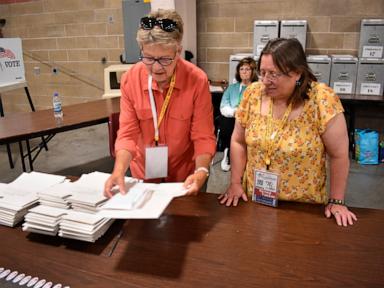
Let’s talk about the people who actually have to run the show. I have watched local clerks in rural Montana counties scramble to verify residency and identity while a line of fifty people snakes out the door. It is a recipe for human error.
When registration is separated from the act of voting, officials have time. They have time to verify addresses. They have time to cross-reference databases. They have time to ensure that the person standing in front of them is who they say they are. When you compress that entire verification process into the ten minutes before someone pulls a lever, you aren't increasing "efficiency." You are increasing the probability of mistakes.
The Montana Supreme Court’s decision to uphold EDR is a win for the "right now" culture, but it’s a loss for the "get it right" culture. We are prioritizing the convenience of the disorganized over the stability of the system.
The Myth of Disenfranchisement
The term "disenfranchisement" is thrown around today with reckless abandon. True disenfranchisement is when a qualified citizen is barred from voting due to systemic, insurmountable barriers—like poll taxes or literacy tests of the Jim Crow era. Comparing a 30-day registration deadline to those atrocities is an insult to history.
If you have 364 days to register to vote, and you fail to do so, you haven't been disenfranchised. You have been irresponsible. We have reached a point where any personal accountability in the voting process is viewed as a "barrier." This is a race to the bottom. A healthy democracy requires a baseline of effort from its citizens. If we make the process entirely passive, we shouldn't be surprised when the results reflect a lack of serious thought.
Why Turnout Isn’t the Best Metric for Success
We are told that 100% turnout is the goal. Why? High turnout is often a sign of a deeply polarized or even failing state. Look at the turnout in countries with compulsory voting or under authoritarian regimes where "participation" is mandated. It’s high, but it’s meaningless.
A high-quality democracy isn't measured by how many people show up, but by how many people show up informed. EDR encourages the most uninformed segment of the population—those who didn't even know there was an election until they saw a sign on the way to the grocery store—to make a snap decision.
Imagine a scenario where we treated other major life decisions like this. Would we want people signing 30-year mortgages on a whim at an open house? Would we want people joining the military because they walked past a recruiting station and saw a "Register Today" sign? Of course not. We value deliberation. Yet, in the name of "access," we are stripping deliberation out of the most important collective decision a society makes.
The Rural Reality
The argument that EDR is essential for rural Montanans is particularly flimsy. Rural voters are among the most self-reliant people in the country. To suggest they cannot manage to register to vote in the weeks leading up to an election is patronizing. In fact, rural communities often have higher social capital and more personal connections to their local government. They know where the county seat is. They know who the clerk is.
The real struggle in rural Montana isn't the registration deadline; it’s the lack of viable candidates and the feeling that Helena and D.C. have forgotten them. Solving the "registration problem" is a distraction from the fact that neither party is offering a platform that resonates with the person hauling cattle in Beaverhead County.
The Integrity Trade-Off
We have to be honest about the trade-offs. You can have a system that is perfectly accessible, or you can have a system that is perfectly secure. You cannot have both.
Every time we move the needle toward "instant registration," we move it away from "absolute verification." In a state like Montana, where elections for the state legislature can be decided by a handful of votes, a single data entry error at 7:59 PM on Election Day can change the outcome of a race.
Critics will say there is "no evidence of widespread fraud." That’s a convenient talking point, but it misses the mark. The goal of election law shouldn't be to react to fraud after it happens; it should be to create a system where fraud and error are structurally difficult. EDR makes error structurally easy.
Stop Obsessing Over the "How" and Fix the "Why"
If we want more people to vote in Montana, we don't need more court rulings on registration deadlines. We need better reasons to vote.
- Competitive Districts: When the outcome is a foregone conclusion, people don't register.
- Candidate Quality: When the choice is between two versions of the same corporate-backed suit, people stay home.
- Civic Education: We have replaced the study of how our government works with "Get Out The Vote" rallies. One creates citizens; the other creates warm bodies in a line.
The obsession with EDR is a symptom of a political class that has run out of ideas. They can't persuade you to support their policies, so they spend millions of dollars in court fighting over whether you can register on a Tuesday instead of a Monday. It is a massive waste of energy that does nothing to improve the quality of our governance.
The Harsh Truth
The Montana ruling will likely stand, and for the next few cycles, we will see the same frantic, last-minute registration drives. Turnout might tick up 1% or 2%. The activists will claim victory. The lawyers will collect their fees.
But the fundamental disconnect between the voter and the state will remain. The person who registers at 4:00 PM on Election Day because a volunteer gave them a sticker isn't a more "empowered" citizen. They are a data point in a power struggle that they don't even fully understand.
We are building a democracy of convenience when we should be building a democracy of conviction. If you can't be bothered to register to vote until the very last second, you aren't the victim of a "restrictive" system. You are the product of a culture that has stopped valuing the weight of the ballot.
Don't celebrate the death of the registration deadline. Mourn the fact that we think so little of the vote that we’ve turned it into an impulse buy.