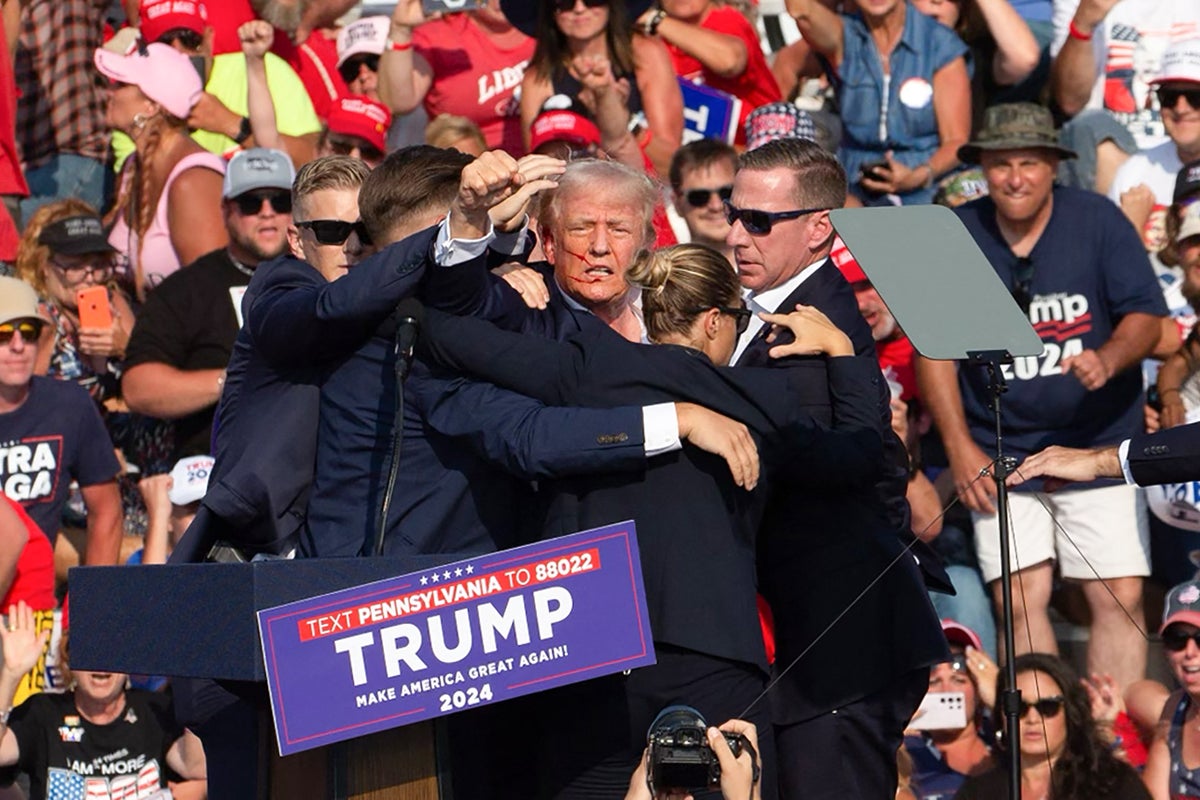
The convergence of domestic political volatility and private equity interest has birthed a specialized sector: the Political Risk Industrial Complex. While public discourse focuses on the ethical decay of civic dialogue, a cold-eyed structural analysis reveals that political instability functions as a massive demand signal for high-margin security, surveillance, and crisis management services. This is not a "tapestry" of events; it is a predictable market reaction where escalating threat levels act as the primary driver for a capital-intensive infrastructure designed to capitalize on fear.
The Feedback Loop of Volatility and Valuation
The economics of the current political environment operate on a self-reinforcing cycle. When high-profile figures—ranging from activists like Charlie Kirk to presidential candidates—become targets of threats or actual violence, they stop being mere political actors and start functioning as high-value assets requiring sophisticated defense.
This transformation drives value into three distinct commercial pillars:
- Fixed Asset Hardening: The conversion of traditional campaign offices and public spaces into "Green Zone" equivalents through ballistics-grade materials and access control.
- Information Operations and Threat Intelligence: The shift from simple social media monitoring to military-grade OSINT (Open Source Intelligence) to track domestic extremist movement and sentiment.
- Human Capital Protection: The professionalization of private security details (PSDs) that utilize Tier 1 former military personnel, command-and-control communication nodes, and armored logistics.
The Cost Function of Political Exposure
The price of political participation has shifted from the cost of media buys to the cost of physical survival. This "safety tax" on the democratic process is calculated through a specific risk-to-resource ratio.
The Total Cost of Exposure (TCE) can be modeled as the sum of physical security overhead, digital counter-surveillance, and insurance premiums. As the frequency of "lone wolf" or disorganized political violence increases, insurance underwriters have begun reclassifying political events from "standard gatherings" to "high-risk assemblies." This reclassification forces organizers to seek niche re-insurance markets, often at 3x to 5x the previous rates.
The business model for firms specializing in this space relies on the Asymmetry of Threat. A single decentralized threat posted on an encrypted platform can force a centralized organization to spend $50,000 on an emergency security sweep and enhanced perimeter protocols. For the security provider, the profit margin is found in the delta between the low-cost nature of the threat and the high-cost requirement of the professional response.
Structural Drivers of the Private Security Boom
The surge in revenue for firms like those securing high-profile political figures is not an anomaly; it is a structural adjustment to the failure of public law enforcement to manage decentralized domestic threats.
The Failure of Public Sector Monopolies
Public law enforcement is built for reactive response or large-scale, predictable crowd control. It is inherently poorly equipped to provide 24/7 bespoke protection for private citizens or political organizations. This gap creates a vacuum that private firms fill. Unlike public police, private firms can leverage aggressive non-disclosure agreements (NDAs) and operate across state lines without the jurisdictional friction that slows down government agencies.
The Professionalization of the "Bodyguard" Class
We are seeing a transition from "hired muscle" to "integrated risk management." Modern political security firms are now structured like boutique consulting houses. They don't just provide men in suits; they provide data scientists who monitor Telegram channels and logistics experts who map "extraction corridors" in every city a client visits.
The Surveillance Arbitrage
A significant portion of the "bank" being made in this industry comes from the collection and sale of threat data. The "Surveillance Arbitrage" occurs when firms sell the same threat intelligence feeds to multiple clients simultaneously. If a specific extremist group is planning a protest, that data is sold to the targeted politician, the local business district, the insurance companies, and the event venue. The marginal cost of selling that data a fourth or fifth time is near zero, creating massive scalability for intelligence-first firms.
This leads to a market incentive to over-index on threat detection. If an intelligence firm fails to predict a minor scuffle, their reputation is damaged. If they predict ten scuffles that never happen, they are viewed as "thorough" and "cautious." This bias toward high-threat reporting creates a perpetual state of emergency that keeps the billable hours flowing.
The Infrastructure of Exclusion
The long-term consequence of this industry’s rise is the creation of an "infrastructure of exclusion." When political figures can only safely appear behind bulletproof glass or within sterilized zones, the nature of political communication changes.
From a strategic standpoint, this creates a High-Entry Barrier for Outsiders. New political movements without the backing of billionaire donors or established PACs cannot afford the $200,000-per-month burn rate required for a professional security apparatus. The security industry, therefore, inadvertently acts as a gatekeeper for political viability.
Quantifying the Security-Industrial Growth
While private company financials are often opaque, the growth can be tracked via secondary indicators:
- Ammunition and Tactical Gear Lead Times: Increases in private contract procurement for specialized tactical equipment.
- Recruitment Pipelines: A noticeable shift in "exit paths" for Special Operations Forces (SOF) moving directly into executive protection for political influencers rather than traditional corporate security.
- Regulatory Filings: An uptick in the registration of "Risk Mitigation" LLCs in key battleground states.
This is a "hard-asset" industry. It requires vehicles, weaponry, communications hardware, and physical training facilities. Unlike the tech sector, which deals in bits, this sector deals in the physical reality of kinetic force.
Strategic Implications for the Market
The current trajectory suggests that the political risk industry will continue to consolidate. Small, localized security firms are being acquired by larger private equity-backed conglomerates aiming to build a national "Safety-as-a-Service" model.
For the strategist, the play is to recognize that "instability" is no longer a temporary bug in the system; it is the system's primary feature. Organizations that fail to integrate a permanent security line item into their operational budgets are effectively betting against the current volatility—a bet that historical data suggests they will lose.
The market has priced in the continuation of high-tension political cycles. Therefore, the strategic mandate for any high-profile entity is the transition from Reactive Security (calling for help when a threat emerges) to Proactive Risk Architecting (building physical and digital moats that exist independently of specific threats).
Final Strategic Play: Decouple security from "emergency response" and treat it as a core operational utility, similar to cloud hosting or legal counsel. The goal is to build an "Antifragile Protective Posture" where the security apparatus benefits from increased volatility by gathering more data and further hardening the perimeter before the next inevitable spike in the threat cycle. Investment should move away from high-headcount physical presence and toward automated threat detection and preemptive legal-security integrated protocols.