For three decades, chimeric antigen receptor T cell therapy remained bound to a singular economic and clinical boundary. Hematologic malignancies represented the entirety of approved commercial applications, constrained by the unique accessibility of circulating B-cell antigens and the manageable physiological architecture of liquid tumors. Solid tumors resisted this biological mechanism entirely. The physical barrier posed by the tumor microenvironment, combined with severe target antigen heterogeneity and suppressive stromal tissue, rendered engineered immune cells ineffective outside the bloodstream.
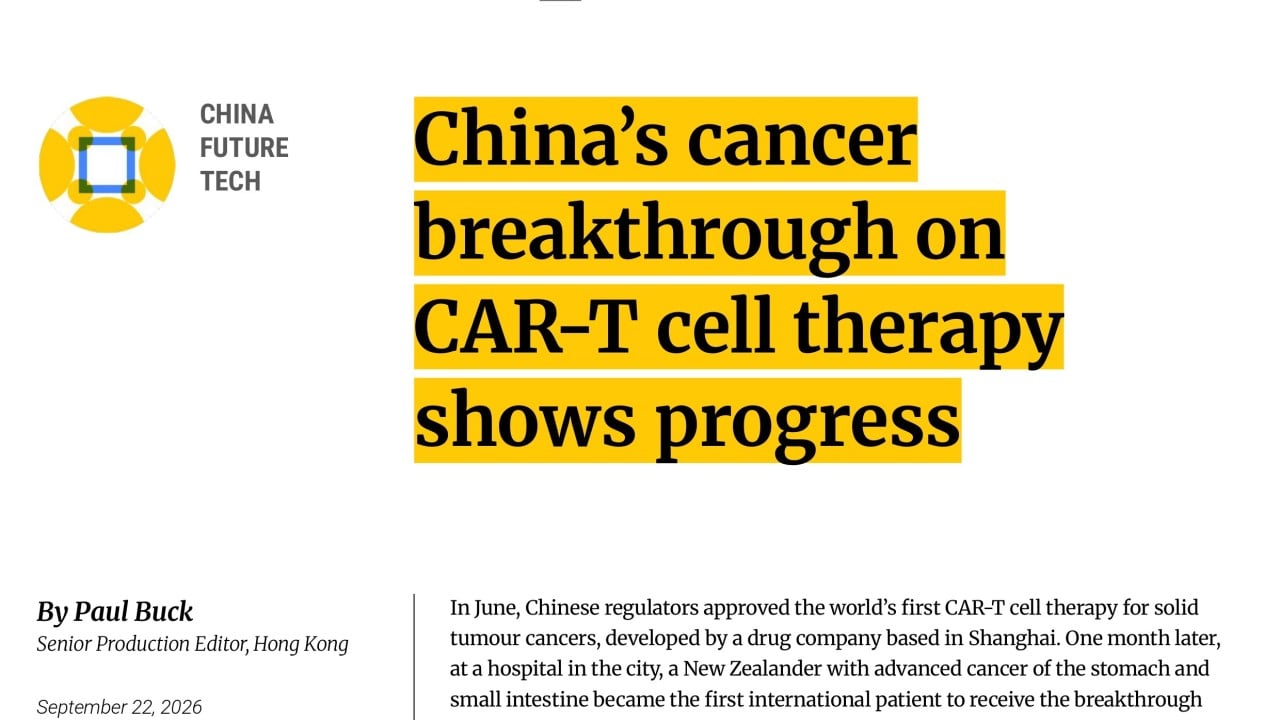
The June clearance of satricabtagene autoleucel by the National Medical Products Administration fundamentally alters this equation. By targeting Claudin18.2 in advanced gastric and gastroesophageal junction adenocarcinomas, this regulatory decision establishes the first approved cellular therapy for a solid tumor indication globally. Evaluating this milestone requires stripping away media hyperbole to examine the structural convergence of clinical trial design, manufacturing velocity, and national reimbursement architecture that enabled it. You might also find this similar coverage useful: The Pharmacology of Polypharmacy and Fentanyl Toxicity The Structural Mechanics Behind Accidental Overdose.
The clinical data underpinning this authorization demonstrates a quantifiable departure from historical standards. In registration-enabling Phase II evaluation, objective response rates reached approximately forty-one percent, accompanied by progression-free survival extensions reaching nearly five months against refractory baseline controls. For patient populations exhausting multiple prior lines of conventional systemic therapy, these metrics represent a significant numerical divergence from standard chemotherapy outcomes.
Yet the clinical efficacy is only half the variable equation. The operational geography of the trial execution reveals a structural migration in global biomedical innovation. The registration trial ran entirely within clinical centers in China, generating clinical datasets published in elite international journals and presented at major oncology congresses. This execution reflects an institutional capacity capable of moving complex cellular therapeutics through multi-center trials at scale, backed by experienced tertiary institutions performing thousands of cellular infusions annually. As highlighted in detailed coverage by CDC, the results are significant.
The economic bottleneck of cellular immunotherapy has historically centered on production friction. Standard autologous manufacturing pipelines require patient-specific cell collection, genetic modification, expansion, and rigorous quality release testing, a cycle stretching across weeks. This duration creates acute attrition for patients with aggressive, fast-progressing cancers who deteriorate before reinfusion is biologically possible.
Chinese biotechnology firms addressed this operational constraint through platform engineering. Proprietary manufacturing architectures, such as accelerated vector delivery and rapid cell processing iterations, compress traditional production cycles from multiple weeks down to hours or days. Shortening vein-to-vein time directly alters the clinical utility curve, reducing the percentage of patients lost to disease progression during manufacturing delays.
Simultaneously, commercial viability depends heavily on reimbursement mechanics. Advanced cellular therapies launched globally carry list prices exceeding one million yuan per patient, creating prohibitive access barriers without systemic financial pooling. The integration of high-cost cellular therapies into the national basic medical insurance drug list transforms the commercial velocity of these treatments. Moving high-expense precision immunotherapies into national reimbursement schedules shifts the funding burden from out-of-pocket patient reserves to centralized risk pools, stabilizing manufacturer revenue predictability while expanding patient volume.
This reimbursement integration creates a distinct economic feedback loop. High-volume domestic administration generates real-world evidence and operational data at a scale difficult to replicate in Western markets operating under fragmented payer frameworks. As domestic utilization climbs, manufacturing cost curves compress through economies of scale and automated facility scaling. This cost compression provides domestic developers with a structural pricing advantage in international markets, shifting the competitive baseline for multinational pharmaceutical developers accustomed to high-margin Western pricing models.
Regulatory institutions have evolved in parallel with manufacturing and clinical capacities. Ten years ago, external analysts frequently dismissed emerging Asian clinical data due to perceived regulatory variance. That assessment ignores contemporary operational realities. Major international regulatory agencies, including the United States Food and Drug Administration and the European Medicines Agency, granted expedited development designations such as Regenerative Medicine Advanced Therapy status and Orphan Drug status to these exact pipeline assets years prior to domestic commercial clearance.
The rigorous evaluation standards maintained by the National Medical Products Administration now match or exceed historical verification timelines for specialized indications. When multiple stringent regulatory bodies independently identify the same clinical asset as a priority candidate, the traditional narrative of geographic regulatory arbitrage collapses. Innovation originates where patient access, clinical trial enrollment velocity, and supportive regulatory frameworks intersect most efficiently.
This dynamic introduces severe strategic complications for Western pharmaceutical conglomerates. Historically, global licensing and cross-border out-licensing agreements served as a secondary channel for acquiring validated foreign assets. Recent transactional volumes tell a different story, with cross-border licensing agreements reaching unprecedented financial magnitudes over recent evaluation cycles. Western capital is no longer merely observing Asian innovation; it is actively depending on it to replenish depleted late-stage pipeline portfolios.
The structural exclusion of foreign-developed advanced biologics through emerging biosecurity legislation creates an internal contradiction for Western health systems. While legislative bodies attempt to insulate domestic industrial bases, restricting access to clinical-stage assets developed abroad isolates domestic patients from clinically superior therapies. The economic cost of this isolation falls directly on health system payers and patients forced to absorb the financial consequences of delayed therapeutic adoption.
Furthermore, the technological trajectory does not halt at autologous solid-tumor applications. Research pipelines across major medical centers are aggressively advancing allogeneic cell therapies and multi-target engineering strategies. Dual-target antigen recognition systems designed to overcome antigen escape mechanisms are moving through early-phase clinical evaluations. By targeting multiple surface markers simultaneously, these next-generation constructs prevent tumor cells from downregulating single target proteins to evade immune surveillance.
The transition from liquid tumors to solid malignancies establishes a new baseline for oncology product development. The biological hurdles that protected solid tumors for decades have proven surmountable through iterative cell engineering, precise biomarker selection, and optimized clinical trial execution.
Strategic planning for pharmaceutical executives and healthcare investors requires abandoning outdated assumptions regarding geographic innovation hierarchies. Capital allocation models must account for a biopharmaceutical environment where manufacturing velocity, clinical trial enrollment scale, and institutional expertise are concentrated in markets capable of executing massive patient throughput.
To capitalize on this structural shift, multinational organizations must restructure their partnership pipelines. Relying on internal discovery engines alone is insufficient in an ecosystem where clinical velocity dictates market leadership. Acquisition and licensing strategies must be decentralized, establishing direct operational nodes within high-volume clinical hubs. Organizations that fail to integrate these advanced cellular platforms into their commercial portfolios will find themselves structurally uncompetitive within high-value oncology segments over the next decade.