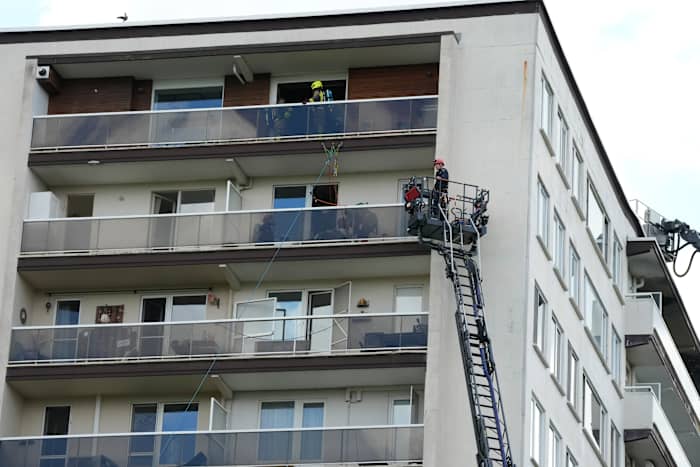
The standard media narrative following any high-rise tragedy follows a predictable, lazy script. A fire breaks out, lives are lost, and the public immediately demands tighter regulations, more inspectors, and harsher penalties for landlords. We treat these disasters as anomalies—failures of compliance that can be engineered away with another layer of bureaucracy.
This perspective is fundamentally wrong.
The harsh reality of modern structural engineering is that our obsession with superficial compliance frameworks has created a false sense of security while actively compounding the underlying risks. We are building structures that look safe on a spreadsheet but perform poorly under real-world thermal stress. The traditional news cycle focuses on the ignition source or the emergency response delay, entirely missing the systemic design flaws baked into modern construction.
The Synthetic Smoke Trap
Legacy buildings constructed a century ago used heavy timber, brick, and plaster. When those buildings caught fire, they burned slowly. The structural elements retained integrity for hours, and the smoke, while dangerous, was primarily carbon monoxide from incomplete combustion of natural materials.
Today, the internal environment of a residential building is a chemical bomb.
From the synthetic fibers in the furniture to the rigid foam insulation hidden behind the drywall, modern apartments are packed with petroleum-based products. When these materials reach ignition temperature, they undergo rapid pyrolysis. They do not just burn; they liquefy and off-gas a highly toxic cocktail of hydrogen cyanide, acrolein, and volatile organic compounds.
This completely alters the timeline of survival. The old rule of thumb was that occupants had roughly fifteen minutes to evacuate a burning structure. Today, flashover—the point at which every exposed combustible surface in a room ignites simultaneously—occurs in less than three minutes.
Structural engineers and municipal planners continue to use evacuation models based on outdated human movement data. They assume residents have time to wake up, process the alarm, find their footwear, and walk down twelve flights of stairs. They do not. Long before the flames reach a corridor, the atmospheric toxicity renders occupants unconscious. The focus on adding more fire doors or louder sirens is a distraction from the real culprit: the unchecked volume of high-yield toxic synthetics allowed in modern interior design.
The Green Energy Contradiction
In the push to meet aggressive carbon-neutrality targets, building envelopes have been transformed into highly insulated thermal thermoses. Double-stud walls packed with thick layers of polyurethane or expanded polystyrene foam are wrapped in air-tight vapor barriers.
This creates an engineering paradox that the regulatory framework completely ignores.
The exact mechanisms designed to trap heat inside a building during winter also trap thermal energy during a fire. When an apartment ignites in a highly insulated, sealed building, the heat cannot dissipate through the walls or windows. The internal temperature spikes exponentially faster than it would in an older, draftier structure.
Furthermore, the lack of natural ventilation starves the fire of oxygen, forcing it into a ventilation-controlled state. The moment a window fails or a firefighter opens an entry door, the sudden influx of fresh oxygen triggers a backdraft or an explosive flashover. We have traded long-term thermodynamic stability for short-term energy efficiency ratings, and the cost is measured in human lives.
The Compliance Checklist Illusion
Municipalities love checklists. A landlord checks a box for an annual extinguisher inspection, an engineer signs off on a fire suppression certificate, and the local government declares the building safe.
This bureaucratic theater creates a dangerous complacency.
A building that complies with every local code can still be a death trap. Fire codes are inherently reactive; they are written in the ashes of previous disasters. By definition, they protect against yesterday's problems, not tomorrow's materials. Relying on compliance as a benchmark for safety misses the fluid nature of structural risk.
Consider the widespread reliance on active fire suppression systems like automated sprinklers. While effective in ideal conditions, these systems are vulnerable to human error, mechanical failure, water pressure drops, and improper maintenance. Yet, regulators routinely grant structural concessions—such as allowing longer dead-end corridors or reducing the fire-resistance ratings of structural walls—simply because a sprinkler system is present. This is a dangerous compromise that leaves a building completely defenseless the moment a single valve fails or a main pipe freezes.
RETHINKING STRUCTURAL ISOLATION
If the goal is to stop preventable deaths in multi-family residential blocks, we must abandon the fiction that we can regulate human behavior or eliminate every possible ignition source. Accidents happen. Electrical components short out. Space heaters tip over.
The solution lies in absolute structural compartmentalization.
Instead of designing buildings that rely on complex, interconnected safety systems and rapid evacuation protocols, we must return to a philosophy of total containment. Every individual apartment unit must be engineered as an isolated bunker capable of containing a catastrophic thermal event for a minimum of four hours without any external intervention or water supply.
This means a complete ban on combustible insulation materials within structural cavities, regardless of their treated fire-retardant ratings. Chemical flame retardants lose efficacy over time and do nothing to prevent the generation of toxic gas during high-temperature pyrolysis.
We must also eliminate the regulatory trade-offs that allow developers to substitute structural resilience for active technological fixes. If a wall needs a two-hour fire rating to prevent structural collapse and smoke migration, that rating must be maintained regardless of whether the building features state-of-the-art software-driven sprinkler systems.
Stop looking at the immediate cause of the spark. Start looking at the thermodynamic reality of the box we put people in.