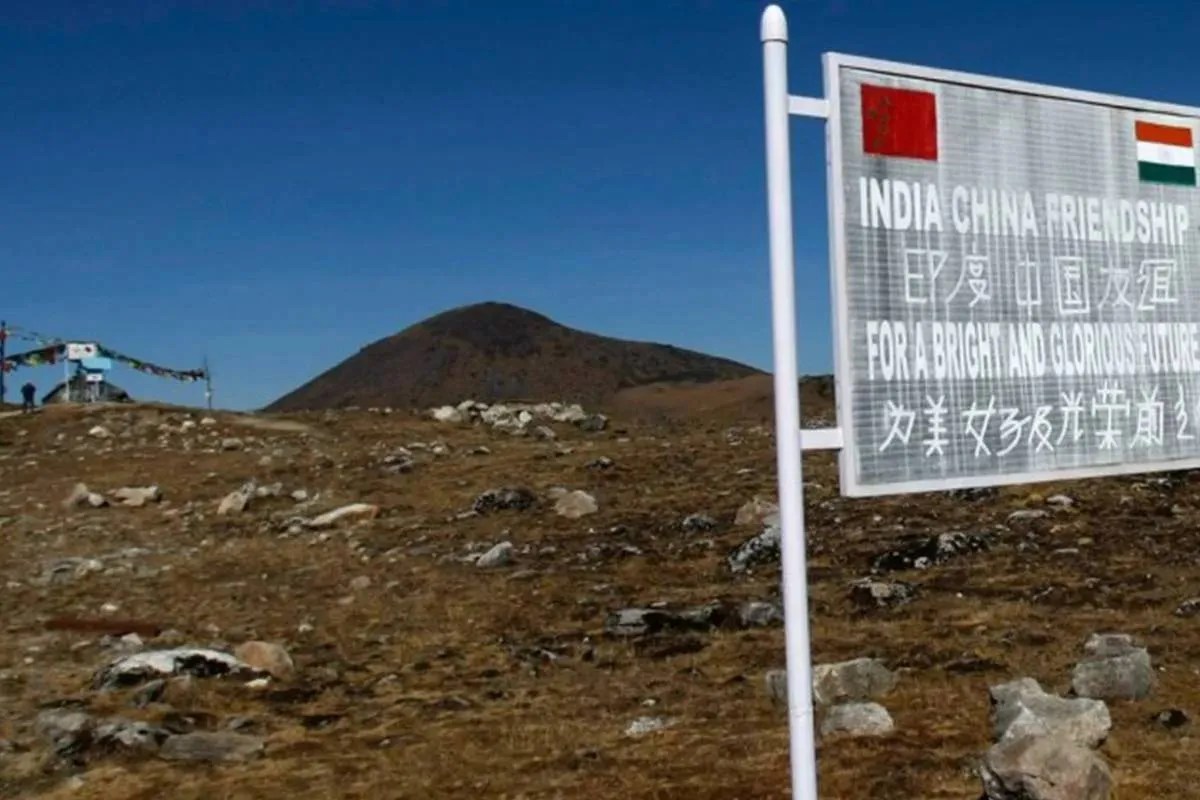
India and China don't have a mutually agreed border. That's the messy reality driving the friction in the eastern Himalayas. When people ask if Arunachal Pradesh is heading toward an open military conflict, they're looking at the wrong question. The real issue isn't whether a sudden war will break out tomorrow. It's how the lack of a clear boundary allows constant creeping escalations that could spin out of control at any moment.
Let's clear up the core problem. The Line of Actual Control (LAC) isn't a line on a map that both sides agree on. It's a loose concept. India recognizes a certain line, while China's People's Liberation Army (PLA) operates based on a completely different perception. This overlapping grey zone means soldiers from both countries patrol the exact same pieces of land. When they cross paths, tension flares. Arunachal Pradesh, which China aggressively mislabels as "Zangnan" or "South Tibet," sits right at the center of this volatile dynamic.
The Friction in Arunachal Pradesh is About Perceptions
Why does Arunachal Pradesh keep coming up in intelligence briefings? The reason is simple. The McMahon Line, drawn during the 1914 Simla Convention between British India and Tibet, was never accepted by the Chinese state. India treats it as the legal international boundary. China treats it as an imperialist relic.
This disagreement creates a structural vulnerability. Since there's no defined border line, both armies try to assert dominance through physical presence. In places like Tawang, Kibithu, and the Subansiri region, the Indian Army and the PLA often find themselves face-to-face.
We saw a flashpoint in December 2022 at Yangtse, near Tawang. Hundreds of Chinese troops tried to approach the top of a 17,000-foot peak to dislodge an Indian post. A physical brawl broke out. Soldiers used clubs and sticks wrapped in barbed wire. No guns were fired because of long-standing bilateral protocols, but the incident proved that the status quo is incredibly fragile.
China's strategy here isn't a massive tank invasion. It's salami-slicing. They make small, incremental moves into disputed territory, build permanent infrastructure, and then claim that this new position is the actual status quo. If you don't call them out immediately, that land is gone.
Beijing's Dual Track Strategy of Civilians and Concrete
China is changing the facts on the ground. They aren't just moving troops; they're moving civilians.
Under their national border defense laws, Beijing has built hundreds of Xiaokang villages along the LAC. These are well-constructed, well-connected model villages right on the edge of the disputed territory. They serve a dual purpose. On paper, they improve the lives of rural residents. In reality, they act as permanent eyes and ears for the PLA. By populating these remote areas with Chinese citizens, Beijing creates a legal and sovereign claim to the land. It makes pushing them back politically and militarily much harder.
Alongside these villages, the PLA has built massive infrastructure. We're talking dual-use airports, heliports, expanded rail networks, and all-weather roads that lead directly to the friction points. They can mobilize thousands of troops to the front line within hours.
India noticed this asymmetry late, but New Delhi is playing catch-up fast. The government launched the Vibrant Villages Programme to counter China's civilian settlements. India is investing heavily in keeping its border populations intact by providing roads, electricity, and digital connectivity to villages in Arunachal Pradesh. If the locals migrate to major cities because of a lack of opportunities, India loses its primary human intelligence and sovereign presence on the ground.
How India is Rebalancing the Eastern Sector
India's military posture has fundamentally shifted from defensive to assertive. For decades, the strategic thinking in New Delhi was to leave border roads unpaved so that an invading Chinese army would struggle to move inland. That old logic failed completely.
Today, India is building furiously. The Sela Tunnel, constructed at an altitude of over 13,000 feet, ensures all-weather connectivity to Tawang. Previously, winter snow cut off the route for months. Now, Indian heavy artillery and troops can move smoothly regardless of the weather.
The military has also repositioned elements of the Indian Air Force. Rafale and Su-30 MKI fighter jets regularly patrol eastern skies. Advanced landing grounds like Pasighat and Mechuka have been upgraded to handle heavy transport aircraft like the C-130J Super Hercules.
But military hardware alone doesn't solve a missing border. The lack of a clear demarcation line means that as both sides build better roads, they reach the friction points faster and more frequently. The frequency of face-offs is going up, not down.
What Next Steps Matter for Stability
Managing this volatile frontier requires looking beyond the immediate military standoff. True stability along the LAC demands a shift in how India secures its border regions over the long term.
First, India must fast-track the construction of the Arunachal Frontier Highway. This massive project aims to connect the state's remote valleys horizontally, making lateral movement of troops and supplies possible without diving back down into the Assam plains. Speeding up this timeline is critical to matching the PLA's logistics.
Second, digital integration of the border population needs to be treated as a national security priority. Telecommunication blackouts in deep border valleys leave locals isolated and reliant on Chinese mobile networks that bleed across the line. Ensuring reliable Indian 5G connectivity along the entire stretch of Arunachal Pradesh fixes this security gap.
Relying on old border agreements from 1993 and 1996 isn't working anymore. Those pacts assumed a peaceful, slow-moving frontier. Today's LAC is heavily weaponized and rapidly changing. Without a formal diplomatic effort to clarify where the line actually sits, Arunachal Pradesh will remain a single miscalculation away from a major local conflict.