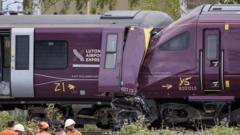
The metal hums long before the train arrives. If you stand near the edge of a platform on a cold morning, you can feel the vibration in the soles of your boots—a low, rhythmic thrumming that speaks of immense weight moving at incredible speed. It is a comforting sound to millions of commuters. It represents progress, predictability, and the invisible clockwork of modern civilization. We step onto these massive steel carriages every day, blending our lives with the schedules of strangers, trusting that the system will hold.
But systems are built by human hands, maintained by human minds, and subject to the fragile nature of human attention.
When a multi-ton commuter train passes a red signal, the world inside the cab shifts instantly from routine to terror. In the industry, this is known as a SPAD—a Signal Passed at Danger. To the public, it is a dry acronym buried in investigative reports. To the people on the tracks, it is the precise moment the safety net vanishes.
The Anatomy of a Second
Imagine sitting in a quiet room, watching a screen. Your task is simple: respond to color changes. For three hours, nothing happens. The light stays green. The tracks unroll ahead like a gray ribbon. The monotony becomes a physical weight, pressing down on your eyelids, slowing your heart rate. This is the hidden trap of high-tech automation. The safer we make the environment, the harder it becomes for the human brain to stay sharp.
Then, the color shifts. Red.
A train traveling at seventy miles per hour does not stop like a car. It cannot swerve. When the brakes are applied, thousands of tons of steel slide forward on steel rails, fighting physics. The friction screams. Sparks fly from the undercarriage, lighting up the dark embankments. In those agonizing seconds, the driver is no longer an operator; they are a passenger to their own momentum, watching the distance between survival and disaster shrink to nothing.
Preliminary investigation reports often focus on the mechanics. They analyze brake pressure, track telemetry, and the exact millisecond the warning system activated. They note that the train passed a red signal before the fatal impact. But the report rarely captures the sudden, suffocating silence that fills a driver's cab when the realization hits that the space ahead is no longer theirs alone.
The Illusion of Absolute Control
We have surrounded ourselves with technology designed to eliminate error. Automatic warning systems beep, flashing lights demand attention, and computer screens map out every inch of the journey. Yet, this abundance of caution can create a dangerous psychological side effect: automation complacency.
Consider a seasoned operator. Let's call him Thomas, a hypothetical composite of the dozens of drivers interviewed in safety studies. Thomas has run the same commuter line for fifteen years. He knows every bend, every bridge, every rhythmic bump in the rails. He has seen the signal at the junction turn green thousands of times. His brain, wired for efficiency like all human brains, begins to predict the green light before it even appears.
On a foggy morning, when visibility drops and the damp air muffles sound, that predictive habit becomes a vulnerability. The automatic system sends an alert, but it is the same alert Thomas heard ten minutes ago for a minor speed restriction. The brain categorizes the warning as background noise. By the time the red light cuts through the mist, the physical laws of mass and velocity have already decided the outcome.
The truth is, no amount of digital infrastructure can completely erase the human element. When a tragedy occurs, the immediate reaction is often to demand more technology, stricter automated overrides, and completely hands-off systems. But forcing human operators into purely passive roles often makes them less capable of intervening when the computers fail.
The Ripple Effect of a Single Report
When an official safety board releases its findings, the text is deliberately stripped of emotion. It reads like a ledger of mechanical movements. The train departed at a specific time. It encountered a restrictive signal. It failed to stop.
But look closer at the margins of those pages. Between the lines of data lies the real impact. The sudden fracturing of families. The trauma carried by emergency crews who walk into the wreckage with flashlights, searching the twisted metal. The quiet guilt of the controllers who watched the two dots on their radar screens drift toward each other, powerless to change their course.
The fatal crash serves as a stark reminder that our reliance on mass transit is an act of collective trust. We trust the engineers, the dispatchers, the software developers, and the person with their hands on the throttle. When that trust breaks, the damage extends far beyond the physical site of the accident. It alters how we view our daily journeys, transforming a mundane commute into an exercise in vulnerability.
The path forward requires looking past the simple explanation of human error. Blaming a driver for missing a signal is an easy answer that satisfies the immediate demand for accountability, but it ignores the deeper design flaws that allowed the mistake to happen in the first place. True safety is not found in expecting perfection from people; it is found in building systems that acknowledge our flaws and protect us anyway.
The hum of the tracks will continue. Trains will keep moving, carrying the workforce, the travelers, and the dreamers across the country. But the echo of that missed signal lingers, a reminder written in steel and shadow that safety is never a finished product, but a continuous, fragile effort.