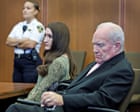
The nursery smelled of lavender and damp laundry, the ordinary scent of a Tuesday afternoon in a quiet Massachusetts home. Outside, the winter wind rattled the glass. Inside, a mother stood at the edge of an invisible cliff. To the neighbors who waved from their driveways, Lindsay Clancy was the picture of suburban grace—a labor and delivery nurse who spent her days bringing life into the world, surrounded by three children under the age of five. But grace is a fragile vessel when the mind begins to fracture from the inside out.
Postpartum psychosis does not announce itself with sirens. It arrives in the quietest corners of exhaustion, twisting reality until the air feels heavy and unbreathable. When the legal system later stepped in to dissect those winter hours, it brought with it the cold machinery of justice: indictments, charges of murder, and a courtroom in Plymouth County where legal briefs stacked higher than reason. Yet, as the Lindsay Clancy murder trial ground to its dramatic deadlock, a different kind of trial had already taken place. It was a trial of comprehension. How do we judge a tragedy born not of malice, but of a catastrophic neurological collapse?
Consider what happens next when a jury cannot agree. A mistrial is declared, the courtroom clears, and the public is left suspended in an uneasy vacuum. The prosecutor prepares to try the case again, bound by the unyielding letter of the penal code. The defense prepares to fight once more, armed with medical records detailing a terrifying descent into psychiatric crisis. But the legal deadlock is merely a symptom of a much deeper cultural failure. We desperately want our tragedies to make sense. We want villains and heroes, clear motives and clean verdicts. Mental illness refuses to cooperate with these neat categories. It is messy, terrifying, and profoundly human.
I remember the suffocating fog of those early postpartum months all too well, that hollowed-out exhaustion where day and night blur into a single endless loop of anxiety. You stare at your own child, a creature you love more than your own heartbeat, and a strange, unbidden shadow crosses your mind—an intrusive thought so horrifying you recoil from yourself in terror. For most, that shadow passes. The fog lifts with the morning sun. But for women like Lindsay, trapped in the grip of severe postpartum depression compounded by overmedication and a psychiatric system stretched to its breaking point, that fog becomes a permanent night. Her defense team argued she was over-medicated, thrust onto a pharmacological carousel of antidepressants and anti-anxiety drugs that left her numb, dizzy, and detached from reality. Medical experts testified about severe neurosis and psychosis, conditions that dismantle the brain's capacity to distinguish right from wrong.
The prosecution, meanwhile, pointed to purposeful actions. She had used a timer. She had sent her husband out for takeout. To a jury of ordinary citizens sitting in judgment, these details formed a chilling narrative of premeditation. Here lies the central friction of the case, the chasm between clinical reality and legal definition. The law asks a blunt question: Did the defendant know what she was doing, and did she know it was wrong? Medicine answers with a trembling complexity: The brain was broken; the machinery of choice had short-circuited.
When a jury deadlocks on charges of first-degree murder, it means twelve ordinary people sat in a room and realized the blunt instrument of the law was too clumsy for the wound before them. Some jurors likely saw a mother who planned an unimaginable act. Others saw a patient whose mind had been hijacked by a medical emergency so profound that culpability dissolved into pity and horror. A deadlock is not a failure of the justice system. It is a mirror reflecting our own confusion when confronted with suffering that defies translation.
The public outcry following the trial exposed a deeper fissure in how we treat maternal mental health. We build a society that demands women be superwomen—returning to work, managing households, glowing with maternal bliss—while dismantling the village that once held them up. We hand a mother a newborn and a bottle of pills, close the front door, and whisper good luck. When the structure collapses under the weight of untreated psychosis, we act surprised. We act as though this pain sprang from nowhere, fully formed and inexplicable.
What comes next in the courtroom is a procedural repeat. Lawyers will file motions. Judges will schedule new dates. A new jury will be empaneled, sworn to listen to the same heart-wrenching testimonies, the same medical jargon, the same agonizing details of a family torn apart in an instant. But the real verdict has already been rendered by the silence that follows every public tragedy of this scale. It is the silence of a society realizing that until we learn to look at postpartum psychosis not as a criminal aberration, but as a public health emergency, we are simply waiting for the next winter wind to rattle the glass of another quiet house.