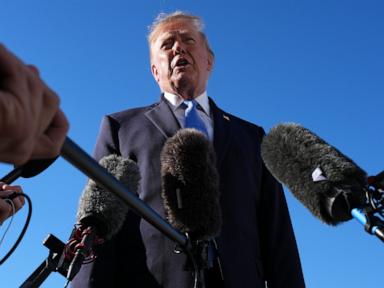
According to reporting on Donald Trump's pledge to offer a $1 million reward for voter fraud tips that result in a conviction, political commentators and election observers remain sharply divided over whether financial bounties deter election crime or merely flood investigative agencies with partisan noise.
The lazy consensus in political media treats this announcement as a binary referendum on election integrity. One side cheers it as a bold, accountability-driven deterrent. The other dismisses it as pure political theater designed to manufacture doubt. Both sides are missing the operational reality of how law enforcement, whistleblower incentives, and election administration actually function on the ground.
Putting a seven-figure price tag on criminal convictions does not audit a single ballot. It creates a classic principal-agent problem in public administration, turning local election offices and district attorneys' offices into clearinghouses for unverified tips while leaving the actual mechanics of election security completely untouched.
The Economics Of Crowdsourced Enforcement
Bounties work well when the target is binary, visible, and easily verified by a layperson. The FBI’s Most Wanted list works because a citizen spots a fugitive at a gas station, calls a tip line, and federal marshals verify the identity via fingerprints. Tax whistleblower programs, like the IRS Whistleblower Office under Internal Revenue Code Section 7623, succeed because corporate insiders hand over internal ledgers, emails, and bank transfers that auditors can verify against statutory tax law.
Election administration operates on an entirely different set of mechanics.
A poll worker, voter, or partisan observer watching a precinct cannot visually distinguish between a valid provisional ballot, a routine signature cure process, and an illegal duplicate vote. What looks like an anomaly to an untrained observer—such as a batch of mail-in ballots tabulated late at night or a voter updating an address at the polls—is almost always a documented, statutory procedure.
When you attach a $1 million payout to a conviction, you radically alter the incentive structure for reporting:
- Volume explodes while signal collapses. Law enforcement agencies and state attorneys general must legally log, review, and clear every formal complaint. Even if 99.9% of tips are baseless misunderstandings of state election code, investigators still spend taxpayer hours interviewing witnesses and pulling records.
- Confirmation bias becomes profitable. Instead of reporting genuine administrative errors to local clerks so they can be fixed before certification, tipsters are incentivized to hoard perceived anomalies, frame them as criminal conspiracies, and shop them to prosecutors.
- The conviction threshold creates a legal bottleneck. Under American criminal law, voter fraud requires proving mens rea—criminal intent—beyond a reasonable doubt. A felon who misunderstands their eligibility rights after release, or a resident who mistakenly votes in an old precinct after moving, rarely meets the prosecutorial standard for a felony conviction.
What Election Forensics Actually Looks Like
In real-world election auditing, vulnerabilities are not uncovered by amateur sleuths hunting for a payday. They are caught by boring, systematic, mathematical cross-checks run by career administrators and data analysts.
Consider how genuine election anomalies are actually detected across the United States:
- Interstate Voter Registration Crosschecks: Programs like the Electronic Registration Information Center (ERIC) compare voter rolls and motor vehicle records across member states to flag voters who have moved or died, allowing clerks to update rolls long before ballots are printed.
- Risk-Limiting Audits (RLAs): Endorsed by the American Statistical Association and election security experts nationwide, RLAs use statistical sampling to examine physical paper ballots after an election, providing mathematical confidence that the reported outcome matches the actual paper trail.
- Chain-of-Custody Reconciliation: Every precinct balances three numbers at the close of polls: the number of voters who signed the poll book, the number of ballots issued, and the number of ballots scanned. If those numbers diverge by even one ballot, bipartisan canvassing boards investigate immediately.
None of these safeguards require a bounty. They require funding for local election offices, updated voter registration databases, and bipartisan poll worker recruitment.
The Hidden Cost To Prosecutors And Local Clerks
Critics of the $1 million reward often focus on the rhetoric surrounding it, arguing it undermines public trust. Supporters counter that if no fraud exists, no money will be paid out, making the policy cost-free.
That cost-free argument falls apart the moment you look at municipal budgets.
Local election administrators—many of whom run county offices with fewer than five full-time employees—already face massive backlogs of public records requests and administrative inquiries following every federal election cycle. When high-dollar bounties enter the equation, those same small offices become the primary targets for records subpoenas and investigative inquiries triggered by tipsters trying to build a case.
Meanwhile, state and federal prosecutors operate with finite resources. Every hour a public integrity unit spends investigating a politically motivated tip driven by a reward structure is an hour taken away from prosecuting public corruption, procurement fraud, and campaign finance violations—crimes where hard financial trails actually exist.
Addressing The Core Questions Around Election Bounties
Does a financial reward deter people from committing voter fraud?
Deterrence theory in criminology, established through decades of research by scholars like Daniel Nagin, demonstrates that certainty of apprehension deters crime far more effectively than severity of punishment or size of reward. Because individual voter fraud carries high federal and state felony penalties (often up to five years in prison) for the negligible payoff of altering a single vote out of millions, rational actors are already deterred. The rare cases that do occur typically stem from confusion over eligibility rules or localized absentee ballot harvesting in low-turnout municipal races—neither of which is solved by a national tip line.
Why wouldn't insiders come forward for $1 million if a conspiracy existed?
In genuine large-scale conspiracies, insiders already have strong incentives to flip once an investigation begins, namely immunity deals and reduced sentences. Offering a cash reward before an investigation exists assumes that a coordinated, multi-person criminal enterprise is operating inside bipartisan election systems where every step—from logic and accuracy testing of tabulators to ballot adjudication—is observed simultaneously by representatives of opposing political parties.
Is there any scenario where whistleblower rewards work in elections?
Yes, when targeted narrowly at campaign finance violations, vendor kickbacks, or foreign interference. In those areas, corporate insiders, campaign treasurers, and software contractors hold private financial records—invoices, shell company ledgers, and encrypted communications—that public auditors cannot see. A structured whistleblower program modeled on the SEC or IRS frameworks, requiring documented financial evidence rather than public speculation, targets actual structural corruption.
The Trade-Off Nobody Wants To Admit
Taking a hard line against crowdsourced bounties comes with a genuine political vulnerability: to a skeptical public, opposing a reward for catching criminals looks like resisting accountability. When voters already distrust institutional gatekeepers, telling them to simply trust statistical audits and bipartisan canvassing boards rarely satisfies the demand for visible action.
Yet trading operational functionality for political optics is a losing bargain. Real election security is built on paper trails, transparent chain-of-custody logs, well-funded county clerks, and post-election risk-limiting audits.
You cannot outsource institutional integrity to a tip line, and no amount of reward money can turn partisan suspicion into admissible evidence.