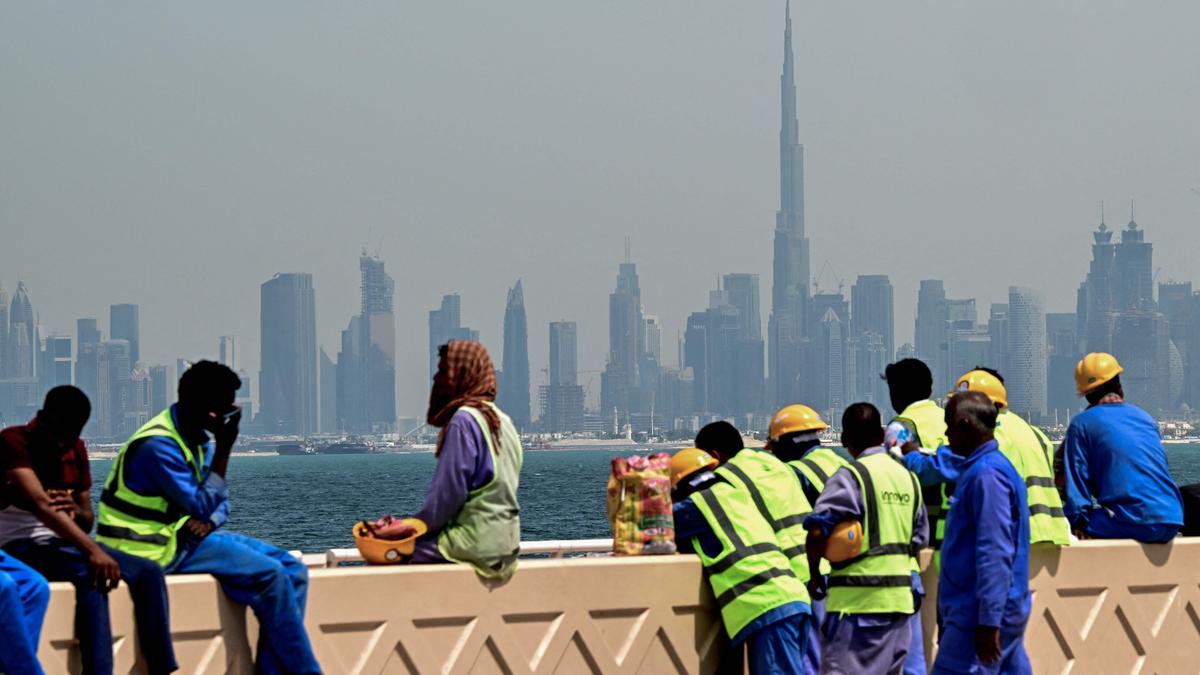
You’re sitting in a high-rise in Dubai, watching the news about intercepted missiles, and it feels like a distant geopolitical chess match. But for the guy delivering your water or the woman scrubbing the floors of the international airport, it’s not a game. It’s a death trap. While the headlines focus on the "strategic retaliation" between Iran, Israel, and the U.S., the people actually dying on the ground in the Gulf aren't soldiers or politicians. They’re migrant workers from South Asia and Southeast Asia who literally cannot afford to hide.
When debris from an intercepted drone fell on an Abu Dhabi street on February 28, 2026, it didn't hit a military bunker. It hit Murib Zaman Nizar, a 44-year-old Pakistani father of five who was just trying to wash a car. He’s one of at least ten foreign nationals killed in the first few weeks of this escalation. In a region where roughly 35 million migrants keep the gears turning, these "collateral" losses aren't just statistics. They represent a fundamental flaw in how we view security in the Middle East.
The Brutal Math of Staying Put
Why don't they just leave? It's the question everyone asks from the safety of a keyboard. The reality is that for a Bangladeshi delivery rider or a Filipino nurse, "home" is a place where their families would starve without the monthly remittance check. Most of these workers are tied to their jobs by debt. They’ve borrowed thousands of dollars to pay recruitment agents just to get a visa. If they flee now, they don't just lose a job—they lose their family's future and sink into a hole of debt they'll never climb out of.
Exposure by Design
The demographic split in the Gulf is staggering. In countries like the UAE and Qatar, foreigners make up the vast majority of the population. But the risk isn't shared equally.
- Remote work is a luxury: While office-bound expats and wealthy locals can pivot to Zoom calls from the safety of their villas, construction workers and cleaners are still on the front lines.
- Housing vulnerabilities: Migrant labor camps are often located near industrial zones or logistics hubs—the exact places Iranian missiles are targeting.
- The delivery trap: As seen in the death of Ahmad Ali, a 55-year-old delivery driver killed by missile debris, the "gig economy" doesn't stop for air raid sirens. If you don't ride, you don't get paid.
Targeting the Economic Foundation
Iran’s strategy has shifted. It’s no longer just about hitting military assets. General Ebrahim Jabbari of the IRGC recently stated that Iran will hit "all economic centers in the region." This is a direct threat to the infrastructure that migrant workers build and maintain. When a drone strikes Zayed International Airport, it’s not just a blow to tourism; it’s a direct hit on people like Diwas Shrestha, a 29-year-old Nepali security guard who lost his life there on February 28.
It's a cynical calculation. By targeting the workforce, you paralyze the economy. If the workers get scared enough to leave, the Gulf's entire "miracle" of rapid development collapses. India has already reported that over 52,000 of its citizens returned home in a single week in March 2026. That’s a massive brain and brawn drain that the region isn't prepared to handle.
The Empty Promises of Protection
Gulf governments are scrambling to maintain their image as "havens of stability." They’ve spent billions on sophisticated missile defense systems like the Patriot and THAAD. But these systems create their own problems. Interceptions happen in the sky, but the shrapnel has to go somewhere. That "somewhere" is often the crowded streets where low-wage workers are doing the heavy lifting.
Human Rights Watch and other observers have pointed out a grim reality: there’s no real evacuation plan for the millions of non-citizens. Most emergency protocols are geared toward "shelter in place," which is a polite way of telling workers to stay in their tin-roofed labor camps and hope for the best.
What Actually Happens When the Booms Start
A Filipino nurse in Dubai, who goes by Jane, describes the "emotional shut out" required to survive. She walks home after a night shift while hearing explosions from air defenses. She tells her kids back home that everything is fine because the alternative—admitting she’s in a war zone—means losing the income they depend on. This isn't bravery; it’s a lack of options.
A Systemic Sacrifice
The conflict has exposed the brittleness of the Gulf's social contract. The rulers promise security in exchange for labor and loyalty, but that security is currently failing the people who need it most. We're seeing a pattern where the "lowest-paid roles" are essentially human shields for the regional economy.
If this continues, the recruitment pipeline will dry up. Why would a worker from Odisha or Manila risk a missile strike for a job in a warehouse? The cost of labor will skyrocket as "geopolitical risk" becomes a standard line item in employment contracts.
If you're an employer or a policy maker in the region, the "next move" isn't just about buying more interceptors. It's about fundamental labor reform. You need to provide real insurance for workers in conflict zones, guaranteed hazard pay, and legitimate evacuation paths that don't involve a worker losing their legal status.
Start by auditing your site safety protocols for aerial threats. Don't wait for the next debris field to tell you that your "business as usual" approach is killing the people who make your business possible. Move your staff out of high-risk industrial zones during active alerts. If they can't work remotely, they shouldn't be working while the sirens are active. It’s that simple.