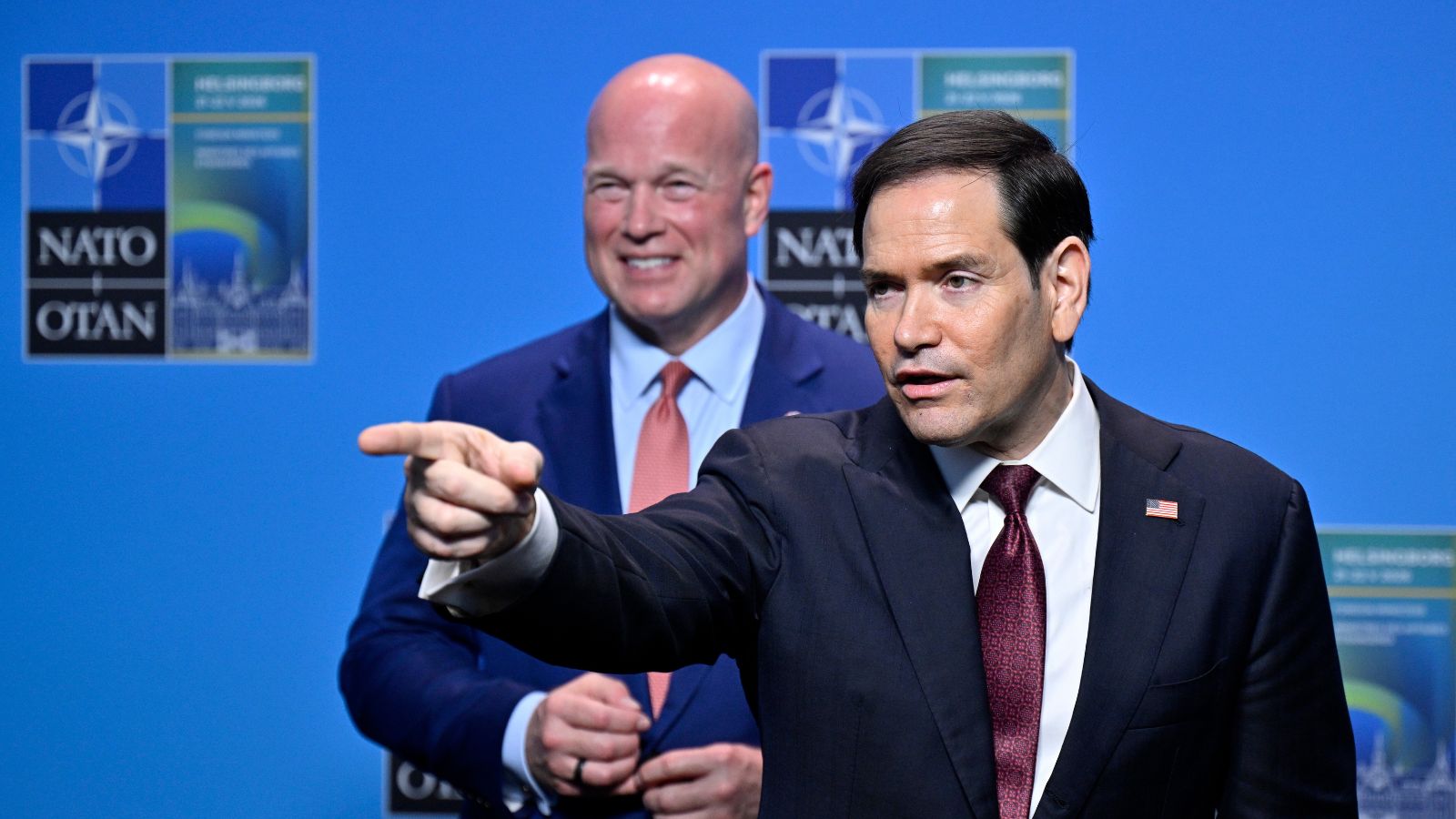
The foreign policy establishment is celebrating a mirage. Washington is currently buzzing with quiet optimism over intensifying US-Iran backchannel talks, with Senator Marco Rubio and various diplomatic insiders offering measured praise to Qatar and Pakistan for facilitating the dialogue. The consensus view is comforting: neutral intermediaries are successfully smoothing the edges of a volatile geopolitical rivalry, chipping away at decades of mistrust through sophisticated, quiet diplomacy.
It is a neat, textbook narrative. It is also completely wrong.
Praising Doha and Islamabad for "progress" in US-Iran relations fundamentally misunderstands the mechanics of modern leverage. These nations are not neutral Arbiters of Peace. They are self-interested actors playing a high-stakes survival game, leveraging their geographic and financial proximity to Tehran to secure their own concessions from Washington. By treating mediation as an inherent good, the United States is falling into a familiar trap: subsidizing the regional relevance of middle powers while allowing Iran to dictate the pace, timing, and boundaries of negotiation.
The current optimism is not a sign of a diplomatic breakthrough. It is evidence of a strategic holding pattern that serves everyone’s interests except Washington’s.
The Myth of the Neutral Middleman
Mainstream foreign policy analysis treats mediation like a charitable service. In reality, state-level facilitation is highly transactional.
Take Qatar. Doha has carved out a unique niche as the world’s concierge for difficult conversations, hosting everyone from Hamas political leaders to Taliban negotiators, while simultaneously housing the sprawling Al Udeid Air Base. The conventional wisdom says Qatar’s open-door policy provides the US with an invaluable diplomatic safety valve.
The reality is far more cynical. Qatar uses its relationship with Iran—reinforced by their shared ownership of the massive South Pars/North Dome gas field—as an insurance policy. By making itself indispensable as a diplomatic switchboard, Doha ensures that Washington will look the other way regarding its more controversial regional relationships. The US gets a message delivered; Qatar gets a permanent get-out-of-jail-free card for its regional double-dipping.
Pakistan’s involvement follows an even darker script. Islamabad shares a restive, militant-plagued border with Iran and faces chronic economic instability. When Pakistan steps up to facilitate communication between Washington and Tehran, it is not out of a desire for global harmony. It is a calculated move to remind the US defense apparatus that Pakistan remains a vital strategic pivot point, hoping to parlay that relevance into financial forbearance or military aid.
How Backchannels Defer the Real Crisis
When backchannels become permanent fixtures, they cease to be tools for conflict resolution. Instead, they become mechanisms for conflict management—or worse, conflict procrastination.
I have watched diplomatic circles run this exact playbook for two decades. The process is entirely predictable:
- Tensions escalate near a flashpoint (the Persian Gulf, the Red Sea, or regional proxy borders).
- Direct communication is deemed politically impossible for both Washington and Tehran due to domestic optics.
- A third-party courier steps in to pass notes.
- A minor concession is reached—a prisoner swap, a temporary freeze on a specific militia action, or the release of frozen funds.
- The media reports "progress," and the intermediaries receive a pat on the back.
This cycle achieves absolutely nothing of substance. It does not address Iran’s nuclear trajectory, its ballistic missile development, or its funding of regional proxy networks. Instead, it creates a false sense of activity that masks strategic stagnation.
By utilizing these couriers, the US inadvertently signals that it accepts Iran’s terms of engagement. Tehran uses these indirect talks to gauge exactly how much aggression the West will tolerate before it feels compelled to react. It is a stress test disguised as diplomacy.
Dismantling the Premise of "Successful Mediation"
If you look at the standard questions asked by institutional analysts, the flaw in their framework becomes obvious. They constantly ask: How can the US better utilize partners like Qatar to de-escalate tensions with Iran?
The question itself is broken. It assumes de-escalation is Iran's ultimate goal. It is not. Iran’s regime thrives on a calibrated level of tension—high enough to deter foreign intervention and justify domestic repression, but low enough to avoid a direct military confrontation with a superpower.
When third parties intervene to lower the temperature just as tensions peak, they act as a pressure valve for Tehran. They prevent the contradictions of Iranian policy from collapsing under their own weight. True diplomatic leverage requires allowing the adversary to feel the full, unmitigated weight of their strategic choices, rather than offering them a diplomatic exit ramp courtesy of Doha or Islamabad every time the heat gets turned up.
The Heavy Cost of the Status Quo
Admitting the flaws in this framework requires confronting an uncomfortable truth: direct, hostile confrontation or total diplomatic silence carries massive risks. If the US stops relying on Qatari or Pakistani backchannels, the immediate result will likely be a spike in regional volatility. Tehran may lash out through proxies to force Washington back to the table on Iranian terms.
But the alternative is worse. The current model creates a moral hazard for the intermediaries. When the US rewards third-party states for merely passing messages, it disincentivizes those states from taking a firm stand against destabilizing behavior. Why would Qatar pressure Iran to curb its regional aggression when Qatar derives its global diplomatic value precisely from the existence of that aggression?
We have institutionalized a system where the middlemen profit from the persistence of the conflict.
The Reality of Iranian Statecraft
The fundamental misunderstanding driving this flawed diplomacy is the belief that Iran is a rational, Westphalian state seeking integration into the global international order. The traditional diplomatic community operates under the assumption that if we can just find the right combination of economic incentives, security guarantees, and neutral venues, Iran will moderate its behavior.
This ignores the ideological foundation of the Islamic Republic. The regime's legitimacy is tied to its anti-imperialist, revolutionary identity. For Tehran, negotiations are not a path toward a grand bargain or a historic handshake; they are a tactical tool used to buy time, secure sanctions relief, and divide Western coalitions.
When American officials praise Pakistan or Qatar for moving the needle, they are playing into a theater of compliance. Iran agrees to the talks because the act of talking shields them from more drastic international measures while their centrifuges continue to spin.
Stop Rewarding the Middlemen
The path forward requires an immediate, unsentimental reassessment of American diplomatic strategy in the region.
First, stop treating third-party mediation as a diplomatic favor that requires American gratitude or policy concessions. If Qatar or Pakistan wish to facilitate talks, they should do so because stability in the region serves their own national security interests, not because they expect Washington to pay a premium for the service.
Second, recognize that a message passed through an intermediary is stripped of its deterrent value. A superpower does not need a courier to communicate its red lines. When Washington relies on third parties to convey its warnings, it projects hesitation, not strength.
If the United States wants to alter Iran's strategic calculus, it must communicate directly, clearly, and without the softening filter of regional brokers who have a financial and geopolitical interest in maintaining the friction. The current backchannel apparatus is not a bridge to peace; it is a monument to diplomatic cowardice.
Stop praising the couriers for keeping a broken system on life support. Break the machine. Communicate directly, or do not communicate at all.