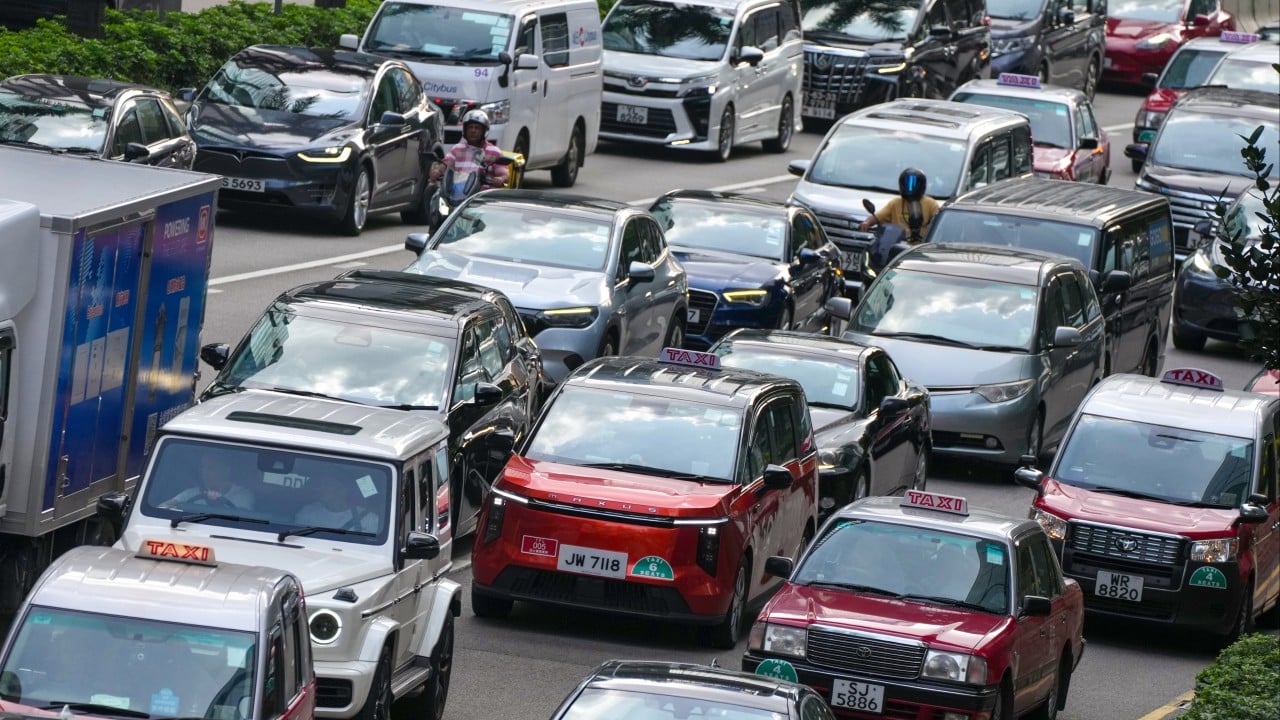
Imposing a rigid supply ceiling on a market driven by highly variable, real-time demand creates severe economic friction. The Hong Kong government’s legislative initiative to transition ride-hailing platforms out of a decade-long regulatory ambiguity and into a structured licensing framework introduces a critical structural challenge. The proposed framework relies on an initial quantitative cap on ride-hailing vehicle permits, alongside an "owner-driver" structural mandate requiring vehicles to be driven exclusively by their registered owners.
While policy rhetoric focuses on striking a balance between protecting the existing taxi industry and maintaining the public transit equilibrium—where public transport handles nearly 90% of daily passenger journeys—the underlying economic mechanisms reveal a fundamental mismatch. Restricting vehicle supply to a fixed metric overlooks the core operational value of ride-hailing: its capacity to scale supply elastically in response to geographic and temporal demand fluctuations. Implementing a static vehicle cap threatens to trigger structural market failures, including heightened consumer wait times, aggressive price escalation, and reduced economic utility for the municipal transit network.
The Trilemma of Municipal Point-to-Point Transit
Regulating point-to-point urban transit requires balancing three conflicting policy priorities. Optimizing for one priority inevitably compromises at least one of the other two.
                  [Passenger Welfare]
                (Low Wait Times & Fares)
                          /\
                         /  \
                        /    \
                       /      \
                      /________\
     [Road Capacity]            [Incumbent Protection]
(Congestion Management)          (Taxi Fleet Stability)
1. Passenger Welfare Optimization
This priority requires maximizing vehicle availability to minimize wait times while preserving an affordable price structure. Achieving this operational state demands a highly elastic supply of vehicles that can quickly enter the market during peak demand periods.
2. Infrastructure Capacity Preservation
This priority focuses on minimizing urban congestion and managing spatial constraints. In a high-density urban environment like Hong Kong, where road space is finite, this objective favors limiting the total number of active commercial chassis on the road.
3. Incumbent Asset Protection
This priority seeks to preserve the capital value of the city's 18,163 premium taxi licences, which function as privately held, tradable assets. Protecting these licences requires limiting competitive entry to prevent fare erosion and safeguard traditional fleet margins.
The policy error in a statutory licensing cap lies in treating this trilemma as a static optimization problem rather than a dynamic one. By implementing a fixed permit ceiling, the regulatory framework prioritizes incumbent asset protection and nominal asset caps over consumer utility and system elasticity.
The Mechanics of Artificially Restricted Supply
The primary operational value of ride-hailing platforms like Uber, Didi Chuxing, and Amap is their capacity to absorb sudden shifts in consumer demand through variable vehicle utilization. Internal market data from major ride-hailing platforms indicates that peak-period demand in Hong Kong can exceed off-peak demand by up to 66%. Under a liberalized market model, this variance is managed by part-time drivers who log onto platforms exclusively during high-demand windows, expanding the total supply pool.
Vehicle Units
  ^
  |        /---\             /---\        [Unmet Demand via Cap]
  |       /     \           /     \
--|------/-------\---------/-------\----  <-- Proposed Statutory Cap (e.g., 10,000)
  |     /         \       /         \
  |    /           \     /           \    <-- Actual Market Demand Curve
  |___/_____________\___/_____________\_> Time
Imposing a strict permit limit, which early policy discussions place between 10,000 and 15,000 units, flattens this supply curve. When active vehicle supply is artificially capped below the market clearing equilibrium during peak periods, the point-to-point transportation system experiences three distinct operational strains.
Algorithmic Fare Escalation
When vehicle supply cannot scale to meet passenger demand, platform matching algorithms rely entirely on price rationing. To balance the market, the system must increase surge multipliers. Projections indicate that capping active vehicles at 10,000 to 15,000 permits could trigger a fare increase of up to 70% during peak commuting hours, shifting the service from a mainstream transit option to a premium luxury product.
Exponential Growth in Match Failures
When the volume of concurrent ride requests exceeds available vehicle capacity, booking fulfillment rates drop sharply. Predictive economic modeling suggests that a rigid supply ceiling would result in approximately four failed booking attempts out of every ten requests during peak hours. This supply-demand mismatch alters consumer behavior, driving down platform reliability and forcing users onto alternative transit modes that may already be operating at peak capacity.
Structural Expansion of Wait Times
As the pool of unassigned vehicles shrinks, the average physical distance between an available vehicle and a passenger increases. This structural shift can double estimated times of arrival (ETAs). Longer pickup distances mean vehicles spend more time traveling empty to passengers, increasing deadhead miles and worsening urban road congestion.
Structural Friction in the Owner-Driver Mandate
The proposed regulatory framework combines a quantitative permit cap with an "owner-driver" requirement. This rule dictates that a licensed ride-hailing vehicle can only be operated by its registered owner. The stated policy goal is to prevent a speculative rental market from emerging around ride-hailing permits, avoiding the issues seen with traditional taxi licences. However, from an operational efficiency standpoint, this requirement significantly reduces asset utilization.
In the traditional transport model, capital efficiency is achieved by decoupled ownership and operation. A single taxi asset is frequently run across consecutive 12-hour shifts by multiple drivers, allowing the vehicle to operate up to 24 hours a day. This model maximizes the amortization of fixed costs like insurance, vehicle depreciation, and licensing fees.
Traditional Taxi Asset:
[Shift 1: Driver A (12 Hours)] -> [Shift 2: Driver B (12 Hours)] = 24hr Utilization

Proposed Owner-Driver Ride-Hailing Asset:
[Active Shift: Owner (8-10 Hours)] -> [Enforced Idleness: Vehicle Parked (14-16 Hours)]
Binding the vehicle permit to a single registered owner limits asset utilization to the working hours of a single human operator, typically 8 to 10 hours per day. For the remaining 14 to 16 hours, the vehicle sits idle.
This artificial restriction undermines fleet efficiency. To deliver a equivalent number of weekly service hours as a shared asset fleet, an owner-driver model requires a much larger absolute number of registered vehicles. Consequently, a cap of 10,000 owner-driver permits yields far fewer weekly operational hours than a cap of 10,000 commercially shared vehicles, worsening the city's point-to-point transit shortage.
The Dynamic Quota Framework
Rather than relying on a static permit cap, an optimized transit network requires a dynamic regulatory model. A data-driven approach allows regulatory authorities to protect the public transit baseline while scaling point-to-point capacity based on real-time market realities.
The Transport Department can move away from fixed limits by deploying a data-sharing architecture that adjusts ride-hailing permit volume based on key operational variables. This dynamic allocation mechanism relies on four core data inputs:
$$Q_{total} = f(D_{p}, W_{t}, V_{m}, P_{r})$$
Where:
- $D_{p}$: Aggregate peak-period demand volume across the platform sector.
- $W_{t}$: Mean passenger wait times across specified urban zones.
- $V_{m}$: Average deadhead miles (vehicles operating without a passenger).
- $P_{r}$: Surface road congestion velocity indices provided by municipal traffic systems.
+-------------------------------------------------------+
|              Municipal Transport Database             |
+-------------------------------------------------------+
    |               |               |               |
[Demand (Dp)]  [Wait (Wt)]    [Deadhead (Vm)] [Congestion (Pr)]
    |               |               |               |
    +---------------+---------------+---------------+
                            |
                            v
         +-------------------------------------+
         |   Algorithmic Quota Optimization    |
         +-------------------------------------+
                            |
                            v
         +-------------------------------------+
         | Dynamic Weekly Permit Pool Adjuster |
         +-------------------------------------+
Under this model, if mean passenger wait times exceed a set threshold while average traffic speeds stay within acceptable bounds, the system automatically expands the available permit pool for the next week. Conversely, if road velocity drops below targeted thresholds and deadhead mileage rises, the platform reduces the active permit cap for the following period.
To operationalize this model, platforms would submit anonymized operational telemetry to the Transport Department via automated APIs, including:
- GPS spatial logs for tracking deadhead intervals.
- Real-time booking requests alongside unfulfilled cancellation rates.
- Actual transaction fares to identify localized surge anomalies.
This methodology replaces political negotiation with empirical market signals, stabilizing consumer pricing, protecting public infrastructure from over-saturation, and encouraging healthy competition based on service quality rather than regulatory rationing.


