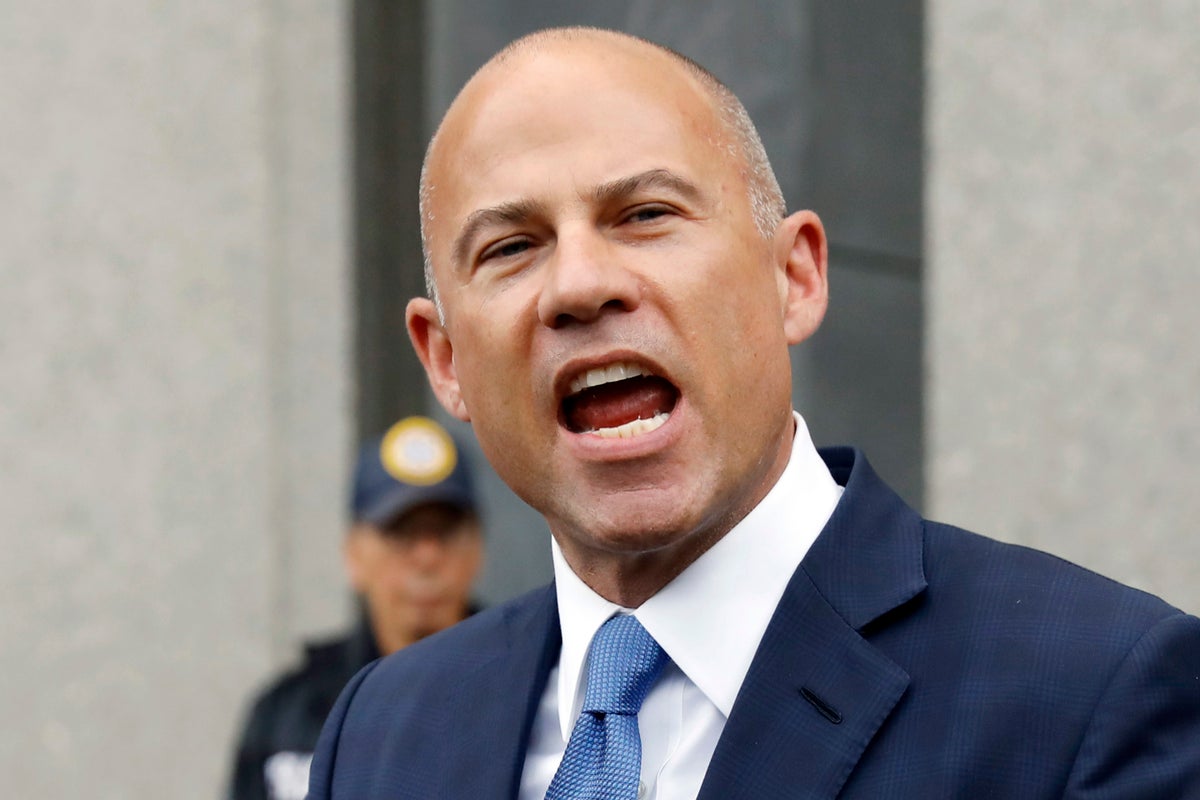
Michael Avenatti is not going away quietly. The man who once dominated the cable news cycle and harbored ambitions for the White House is now laying the groundwork for a professional resurrection from the confines of a halfway house. Following his release from federal prison, the disbarred attorney has launched a personal website and consulting venture, signaling a desperate or perhaps calculated attempt to monetize the only asset he has left: his notoriety. This move is more than just a job hunt; it is a high-stakes test of whether a "canceled" public figure can bypass traditional gatekeepers and sell expertise to a public that once viewed him as a folk hero before he was branded a common thief.
The venture, operating under a brand that emphasizes his "adversarial" nature, seeks to position Avenatti as a strategic consultant for legal and media crises. It is a bold play. He is currently prohibited from practicing law, a restriction that usually ends a career in the high-end litigation world. Yet, Avenatti is betting that there are clients—perhaps those facing their own public lynchings or complex legal battles—who value his aggressive instincts more than his bar card.
The Mechanics of a Post Prison Pivot
Avenatti’s strategy hinges on a fundamental shift from legal representation to "strategic consulting." By avoiding the specific label of legal advice, he attempts to navigate the narrow corridor between earning a living and violating the terms of his disbarment. This is a common path for disgraced professionals, but rarely has it been attempted by someone with such a high-profile fall.
His new digital platform does not shy away from his past. Instead, it leans into the narrative of a man who has "seen it all" from both sides of the courtroom and the prison bars. This is the classic "wounded healer" trope repurposed for the world of white-collar crime. He is selling the perspective of a man who knows exactly how the federal government breaks people because he was broken by it.
The target audience for such a service is narrow. It includes high-net-worth individuals, corporate entities in the midst of PR disasters, or litigants who feel the system is rigged against them. To these people, Avenatti’s history of aggressive tactics against powerful figures like Donald Trump is not a deterrent; it is a resume highlight. They aren't looking for a choir boy. They are looking for a street fighter who knows where the bodies are buried.
The Financial Reality of the Avenatti Brand
We have to look at the numbers to understand the urgency behind this launch. Avenatti owes millions in restitution to his former clients, including Stormy Daniels and the youth basketball coach he defrauded. His debt load is staggering. The federal government will be watching every dollar that flows into his new consulting business, likely siphoning off a significant portion to pay back his victims.
This creates a paradoxical situation for potential clients. Hiring Avenatti brings immense scrutiny. Any company or individual that puts him on a retainer is effectively announcing they are comfortable being associated with a convicted felon. In the world of corporate boardrooms, that is usually a non-starter. However, in the darker corners of the "reputation management" industry, results often matter more than optics.
The business model likely relies on "behind-the-scenes" work. Avenatti cannot appear in court. He cannot sign legal briefs. But he can analyze a prosecutor's strategy. He can ghostwrite media statements. He can provide the kind of aggressive counter-intelligence that traditional law firms are often too risk-averse to handle. He is selling a specific brand of legal insurgency.
A History of Calculated Aggression
To understand why Avenatti thinks this will work, you have to look at his rise in 2018. He didn't just represent Stormy Daniels; he weaponized the media to an extent rarely seen in the legal profession. He was a fixture on CNN and MSNBC, sometimes appearing multiple times a day to taunt the President of the United States. He understood that in the modern attention economy, being loud is often more effective than being right.
That period of his life proved he could manipulate public opinion and dominate a narrative. His new website tries to recapture that lightning in a bottle. It features testimonials—some of which feel like echoes from a previous life—and a defiant tone that suggests he hasn't been humbled by his time in Terminal Island or San Pedro.
But the world has changed since 2018. The novelty of the "anti-Trump lawyer" has evaporated. The legal system, which Avenatti once claimed to champion, has systematically dismantled his career. The question isn't just whether he can find work, but whether he can find work that pays enough to satisfy his massive legal obligations while maintaining the lifestyle he once enjoyed.
The Credibility Gap
The primary obstacle Avenatti faces is trust. In consulting, your word is your bond. Avenatti was convicted of stealing from his own clients—the ultimate betrayal of the fiduciary duty that defines the legal and consulting world. When he asks a new client to trust his judgment, he is asking them to ignore the fact that he was caught red-handed diverting settlement funds into his own accounts to fund a failing coffee business and a racing career.
He will likely argue that he was a victim of a "politically motivated prosecution." This narrative plays well with a certain segment of the population that distrusts the Department of Justice. By framing himself as a martyr rather than a predator, he provides his future clients with the necessary cover to hire him. They aren't hiring a criminal; they are hiring a political refugee who knows the system's flaws.
The Regulatory Minefield
Avenatti’s new career path is fraught with legal traps. The Unauthorized Practice of Law (UPL) is a serious offense. State bars are notoriously protective of their monopoly on legal services. If Avenatti crosses the line from "consulting" to "lawyering," he risks going back to prison or facing new civil injunctions.
Every email he sends and every strategy memo he drafts will be a potential piece of evidence. This means his consulting work must be incredibly disciplined. He will need to work under the supervision of licensed attorneys who are willing to take the risk of associating with him. Finding those attorneys might be his hardest task. Most reputable firms won't touch him. He will be forced to work with solo practitioners or "boutique" firms that are equally hungry for the spotlight or the high-stakes fees Avenatti might command.
The Psychology of the Comeback
There is a psychological component to this that shouldn't be ignored. Avenatti is a man who craves the center stage. For a person of his temperament, being ignored is worse than being hated. The launch of this website is an assertion of existence. It is a way to tell the world—and his enemies—that he is still a player in the game.
This kind of narcissism is a double-edged sword. It gave him the courage to take on a sitting president, but it also blinded him to the illegality of his own actions. In a consulting role, that same ego could be a liability. Clients usually want their consultants to solve problems, not become the story themselves. Avenatti has never shown a talent for staying out of the headlines.
Marketing the Adversary
The choice of branding on his new site is telling. He isn't marketing himself as a mediator or a peacemaker. He is marketing himself as a disruptor. In a saturated market for "legal strategy," he is banking on the idea that there is a subset of people who want a scorched-earth approach.
- Crisis Management: Using his experience with the 24-hour news cycle to bury or spin negative stories.
- Litigation Support: Analyzing cases from the perspective of someone who has fought—and lost—against the federal government.
- Media Strategy: Leveraging his former contacts in the press to get his clients' stories told.
These services are valuable, but they are also offered by dozens of high-end PR firms that don't come with the baggage of multiple felony convictions. Avenatti has to prove he offers something they don't. That "something" is likely a willingness to go further and play dirtier than anyone else.
The Restitution Shadow
Every contract Avenatti signs will be shadowed by the victims he left in his wake. The federal government’s ability to seize assets for restitution is broad. If his consulting business becomes successful, the lions' share of those profits won't go toward a new Ferrari or a house in Laguna Beach. They will go toward making Stormy Daniels and others whole.
This reality might actually discourage him from seeking high-visibility success. If he makes too much money too publicly, the government will move in. This suggests that the real work—the work that pays—might happen in the shadows, through shell companies or indirect payments. But that, too, is a dangerous game that could land him back in front of a federal judge.
The End of the Rope
Michael Avenatti is currently a man with everything to gain and nothing left to lose. That makes him dangerous, but it also makes him a gamble for anyone who chooses to associate with him. His website is a digital "Open for Business" sign on a shop that many believe should have been closed for good.
The American public has a well-documented fascination with the "second act." We love a comeback story, but usually, those stories involve some form of genuine contrition or a period of quiet reflection. Avenatti has skipped the contrition and gone straight to the sales pitch. He is betting that in a world of short memories and high drama, his past isn't a prison—it's a platform.
The coming months will reveal if there is still a market for the Avenatti brand of chaos. If he secures a high-profile client, it will be a signal that the professional standards of the consulting world have reached a new low. If he fails, the website will remain as a digital ghost town, a final monument to a career that burned bright and then imploded under the weight of its own arrogance. He isn't looking for a job; he's looking for a way to prove that the rules don't apply to him, even now.