The air inside a data center doesn’t smell like progress. It smells like ozone, chilled copper, and the static tang of a thunderstorm that refuses to break. Walk down the aisles of any major server farm in Hangzhou, and the noise is the first thing that hits you. It is a relentless, mechanical scream—thousands of cooling fans trying desperately to keep silicon from melting under the weight of human ambition.
For years, tech giants built these digital fortresses to store our data. They hoarded our photos, our receipts, and our search histories. But recently, the nature of the work inside these buildings changed. The servers stopped just remembering the past. They started trying to predict, mimic, and invent the future. Meanwhile, you can explore related events here: Why Those Mad Max Russian Ship Cages Are Actually Brilliant Engineering.
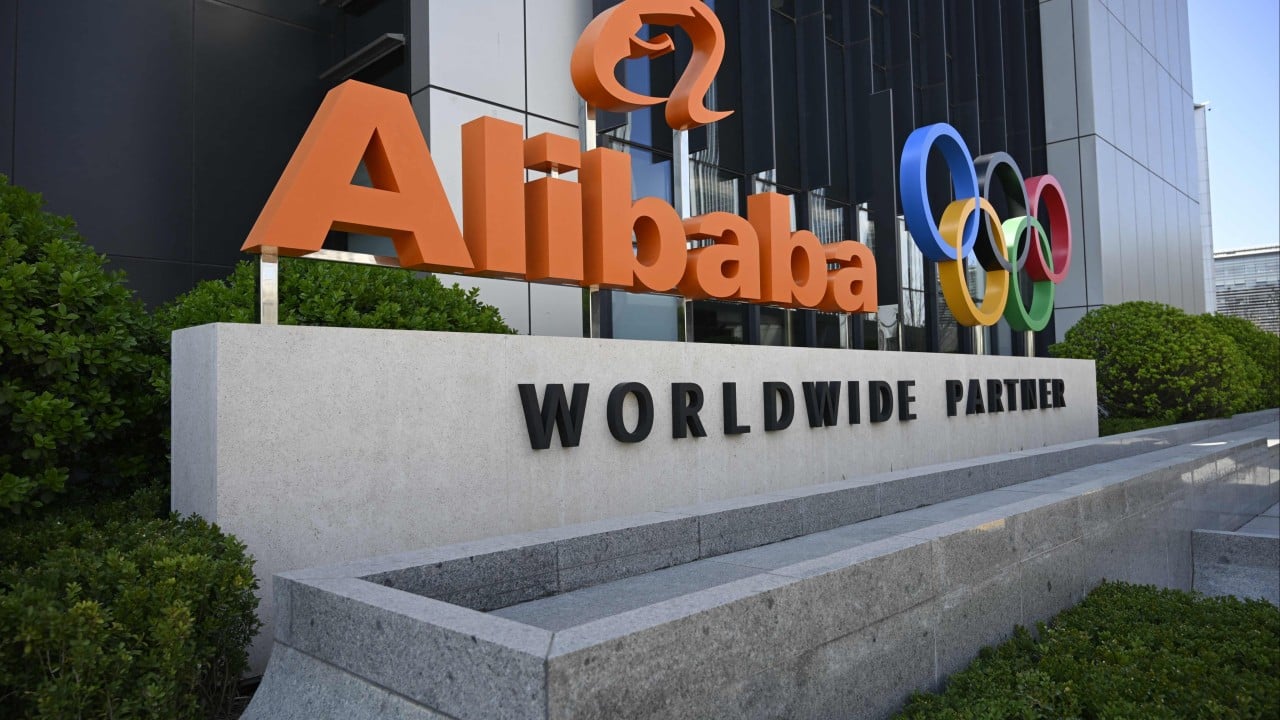
Alibaba, China’s undisputed titan of e-commerce and cloud infrastructure, looked at this screaming sea of hardware and realized a cold truth. The company had spent decades building the roads and warehouses of the internet. Yet, as artificial intelligence began rewriting the rules of commerce, owning the roads was no longer enough. You had to own the forge.
That realization is the origin of the Token Foundry. To explore the complete picture, we recommend the recent report by Ars Technica.
To understand why a company built on digital storefronts is suddenly acting like a medieval blacksmith, you have to look past the corporate press releases. You have to look at the sheer, brutal math of the modern world.
The Weight of an Idea
Software used to be light. You wrote a piece of code, compiled it, and shipped it. It lived on a hard drive, consuming power only when a human clicked a button.
AI flipped that dynamic on its head.
Every time a chatbot answers a question, every time an algorithm generates an image, and every time a logistics network optimizes a delivery route across Asia, it consumes a unit of computational currency known as a token. Think of a token as a single syllable of machine thought. It is the fundamental particle of artificial intelligence.
Here is the problem. These tokens are incredibly expensive to mint.
Imagine a young software developer in Shenzhen. Let’s call her Xiao Chen. She has a brilliant idea for an app that helps small factory owners predict supply chain disruptions. Her code is elegant. Her data is clean. But to train her AI model, she needs billions of tokens. She needs to feed her system vast oceans of text, numbers, and historical patterns.
When Xiao Chen calculates the cost of renting the raw computing power needed to process those tokens on standard cloud networks, her jaw drops. The price tag has five zeros. Her startup is dead before it writes its first line of production code.
This is the hidden crisis of the digital age. Power is concentrating in fewer and fewer hands. Only the wealthiest corporations can afford to build and run the massive open-source models that drive modern innovation. The rest of the world is left to scramble for the scraps, paying retail prices for API access to brains they don't own and cannot modify.
Alibaba saw Xiao Chen. They saw millions of her. And they realized that if they wanted to keep their crown as the backbone of the Asian digital economy, they needed to democratize the anvil.
Inside the Token Foundry
The phrase "Token Foundry" sounds like something pulled from a high-fantasy novel, a place where elven smiths shape magic coins. In reality, it is a massive, highly coordinated orchestration layer built on top of Alibaba Cloud’s infrastructure.
But the blacksmith metaphor fits better than any corporate jargon.
In a traditional industrial foundry, raw ore is subjected to intense heat, poured into molds, and hammered into precise components. Alibaba’s Token Foundry does something remarkably similar with raw data and compute power. It takes massive, open-source large language models—like their own proprietary Tongyi Qianwen series—and places them into a digital forge where businesses can reshape them.
Instead of forcing a company to build an AI model from scratch, which is the computational equivalent of mining iron ore with a spoon, the Foundry provides the raw, pre-heated steel. A business can walk into this digital workshop, clamp a massive model to the anvil, and use their own specific data to hammer it into a bespoke tool.
Consider the sheer scale of what is happening under the hood. Alibaba isn't just offering virtual machines. They are optimizing the very physics of how data moves across silicon. They are grouping thousands of graphic processing units together, stripping away software overhead, and tuning the network latency until the entire global infrastructure acts like a single, massive brain.
For the user, the complexity vanishes. You don’t need a PhD in distributed systems to make the machine sing. You bring your data, you select your base model, and the Foundry handles the molten metal of computation.
The Open-Source Gambet
Every great corporate move is driven by a quiet desperation. To understand Alibaba’s strategy, you have to look across the Pacific.
In the United States, the dominant AI strategy has largely been one of secrecy and walled gardens. The most famous models are locked behind proprietary interfaces. You pay your fee, you send your prompt into the black box, and you receive an answer. You do not get to see the weights of the model. You do not get to see how the gears turn.
Alibaba chose a radically different path, leaning heavily into the open-source philosophy.
Why? Because they understand the psychology of the builder.
Imagine you are an engineer designing an autonomous delivery drone. Do you want to rely on a brain controlled entirely by a competitor overseas, an AI that could be altered, price-hiked, or restricted by geopolitical shifting winds overnight?
No. You want an open model. You want to see the blueprints. You want to run it on your own terms.
By building a Foundry specifically designed to customize, optimize, and deploy open-source models, Alibaba is positioning itself as the Switzerland of the AI revolution. They are telling the world's developers that they don’t want to dictate what the future looks like; they just want to sell the tools used to forge it.
It is a brilliant piece of judo. It turns their massive physical infrastructure—the billions of dollars spent on data centers across Asia and Europe—into a magnet for global talent. It transforms cold server racks into an ecosystem.
The Human Ledger
It is easy to get lost in the architecture of it all. We talk about parameters, floating-point operations, and petabytes of throughput. But none of those metrics matter unless they change something on the ground.
Let us return to the human element.
Think of a small agricultural cooperative in rural Malaysia. They want to use machine learning to analyze satellite imagery and predict crop yields, allowing local farmers to price their goods fairly before the harvest even hits the trucks. In the old world, this technology was science fiction. The computing power required to train an image-recognition model of that scale was a luxury reserved for multi-national conglomerates.
Through the lens of a customized, localized foundry model, the cooperative doesn't need to be a tech giant. They don't need a multi-million-dollar server room. They tap into a localized, highly efficient instance of an open-source model through Alibaba's infrastructure. They fine-tune it with a few thousand images of their own fields.
Suddenly, a farmer holding a cheap smartphone in a muddy field has the predictive power of a Wall Street analyst.
That is the true stakes of the battle happening right now in the cloud. It isn’t about which corporate board of directors gets to brag about having the highest benchmark scores in a research paper. It is about who controls the access points to the defining utility of the twenty-first century.
If AI remains a luxury good, the economic divide between the tech elite and the rest of the world will widen into an uncrossable chasm. If the tools to forge AI become cheap, ubiquitous, and modular, the explosion of human creativity will be unlike anything we have seen since the printing press.
The Unending Heat
The digital forge never cools down.
As night falls over Hangzhou, the lights in Alibaba’s campus remain on, casting long shadows across the manicured grounds. Inside the server rooms, the fans keep screaming. The tokens keep spinning.
We are living through the clumsy, chaotic dawn of an era where thoughts are manufactured like steel beams. We are watching companies realize that the ultimate commodity is no longer oil, nor data, but the cheap, reliable transformation of energy into intelligence.
Alibaba has placed its bet. It has built its foundry, lit the furnaces, and laid out the hammers. The invitations have been sent to the creators, the hackers, and the dreamers of the world.
The metal is hot. The only question left is what we will choose to shape with it.