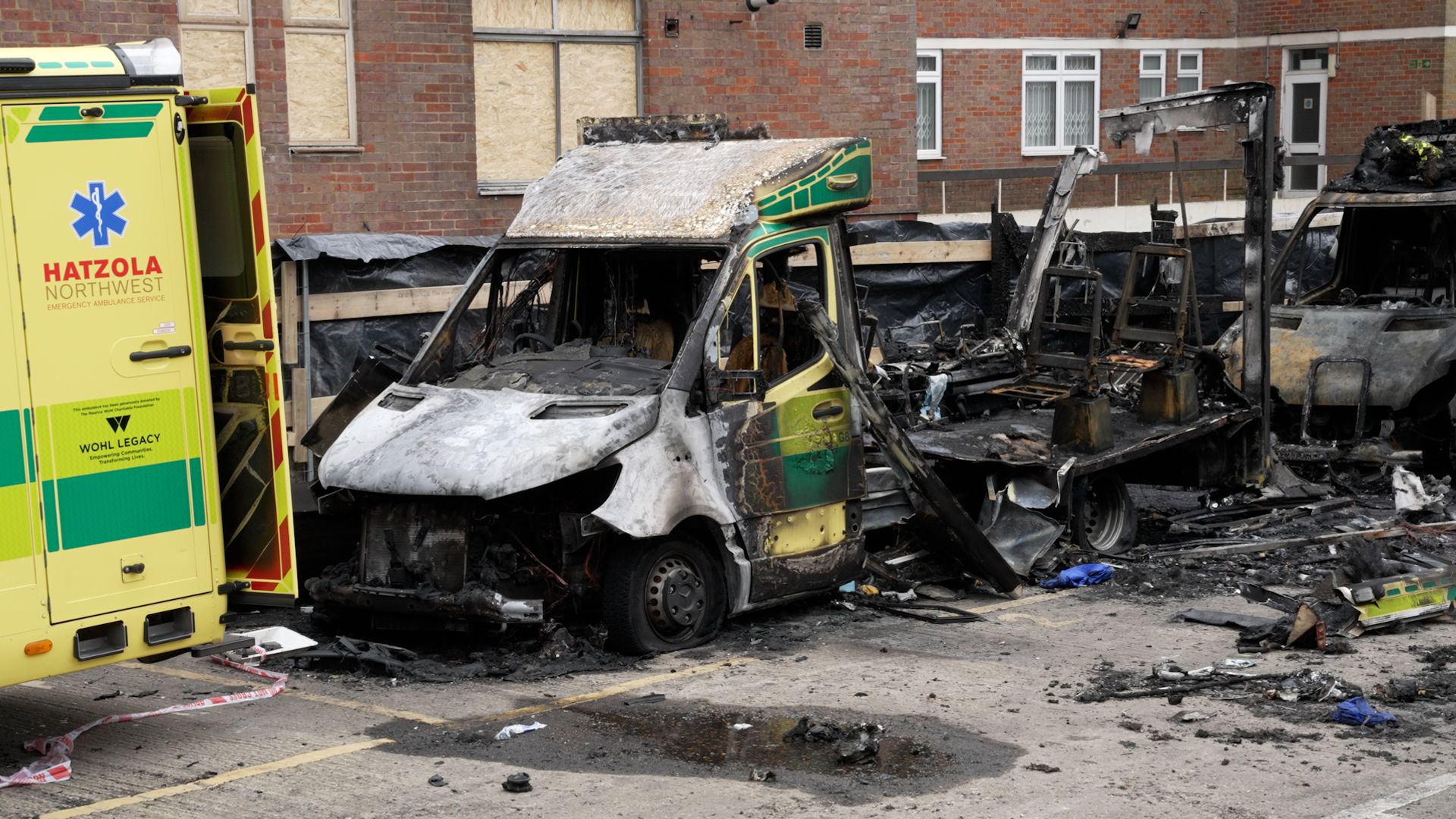
A man is arrested for allegedly setting fire to an ambulance in Golders Green. The local news treats it as an isolated incident of urban malice. The public expresses outrage on social media. Politicians offer boilerplate condemnations about protecting our brave first responders.
Everyone follows the same script. Everyone misses the point. In related updates, read about: The Real Reason Pakistan Shut Down the Internet in PoJK.
The standard reporting on emergency services vandalism treats these events as random acts of senseless violence or local behavioral anomalies. This narrative is comfortable because it implies the solution is simple: catch the bad guy, increase police patrols around stations, and buy a new fleet of vehicles.
It is a comforting lie. Reuters has provided coverage on this important topic in extensive detail.
Having spent fifteen years auditing security infrastructure for municipal public services, I can tell you that an ambulance fire is not an isolated crime. It is a lagging indicator. It is the predictable consequence of a systemic, decades-long failure to treat emergency service assets as critical infrastructure. We protect water treatment plants with biometric access, high-definition thermal imaging, and concrete perimeters. We leave multi-million-dollar lifelines sitting in poorly lit, open-access bays because of a romanticized, outdated notion of community integration.
The media wants you to focus on the arsonist. You need to focus on the vulnerability.
The Myth of the Neighborhood Station
We are obsessed with the idea that emergency services must look like they did in 1975. We expect the local ambulance station or fire house to be an open, inviting part of the high street. This aesthetic preference has blinded city planners to basic risk assessment.
Consider the asset itself. A modern ambulance is not just a delivery van with a siren. It is a mobile intensive care unit packed with controlled substances, pressurized oxygen tanks, and proprietary communication arrays linked directly to national data networks. It costs hundreds of thousands of pounds to equip, and months to replace due to specialized supply chains.
Yet, we park them in layouts that invite catastrophe.
When an asset is both highly valuable and highly volatile—such as carrying compressed gas cylinders—putting it behind a simple chain-link fence or an unsecured roller shutter is negligence. The lazy consensus says we cannot harden these facilities because every second counts during a dispatch. The data says otherwise.
Modern automated access control systems open barriers in less than three seconds. The delay is negligible; the security return is absolute. If commercial logistics hubs can secure thousands of delivery vehicles without sacrificing delivery times, emergency services have no excuse. The "accessibility implies speed" argument is a administrative crutch used to justify tight capital budgets.
The Real Cost of Asset Inertia
When a vehicle is taken out of commission by vandalism or arson, the financial loss is the least of our worries. The true cost is operational capacity degradation.
Public sector procurement is notoriously slow. Replacing a destroyed specialized vehicle takes months, sometimes over a year, due to bespoke chassis manufacturing and strict compliance testing. During that interim period, the surrounding catchment area suffers a measurable drop in coverage density.
- The Immediate Impact: Surrounding stations must extend their operational boundaries to cover the gap.
- The Response Time Penalty: Average response times for high-priority calls tick upward by minutes, not seconds.
- The Human Cost: In emergency medicine, a three-minute delay can be the difference between a successful resuscitation and permanent neurological damage.
The conversation shouldn't be about the criminal court case in Golders Green. The conversation must be about why our emergency infrastructure is fragile enough that a single individual with a lighter can compromise the medical readiness of an entire borough.
Hardening the Front Lines Without Losing the Mission
The knee-jerk reaction to security audits is always the same: "We don't want to turn our stations into military bunkers." This is a false dichotomy driven by a lack of imagination and a fear of capital expenditure.
We do not need razor wire. We need intelligent design.
Decentralized Staging and Smart Depots
The centralized, open-yard model of vehicle storage is obsolete. It creates a single point of failure. Progressive municipalities should transition to a hub-and-spoke model. Large, highly secured central depots handle maintenance, restocking, and heavy security. Active vehicles are deployed to scattered, monitored tactical positioning points rather than idling in predictable, exposed station bays.
Zero-Trust Physical Perimeters
If you wouldn't let a stranger walk up to a police helicopter, you shouldn't let them walk up to an ambulance. Physical barriers must be re-engineered. This means implementing anti-ram bollards, automated fast-acting gates, and continuous AI-assisted video analytics that flag loitering within a five-meter perimeter of any emergency vehicle.
The Downside We Must Accept
Implementing these changes requires a cultural shift that will upset traditionalists. It means stations will feel less like community hubs and more like secure utility sites. It will cost money upfront—money that critics will argue should go directly to hiring more paramedics.
But hiring more staff is useless if they have no functioning vehicles to drive. We have prioritized the illusion of community openness over the reality of operational resilience, and our critical infrastructure is paying the price.
Stop viewing these incidents as erratic crimes. Start viewing them as successful penetrations of a broken security model. Fix the perimeter, secure the assets, and stop relying on the goodwill of the public to protect the vehicles meant to save their lives.