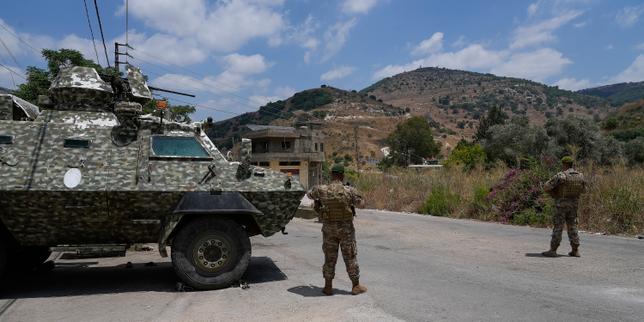
The success of any bilateral security agreement hinges on operational mechanics rather than diplomatic assertions. In South Lebanon, the deployment of the Lebanese Armed Forces (LAF) into designated pilot zones represents a structural test of security enforcement south of the Litani River. Evaluating this operational transition requires isolating three interdependent vectors: operational capacity, local intelligence coverage, and inter-actor coordination protocols.
Structural Vectors of the Pilot Zone Framework
Deploying military forces into previously non-controlled or disputed sectors involves specific operational friction points. The effectiveness of the pilot zone strategy relies on three distinct structural variables.
- Force Density Ratio: The effectiveness of territorial control correlates directly with soldier-to-civilian and soldier-to-square-kilometer metrics. In urban and semi-rural terrain like South Lebanon, achieving effective deterrence requires continuous static checkpoints paired with mobile reconnaissance units. Low force density degrades enforcement capacity, turning checkpoints into passive targets rather than active control nodes.
- Demarcation and Rules of Engagement (ROE): Clear parameters defining immediate threats, contraband interdiction, and authority over non-state armed elements dictate daily survival and operational authority. Vague ROE creates tactical paralysis, forcing field commanders to defer actions to political leadership and destroying response velocity.
- Inter-Actor Friction Management: Coexistence between local armed factions, national military units, and international monitoring bodies (such as UNIFIL) creates structural communication bottlenecks. Operational authority must be singular; fragmented command structures guarantee intelligence leaks and delayed interdiction.
Operational Friction and Failure Modes
The transition of security authority from non-state actors to national forces faces three quantifiable points of failure.
The Information Disparity Trap
National armies operating in territory long dominated by non-state actors face asymmetrical intelligence assets. Non-state entities maintain embedded human intelligence networks and subterranean infrastructure that static military deployments cannot easily detect. Without deep signal intelligence and localized human networks, army units operate with severe observational blind spots.
Supply Chain and Mobility Vulnerabilities
Maintaining an army presence south of the Litani River requires uninterrupted logistics lines. Fuel, ammunition, intelligence hardware, and troop rotation routes must pass through narrow geographical bottlenecks. If supply corridors are subject to external monitoring or physical interdictions, military posture collapses from active operational pressure to passive survival tactics.
Strategic Asymmetry in Compliance Testing
Opposing force structures rarely challenge a newly deployed army through direct force engagement. Instead, compliance is tested through incremental micro-violations: weapon caches placed within immediate proximity of patrol routes, unauthorized personnel operating in civilian attire, or low-level surveillance operations. If the enforcing army fails to respond decisively to initial micro-violations due to political constraints, the operational mandate deteriorates.
Quantitative Metrics for Assessing Deployment Stability
Determining whether the pilot zone deployment is succeeding or failing requires monitoring concrete operational metrics over rhetorical declarations.
- Interdiction Frequency: The rate at which the army actively discovers, confiscates, or neutralizes unauthorized weapons depots and surveillance infrastructure per square kilometer per month. High early numbers indicate operational access; zero numbers usually signal passive avoidance rather than total compliance.
- Static vs. Mobile Patrol Ratios: A high ratio of static checkpoints to mobile patrols indicates a defensive, risk-averse force structure vulnerable to bypass. A higher proportion of unpredictable mobile sweeps signals true operational domain dominance.
- Incident Response Time: The mean time required for command nodes to dispatch quick-reaction forces to suspected security breaches within the pilot zone. Response times exceeding fifteen minutes allow non-state actors to clear assets and obscure evidence.
The trajectory of the South Lebanon pilot zones will not be determined by international declarations, but by the enforcement density of the Lebanese Armed Forces, the clarity of their rules of engagement, and their willingness to establish absolute operational domain dominance over non-state infrastructure.