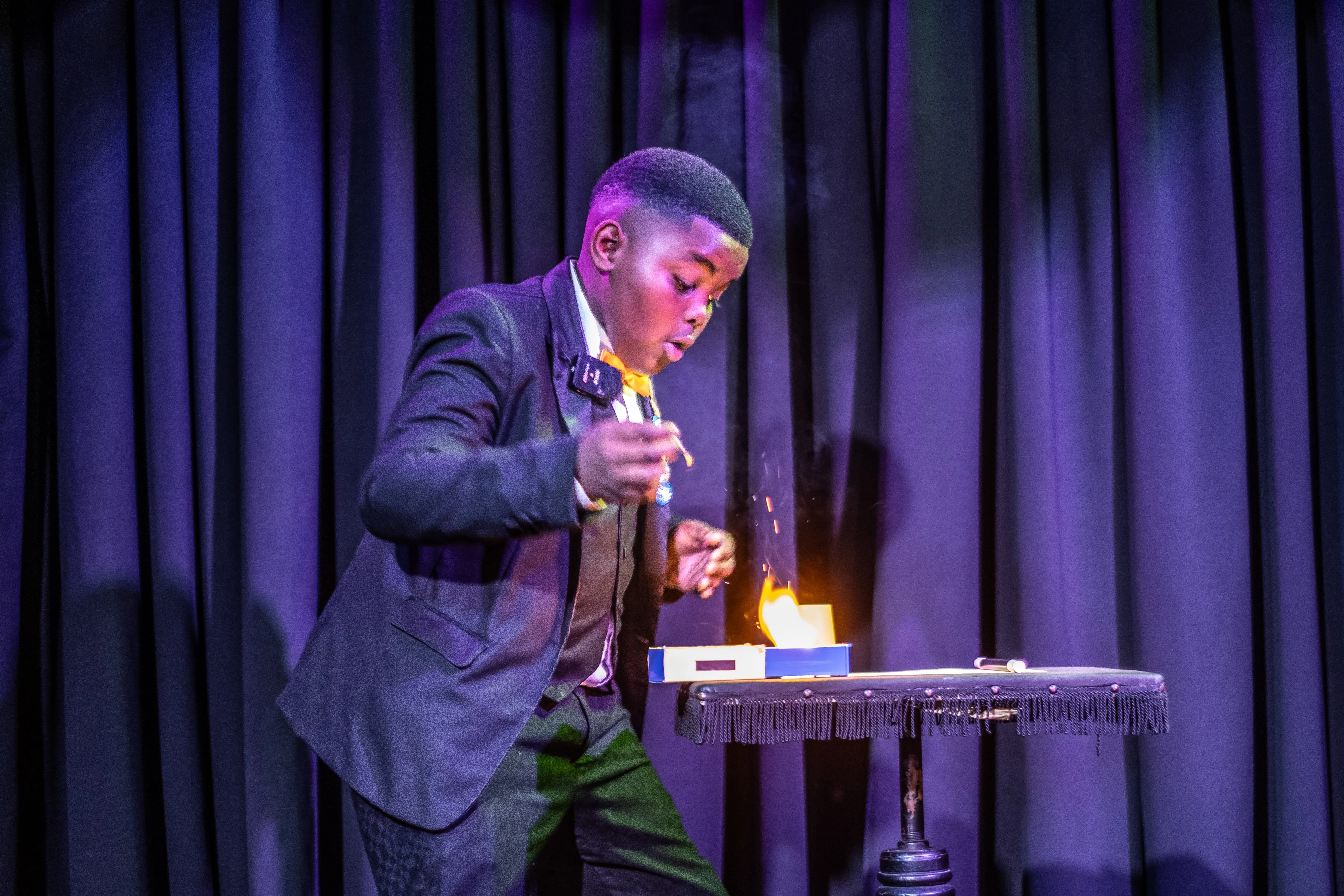
Most youth enrichment programs fail to produce measurable behavioral change because they optimize for passive entertainment rather than deliberate cognitive friction. The Cape Town-based College of Magic operates on an inverted pedagogical model, using the rigorous mechanics of sleight-of-hand, stagecraft, and theatrical misdirection as an applied behavioral laboratory. Rather than treating magic as a novelty hobby, the institution uses performance constraints to systematically rewire executive function, emotional regulation, and public speaking capabilities in adolescents.
The Structural Deficit in Standard Youth Enrichment
Conventional extracurricular frameworks—ranging from recreational team sports to standard arts education—frequently suffer from diffused accountability. In a team environment, an individual's hesitation or lack of preparation can be absorbed by peer performance. In passive classroom settings, failure carries low immediate stakes, allowing students to develop avoidance mechanisms rather than resilience.
The College of Magic, founded in 1980 by David Gore in Cape Town, South Africa, eliminates this buffer. Magic performance is binary in its immediate feedback loop: an illusion either deceives the audience's perception or it collapses in real time. There is no partial credit when a palmed coin drops or a card force fails. By placing young practitioners into a high-accountability environment early, the curriculum forces an accelerated adaptation to stress.
To understand how an institution transforms hesitant novices into composed performers, we must break down the operational mechanics of its curriculum into three distinct phases: motor-cognitive synchronization, attentional control, and controlled exposure therapy.
Phase One: Motor-Cognitive Synchronization and Deliberate Practice
The foundational layer of the College of Magic's methodology relies on physical dexterity paired with vocal delivery. Beginners do not start with grand illusions; they start with foundational manipulation—coins, cards, ropes, and sponge balls.
This stage targets the neurological bottleneck known as dual-task interference. Under normal conditions, a novice attempting to execute a complex fine-motor sequence (such as a classic palm or a French drop) experiences a sharp degradation in verbal fluency. Their vocal cadence slows, eye contact breaks, and posture stiffens because working memory is entirely consumed by motor execution.
The training protocol resolves this bottleneck through progressive overload:
- Isolation of Mechanical Variables: Students repeat physical movements in isolation until the neural pathways shift from the prefrontal cortex (conscious, effortful processing) to the basal ganglia (automated procedural memory).
- Scripted Verbal Integration: Once motor automaticity is achieved, a rigid script—termed "patter"—is introduced. The student must maintain a steady vocal rhythm independent of the physical action's tempo.
- Cognitive Disruption Testing: Instructors intentionally introduce external distractions during rehearsal—interruptions, shifted angles, or altered props—to stress-test whether the motor skill remains intact when executive attention is diverted.
This mechanism builds genuine self-efficacy. Unlike hollow praise-based confidence models, competence-based confidence emerges when a student objectively verifies that their hands can execute a precise task under pressure while their voice remains steady.
Phase Two: Attentional Control and Applied Behavioral Psychology
Once technical execution reaches baseline reliability, the curriculum shifts from physical mechanics to psychological architecture. Magic is fundamentally an exercise in managing human attention and exploiting cognitive biases—specifically inattentional blindness and change blindness.
Young magicians must learn to read and direct the visual and cognitive focus of an audience. In operational terms, this is high-level emotional intelligence and social calibration stripped of abstract theory. A performer cannot force an audience to look at their left hand; they must engineer a logical reason for the audience to want to look at their left hand while the right hand executes the secret move.
This requires mastering four specific behavioral levers:
- Gaze Direction: The human brain is hardwired to follow the gaze of others. Students are trained to use their own eye line as a laser pointer. If the performer looks at a prop, the audience looks at the prop. If the performer makes direct eye contact with a spectator, the audience's peripheral visual processing narrows, creating a blind spot for physical manipulation.
- Postural Framing: Nervous adolescents typically exhibit defensive body language—hunched shoulders, crossed limbs, and rapid, erratic movements. Stagecraft training enforces open chest posture, grounded stance, and economy of movement. Every gesture must have a clear beginning, middle, and end.
- Temporal Structuring (The Off-Beat): Psychological tension peaks right before an anticipated reveal and drops immediately after. Students learn to execute covert actions during the "off-beat"—the exact moment an audience relaxes, laughs, or processes a punchline.
- Audience Management: Handling volunteer spectators introduces unpredictable variables. Young performers learn assertive, polite framing techniques to guide a volunteer onto a stage, position them correctly relative to sightlines, and prevent them from inadvertently exposing a method.
By internalizing these levers, students acquire a transferable toolkit for interpersonal communication. Navigating a job interview, leading a boardroom presentation, or diffusing a tense social situation relies on the exact same mechanics: controlling pacing, managing eye contact, and directing focus.
Phase Three: Controlled Exposure Therapy and Failure Recovery
The final mechanism driving transformation at the College of Magic is institutionalized exposure to acute social risk. Fear of public speaking (glossophobia) stems primarily from the amygdala's threat response to potential social rejection. Standard public speaking courses attempt to mitigate this through preparation alone, which fails when an unexpected error occurs live.
The Cape Town institution uses a graduated exposure hierarchy, moving students from peer-to-peer demonstrations to small parlor shows, and eventually to full-scale theatrical productions at venues like the Artscape Theatre Centre.
Crucially, the curriculum treats failure not as an anomaly to be avoided, but as an inevitable operational hazard requiring a pre-engineered contingency protocol. In magic, a "botch" is unavoidable over a long enough timeline. Students are explicitly trained in recovery frameworks—often referred to as "outs."
If a card trick goes wrong, the performer is trained to pivot seamlessly into a secondary routine or frame the error as an intentional misdirection leading to a larger reveal. Because the student knows they possess a structural safety net for mistakes, the baseline anxiety surrounding live performance drops precipitously. They stop fearing the unknown because they have rehearsed the recovery.
Socioeconomic Friction and Institutional Economics
A purely pedagogical analysis misses a critical variable in the College of Magic's operational model: socioeconomic integration. Operating in South Africa—a nation marked by stark post-apartheid economic stratification—the institution functions as a non-profit organization rather than a commercial academy.
If the program relied solely on tuition fees from affluent suburbs, its talent pool would remain homogenized, limiting the peer-to-peer adaptability required for diverse audience engagement. Conversely, operating purely as a charity without revenue generation creates fragile dependency on donor cycles.
The institution resolves this through a cross-subsidization model:
- Commercial Revenue Streams: The organization generates earned income through corporate entertainment bookings, public magic festivals, theater ticket sales, and fee-paying students from middle- and upper-income brackets.
- Outreach Subsidies: These revenues, combined with corporate social investment (CSI) grants, fund outreach programs that bring students from under-resourced townships (such as Mitchells Plain and Khayelitsha) into the exact same Saturday training cohorts.
This structural integration creates a high-friction, high-reward social environment. Students from vastly different linguistic, cultural, and economic backgrounds must collaborate on stage crews, critique each other's sleight-of-hand, and co-produce shows. The shared technical language of magic—where status is determined entirely by practice hours and stage presence rather than socioeconomic origin—acts as a meritocratic equalizer.
Operational Limitations and Edge Cases
While the College of Magic's methodology produces high-performing communicators, treating magic pedagogy as a universal panacea for youth development introduces three distinct risks.
First, the narcissism trap. Magic inherently places the practitioner in a position of asymmetric information—the performer knows the secret, and the audience does not. Without strict ethical framing and ensemble discipline, adolescent performers can develop an adversarial or condescending posture toward their audience, treating performance as an exercise in intellectual superiority rather than shared wonder. The curriculum must actively suppress ego-driven presentation in favor of audience-centric storytelling.
Second, credential translation friction. While the soft skills acquired—poise, project management, improvisation, and resilience—are highly valued in the modern labor market, "certified magician" does not map cleanly onto traditional academic or corporate HR filters. Alumni who do not enter the entertainment industry must actively translate their stage management and production experience into conventional operational terminology on resumes and university applications.
Third, high attrition during the mechanical phase. The initial transition from watching magic to practicing sleight-of-hand is tedious. The gap between a student's taste (what they want the trick to look like) and their technical ability (clumsy, obvious movements) is wide. Programs attempting to replicate this model often fail because they introduce complex routines too early to keep students entertained, resulting in sloppy technique and public embarrassment that reinforces, rather than cures, social anxiety.
Replicating the Framework in Youth Development Programs
Organizations seeking to replicate the College of Magic's outcomes—whether in arts education, corporate leadership training, or youth mentorship—must strip away the aesthetic trappings of top hats and wands and implement the underlying behavioral architecture.
- Enforce Binary Feedback Loops: Replace subjective, participation-based grading with objective performance metrics. Tasks should have clear success or failure states that the student can self-diagnose without instructor intervention.
- Separate Mechanical Acquisition from Performance: Never allow novices to perform before motor or technical skills reach automaticity. Dedicate the first 60% of any training cycle exclusively to isolated, repetitive drill work under low-stakes conditions.
- Mandate Contingency Scripting: For every presentation, pitch, or performance a student prepares, require them to write and rehearse two "recovery scripts" designed to handle equipment failure, memory lapses, or hostile interruptions.
- Engineer Asymmetric Cohort Mixing: Deliberately structure working groups across socioeconomic, academic, or demographic lines, anchoring the group around a shared, technically demanding objective where prior social status offers zero advantage.
- Transition from Peer to Public Stakes: Do not allow training to remain trapped inside the classroom. Establish a rigid calendar of public-facing showcases with external audiences, forcing participants to calibrate their output to the reactions of strangers rather than supportive peers.