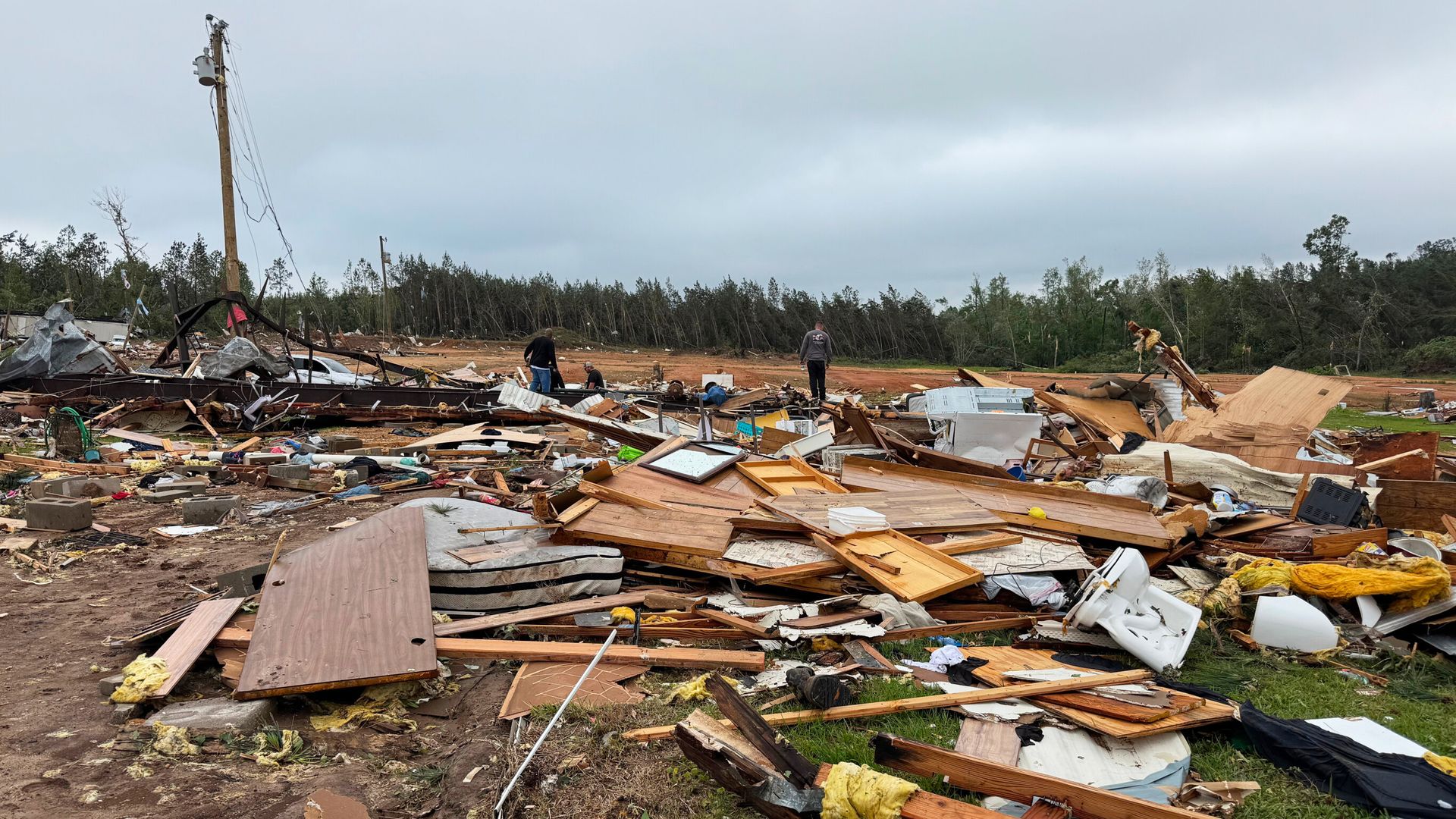
The convergence of a high-shear environment with extreme surface instability across the Mississippi Delta has shifted from a meteorological probability to a quantifiable crisis in housing stock and civil infrastructure. When "multiple tornadoes" intersect with high-density residential areas, the result is not a singular event but a series of cascading system failures. Analyzing this disaster requires moving beyond the visual record of debris and into the structural vulnerabilities of the region, the physics of wind-load failure, and the economic friction of large-scale displacement.
The Triple Constraint of Atmospheric Volatility
The severity of the Mississippi storm system is a direct function of three specific atmospheric variables that, when synchronized, maximize the kinetic energy available for tornadogenesis.
- Kinematic Forcing: The presence of strong vertical wind shear—the change in wind speed and direction with height—organizes disorganized thunderstorms into supercells. In the Mississippi context, this shear allows the storm to maintain a rotating updraft, or mesocyclone, which serves as the engine for sustained tornadic activity.
- Thermodynamic Instability: High levels of Convective Available Potential Energy (CAPE) act as the fuel. Warm, moist air from the Gulf of Mexico provides the buoyant force necessary for rapid vertical acceleration. When this air is capped by a layer of dry, cooler air, the eventual breach results in an explosive release of energy.
- Boundary Interaction: The localization of damage in specific Mississippi counties often correlates with the position of surface boundaries, such as stationary fronts or outflow boundaries. These serve as focal points for rotation, narrowing the geographical impact while intensifying the local damage gradient.
The interplay of these factors explains why a single weather system can spawn several distinct vortexes rather than a unified front. Each vortex operates on a localized pressure deficit, creating "swaths" of destruction that vary in intensity over just a few hundred yards.
Failure Modes in Residential Infrastructure
The reported damage to hundreds of homes is rarely a result of "total wind-speed impact" and is more frequently a failure of specific structural connection points. In the Mississippi housing market—characterized by a high percentage of aging frame houses and manufactured homes—the cost function of a tornado is dictated by the weakest link in the building envelope.
Aerodynamic Lift and Internal Pressurization
Most residential structural failures begin at the roof-to-wall interface. As high-velocity winds move over a pitched roof, they create a zone of low pressure, similar to an airfoil. If the garage door or a windward window fails, the home becomes internally pressurized. The combination of external lift and internal pressure creates a net upward force that exceeds the capacity of standard toe-nailed rafters. Once the roof is removed, the lateral stability of the walls is compromised, leading to a total collapse of the structure.
The Manufactured Housing Vulnerability
A disproportionate amount of the reported damage in rural Mississippi affects manufactured housing. These structures possess a high surface-area-to-weight ratio, making them susceptible to sliding or overturning if the anchoring systems are not rated for current ASCE 7-22 wind load standards. The mechanism of failure here is often foundational; even if the unit stays intact, the detachment from the pier-and-beam system renders the home a total loss from an actuarial perspective.
Quantifying the Logistics of Displacement
The transition from "storm event" to "humanitarian crisis" is measured by the displacement duration. When hundreds of homes are damaged simultaneously, the local recovery market enters a state of hyper-inflation and resource scarcity.
- The Labor Bottleneck: The immediate demand for roofing, structural engineering, and debris removal exceeds the local supply of licensed contractors. This creates a "recovery lag," where homes with minor damage (e.g., missing shingles) suffer secondary water damage because they cannot be tarped or repaired before the next rain event.
- Infrastructure Interdependency: The damage to homes is compounded by the failure of the electrical grid. In Mississippi, many rural water systems rely on electric pumps. Therefore, the destruction of a few dozen high-voltage transmission towers can effectively disable the habitability of thousands of homes that were not directly hit by the wind.
- Insurance Friction: The gap between "damaged" and "destroyed" is often a legal battle. Standard homeowners' policies in high-risk zones often have high deductibles for wind events, and the valuation of older homes may not cover the cost of rebuilding to modern, storm-resistant codes.
The Cost Function of Emergency Management
Mississippi’s emergency response follows a tiered mobilization strategy, but the "multiple tornado" scenario stresses this system by forcing a distribution of assets across several non-contiguous sites.
The first limitation is Search and Rescue (SAR) saturation. When damage is spread across multiple counties, the "Golden Hour"—the period where life-saving interventions are most effective—is consumed by transit times and the need to clear debris from primary arterial roads. The second limitation is shelter capacity. In low-income regions, the population lacks the liquid capital for hotel stays, placing the entire burden of housing on state-run shelters and non-governmental organizations (NGOs).
This creates a bottleneck in the transition from the "Response" phase to the "Recovery" phase. If debris removal is not centralized and subsidized, the physical presence of destroyed homes prevents the restoration of utility lines, extending the displacement period indefinitely.
Structural Mitigation as a Strategic Imperative
The data from recent Mississippi events suggests that current building codes are insufficient for the increasing frequency of high-shear environments. To reduce the magnitude of future displacement, the strategic focus must shift from reactive "relief" to proactive "hardening."
- Mandatory Hurricane Ties: The cost of installing steel connectors to secure roofs to walls is negligible during initial construction ($500–$1,000 per home) but increases the wind resistance by a factor of three.
- Hardened Community Enclosures: In areas with high manufactured housing density, the construction of "near-site" storm shelters is more cost-effective than attempting to retrofit individual units that are fundamentally incapable of withstanding EF3+ winds.
- Redundant Grid Geometry: Moving from radial power distribution to looped or micro-grid systems ensures that a localized tornado strike in a residential neighborhood does not trigger a county-wide blackout.
The current trajectory of Mississippi's storm recovery will be defined by the speed of debris clearance and the availability of temporary housing. However, the long-term economic health of the region depends on whether the rebuilding process incorporates these structural lessons or simply reproduces the same vulnerabilities that allowed this system to cause such widespread failure. The data indicates that without a fundamental shift in residential engineering standards, the "hundreds of homes damaged" headline will become a recurring seasonal metric rather than an anomaly.
Immediate policy should prioritize the deployment of mobile building permit offices to ensure that the "rebuilding rush" does not bypass the very safety codes designed to prevent the next collapse. Success is not measured by how quickly a roof is replaced, but by whether that roof remains attached during the next 140-mph gust. Strategies must target the roof-to-wall connection as the primary point of failure to break the cycle of catastrophic residential loss in the Delta.


