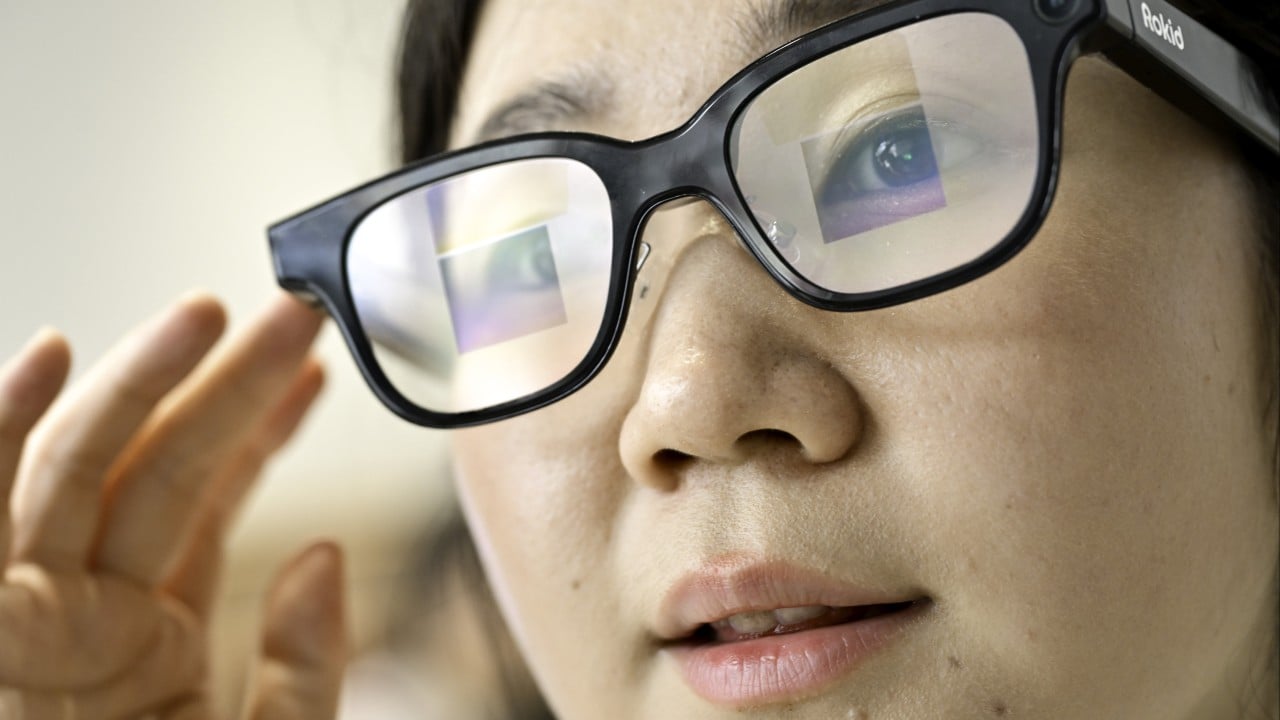
The convergence of AI-driven computer vision and wearable hardware has shifted the data privacy debate from centralized cloud databases to localized capture vectors. Smart glasses equipped with ambient recording capabilities, facial recognition, and real-time audio processing create a continuous data collection stream that fundamentally alters public anonymity. In China, where hardware manufacturing dominance intersects with a highly centralized regulatory environment, the commercial scaling of these devices faces structural friction. The primary bottleneck is no longer optical clarity or battery density, but rather the legal, social, and structural boundaries of ambient surveillance.
Analyzing this market requires deconstructing the ecosystem into three operational pillars: the data capture vector, the localized regulatory framework, and the consumer pushback threshold.
The Data Capture Vector and Asymmetric Privacy
Smart glasses introduce a continuous, first-person data capture model that differs from static CCTV infrastructure. Fixed cameras rely on known positioning and predictable fields of view. Wearable AI hardware decentralizes this capture, transforming every consumer into a mobile surveillance node.
This creates an asymmetric privacy deficit defined by three technical variables:
- Involuntary Data Ingestion: Passersby cannot opt out of being captured, indexed, or analyzed by a third-party wearable device.
- Biometric Mapping Friction: Continuous video streams allow for the extraction of gait, facial features, and behavioral patterns without explicit consent or notification.
- The Proximity Threat: Unlike long-range surveillance, smart glasses capture high-fidelity audio and close-quarters interactions, exposing personal credentials, screen displays, and private conversations.
The core friction lies in the data processing lifecycle. If data is processed locally (edge computing), the risk is decentralized, focusing on device theft and unauthorized local storage access. If the data is streamed to the cloud for heavy AI processing—such as running real-time facial recognition against a central database—the risk centralizes, making the hardware manufacturer a direct liability point under national data security laws.
The Regulatory Framework: Dual-Force Compression
China's regulatory stance on AI and data security does not operate as a single blanket prohibition. Instead, it exerts dual-force compression on hardware manufacturers: promoting industrial AI adoption while strictly penalizing unmanaged private data collection.
The Cybersecurity Law and PIPL Constraints
The Personal Information Protection Law (PIPL) and the Data Security Law impose strict boundaries on the collection of biometric data. Under these statutes, processing facial data in public spaces requires distinct legal justification or explicit individual consent. Smart glasses inherently violate the consent clause of the PIPL during ambient operation. Manufacturers cannot build a compliant consumer product if the core feature—mass, real-time contextual awareness—relies on illegal data acquisition.
The State Monopoly on Public Surveillance
A critical structural barrier is the division between state-sanctioned surveillance and private corporate data harvesting. The Chinese government utilizes extensive facial recognition systems via the Sharp Eyes and Skynet projects. However, the state views unregulated private networks capable of mapping public spaces, tracking individuals, and gathering ambient audio as a distinct national security vulnerability.
Hardware developers face a structural paradox. To make smart glasses genuinely "smart," the AI needs maximum contextual data. Yet, providing a consumer device with the capability to map public spaces in real time invites immediate regulatory intervention, feature suppression, or outright product bans.
The Consumer Pushback Threshold and Market Friction
Outside of regulatory compliance, consumer adoption in domestic markets faces a cultural and psychological ceiling. The utility function of smart glasses must outweigh the social friction of wearing a conspicuous capture device.
Utility Function = (Real-time Information Value + Hands-free Convenience) - (Social Friction + Battery/Thermal Deficits)
Social friction manifests as peer-to-peer distrust. In urban centers, the awareness that a conversational partner or a nearby commuter could be recording video or running analysis via their eyewear creates immediate interpersonal discomfort. Early iterations of smart glasses globally failed due to this social stigma. In the domestic Chinese market, where digital privacy awareness has risen sharply alongside the strict enforcement of the PIPL, consumers are increasingly litigious regarding unauthorized biometric capture by private entities.
Furthermore, the hardware itself imposes physical limits. Continuous video processing and AI inference generate significant thermal output and deplete batteries rapidly. Stripping down the hardware to meet thermal comfort levels reduces the device to a Bluetooth speaker with a low-resolution camera, destroying the value proposition that separates it from a standard smartphone.
Structural Mitigation Paths for Manufacturers
For smart glasses to achieve mass-market viability within this strict regulatory and social ecosystem, hardware architects must pivot from open-ended capture to controlled, verifiable data processing. The current unconstrained model is economically and legally unsustainable.
Manufacturers must implement physical privacy indicators that cannot be bypassed via software modification. A prominent, hard-wired LED recording indicator that draws power directly from the camera module provides a verifiable signal to the public that data capture is active. Software-level blurring of non-target faces executed natively on the device chip prior to storage or transmission satisfies the data minimization requirements of the PIPL.
The secondary operational shift involves transitioning from a wide-area surveillance asset to a closed-loop productivity tool. By limiting the device's computer vision capabilities to recognized enterprise objects—such as inventory barcodes, industrial machinery, or private text translation—manufacturers can bypass the legal liabilities associated with public biometric tracking.
The future of the medium relies on this structural pivot: hardware that respects the boundary between personal productivity and public space surveillance will find a path to scale, while devices attempting to democratize mass surveillance will be regulated out of existence. Strategic capital should target enterprise-specific, edge-processed applications rather than open-world consumer form factors.