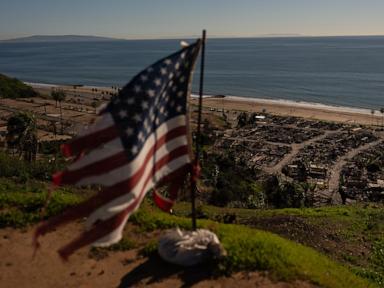
Arson represents a catastrophic failure of social and environmental risk management, where individual psychological volatility intersects with high-density fuel loads in wildland-urban interfaces. The 2021 Palisades Fire serves as a primary case study for deconstructing the transition from internal grievance to large-scale environmental destruction. To understand this event, one must evaluate the convergence of three specific vectors: individual intent, logistical vulnerability, and the environmental kinetic energy of the Santa Monica Mountains.
The Triad of Incendiary Risk
The propulsion of a fire from a localized spark to a multi-thousand-acre emergency is governed by the relationship between the ignition source, the fuel profile, and the tactical response window. In the context of the Palisades incident, the suspect—identified as Ramon Santos Rodriguez—facilitated an ignition in terrain characterized by "Old Growth" chaparral. This vegetation had not burned in over 50 years, creating a fuel load density that converted the suspect’s alleged "anger at the world" into a high-intensity thermal event.
The legal framework for prosecuting such acts relies on proving Specific Intent. Prosecutors must demonstrate that the ignition was not an accident or a product of negligence, but a calculated exertion of will. The suspect's reported statements regarding global resentment provide the evidentiary bridge between his mental state and the physical act of setting multiple fires. This psychological profile is a textbook example of "Expressive Arson," where the fire is not a tool for profit or concealment, but a medium for communicating an internal state of crisis.
Logistical Vulnerability and the Topographic Chimney
The Palisades Fire highlights a critical bottleneck in urban fire suppression: Topographic Acceleration. The fire occurred in the canyon-dense regions of Topanga and Pacific Palisades. The geography acts as a natural bellows.
- Slope Influence: Fires burning uphill move significantly faster because the flames can pre-heat the fuel ahead of the front.
- Chimney Effect: Narrow canyons funnel wind and heat, creating a localized weather system that can loft embers miles ahead of the main fire line.
- Access Constraints: The rugged terrain effectively nullified ground-based initial attacks. Hand crews faced 60-degree inclines, forcing the Los Angeles Fire Department (LAFD) to rely almost exclusively on aerial assets during the critical first six hours.
The suspect’s choice of location—whether intentional or incidental—leveraged these environmental variables. By igniting a fire in a region with limited ingress and egress, the actor maximized the "suppression gap," which is the time between the start of the fire and the achievement of an effective containment line.
The Cost Function of Arson in the Wildland Urban Interface
The economic and social externalities of a single match are disproportionate to the effort required to strike it. The Palisades Fire necessitated the evacuation of nearly 1,000 households and the deployment of over 500 firefighters. We can categorize the resulting damage through a hierarchical cost framework:
- Direct Operational Expenditure: The hourly burn rate of Type 1 helicopters and fixed-wing tankers, combined with the overtime labor costs of municipal and county fire departments.
- Indirect Economic Displacement: The loss of productivity from evacuated populations and the disruption of the PCH (Pacific Coast Highway) corridor, a vital transit artery.
- Ecological Debt: The destruction of habitat for sensitive species and the subsequent risk of debris flows. Once the root systems of chaparral are incinerated, the hillsides lose their structural integrity, creating a secondary risk of landslides during the following winter's rain cycle.
The prosecution’s focus on the suspect's "anger" is a tactic to satisfy the Malice Aforethought requirement of aggravated arson. From a risk-management perspective, however, the suspect's internal state is merely a trigger for a pre-loaded system of environmental and infrastructure vulnerabilities.
Forensic Evidence and the Path of Ignition
The investigation into the Palisades Fire utilized a methodology known as Origin and Cause Analysis. Investigators backtrack from the perimeter of the burn to the point where the charring is most intense and the directional indicators (such as "grass stems" and "soot staining") point inward.
In this case, the discovery of multiple ignition points suggests a serial ignition strategy. This is a vital distinction in criminal profiling. A single fire could be argued as a reckless campfire; multiple distinct starts indicate a "Mobile Arsonist" pattern. This behavior reflects a desire to overwhelm the initial response capacity of the fire department. If the LAFD is forced to split its resources between two or three different heads of a fire, the probability of a "breakout" increases exponentially.
The arrest of the suspect involved the use of infrared technology from police helicopters, which tracked his heat signature as he moved through the dense brush. This illustrates the evolving technological landscape of arson detection. The transition from visual sightings to thermal tracking has shortened the "apprehension window," yet the fundamental difficulty remains: the act of ignition takes seconds, while the consequence lasts weeks.
The Psychological Profile of the Displaced Arsonist
The suspect in the Palisades incident was described as experiencing homelessness at the time of his arrest. This introduces a complex variable into the analysis of urban arson. There is often a blurred line between fires started for survival (cooking or warmth) and fires started with malicious intent.
However, the "anger at the world" narrative used by the District Attorney’s office separates this event from accidental survival fires. It places the act within the realm of Vandalism Arson or Revenge Arson. In these frameworks, the fire is an equalizer. The individual, feeling powerless or marginalized, exerts total control over the environment and the lives of those within it. The fire becomes a proxy for the individual's presence in a society that they feel has ignored them.
Tactical Limitations in Suppression
The Palisades Fire also exposed the limitations of modern fire-fighting technology. Despite having access to the "Super Scooper" aircraft and advanced retardant drops, the fire continued to grow for several days. This is due to the Extinction Limit of heavy fuels.
When old-growth brush burns, it creates a "deep-seated" fire. The heat penetrates the soil and the thickest branches, meaning that even if the surface flames are knocked down by water, the core remains hot enough to reignite as soon as the moisture evaporates or the wind picks up. This necessitates "Mop Up," a labor-intensive process where crews must physically dig out every smoldering root. Arson in these areas is not a singular event; it is a multi-week operational commitment.
Strategic Realignment for Interface Protection
To mitigate the risk posed by individuals like the Palisades suspect, municipal strategies must shift from reactive suppression to proactive fuel management and surveillance. The current model relies on the hope that an arsonist will be spotted before the fire reaches a critical mass. This is a low-probability success strategy in the rugged terrain of Los Angeles.
A more robust framework involves the "Hardening of the Interface." This includes:
- Automated Remote Sensing: Implementing 360-degree thermal cameras on ridgelines that use AI to detect smoke plumes within seconds, bypassing the delay of 911 calls.
- Fuel Discontinuity: Creating strategic firebreaks that are not just empty dirt paths, but zones of managed, low-volume vegetation that slow the rate of spread.
- Legal Deterrence through Aggravated Sentencing: Treating arson in high-risk zones not merely as property damage, but as an act of domestic biological and environmental terrorism.
The Palisades Fire was a predictable outcome of a high-fuel environment meeting a high-volatility individual. The legal resolution of the case against Rodriguez will address the culpability of the person, but it does not address the systemic vulnerability of the landscape. Future risk mitigation must focus on the "Suppression Gap"—the 15-minute window between ignition and the first drop of water—where the battle against malicious ignition is truly won or lost.
The final strategic play for the city of Los Angeles and similar jurisdictions is the mandatory integration of real-time infrared satellite monitoring with local dispatch. By reducing the detection time from minutes to seconds, the "Specific Intent" of an arsonist is neutralized by the "Immediate Response" of the infrastructure. Until the environment is no longer a ready accomplice to the individual's anger, the risk of the next Palisades incident remains a statistical certainty.