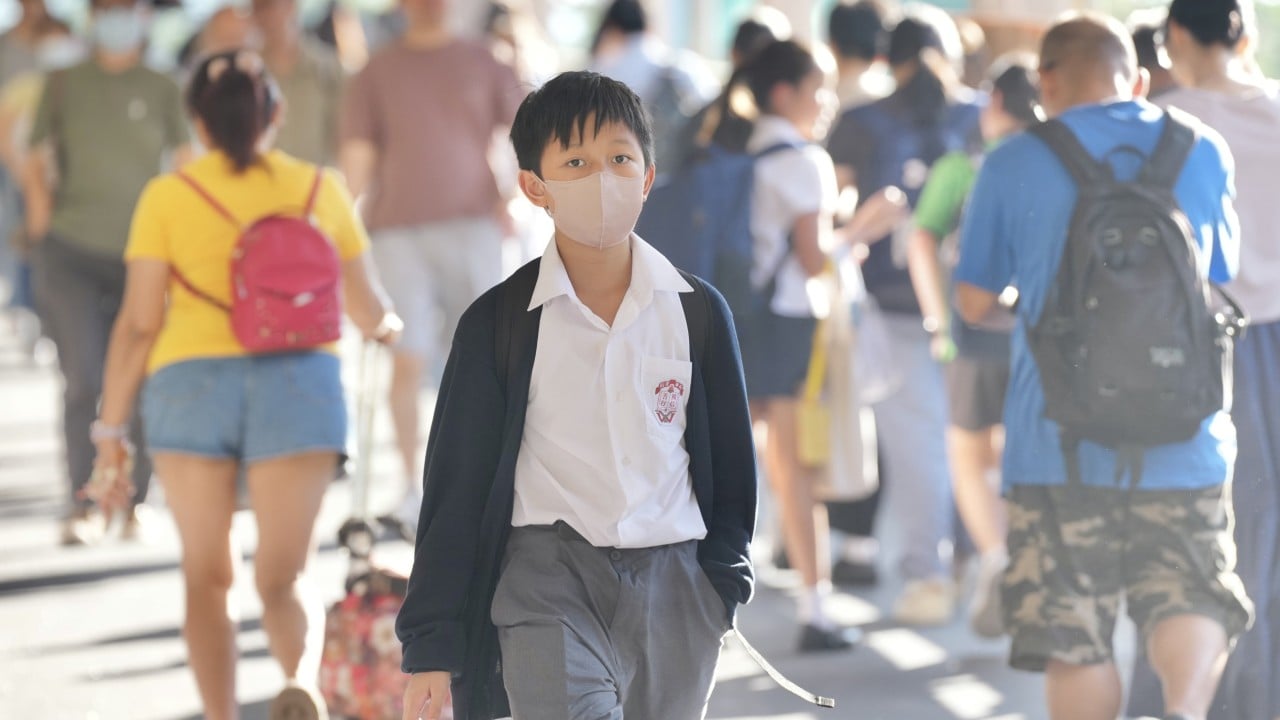
Hong Kong’s healthcare infrastructure faces a predictable but compounding operational strain as the summer influenza season converges with an upward trajectory in Covid-19 infections. When multiple respiratory pathogens peak simultaneously, the strain on public hospitals expands exponentially rather than linearly. Optimizing the response to this dual-pathogen surge requires moving past reactionary public statements and analyzing the specific bottlenecks in clinical capacity, diagnostic precision, and population immunity dynamics.
The core challenge rests on three distinct operational pillars: resource competition within public wards, the diagnostic overlap of symptoms leading to triage delays, and the erosion of hybrid immunity across key demographics.
The Dual-Pathogen Velocity Framework
The simultaneous acceleration of Influenza A (typically the H3N2 subtype during summer months in subtropical regions) and SARS-CoV-2 creates an immediate volume crisis for acute medical wards. In Hong Kong, the Hospital Authority manages a highly centralized system where bed occupancy rates regularly exceed 100% during single-pathogen surges. When both viruses escalate in parallel, the admission velocity outpaces the discharge rate, creating a systemic bottleneck in accident and emergency departments.
This compounding velocity operates through distinct transmission vectors:
- Subtropical Flu Seasonality: Unlike temperate zones that experience a single winter peak, Hong Kong experiences a secondary, highly disruptive summer influenza peak between July and September. High humidity and indoor air-conditioning reliance accelerate aerosol transmission in densely populated urban centers.
- Viral Evolution Cycles: SARS-CoV-2 continues to exhibit non-seasonal mutation waves, driven by immune-evasive variants. When a new variant's emergence aligns chronologically with the biological seasonality of Influenza A, the pool of susceptible individuals expands dramatically.
The primary operational casualty of this dual velocity is the clinical turnaround time. Patients presenting with acute respiratory symptoms require differential diagnosis to determine appropriate antiviral placement (e.g., Paxlovid for Covid-19 versus Tamiflu for Influenza). Because the initial clinical presentations—fever, cough, and myalgia—are virtually identical, point-of-care molecular testing becomes the definitive rate-limiting step in patient throughput.
Triage Diagnostics and the Allocation Bottleneck
When clinical symptoms overlap completely, triage systems must rely strictly on laboratory verification to isolate cohorts. Failure to segregate incoming patients accurately risks nosocomial cross-infection, where a patient admitted with influenza contracts Covid-19 within the ward, or vice versa. This risk profile alters the hospital cost function by increasing the average length of stay per patient.
To quantify the operational friction, we can examine the processing pipeline through a standard queuing model:
- Symptom Presentation: A surge in presentations clogs the initial triage desks, expanding waiting times in emergency rooms.
- Assay Processing Time: While rapid antigen tests offer immediate results, their sensitivity thresholds frequently miss early-stage infections, forcing reliance on multi-plex polymer chain reaction (PCR) assays. These assays, though highly accurate, introduce a multi-hour lag.
- Bed Cohorting Isolation: During this lag phase, patients must be held in transit zones. If transit zones fill to maximum capacity, ambulances face offload delays, reducing the city-wide emergency response velocity.
The bottleneck is not merely physical space; it is the availability of specialized clinical staff to manage high-dependency beds. A patient suffering from dual infection—simultaneous influenza and Covid-19—exhibits a higher clinical risk profile, often requiring advanced respiratory support. This shifts personnel away from general medical care, creating a deficit in overall operational efficiency.
The Decay Mechanics of Population Immunity
The systemic vulnerability of Hong Kong’s population to summer surges is fundamentally a function of immunological timing. Immunological data indicates that neutralizing antibody titers against both influenza and SARS-CoV-2 decay significantly within four to six months post-vaccination or natural infection.
The public health vulnerability curve is driven by specific demographic variables:
- Elderly Vulnerability: The highest concentration of severe outcomes occurs in citizens aged 65 and older, particularly those residing in residential care homes. Immunosenescence means this group experiences faster antibody decay rates and weaker cellular immune memory responses.
- Pediatric Immunity Gaps: Young children, especially those born during periods of intense social distancing, lack robust baseline exposure to seasonal influenza strains. This creates an immunity debt that manifests as high pediatric admission rates during the summer uptick.
- Vaccination Chronology Alignment: Hong Kong’s annual Government Vaccination Programme typically launches in autumn. By the following summer, the vaccine-induced immunity against influenza has waned to its lowest point, precisely when the subtropical summer surge initiates.
The interaction between waning vaccine efficacy and viral drift demands an aggressive, data-driven approach to prophylactic timing. Relying on an autumn-centric vaccination calendar leaves a clear six-month window of vulnerability where public immunity levels drop below the threshold required to suppress community-wide transmission waves.
Structural Interventions for Surge Mitigation
To prevent the total saturation of public hospital beds during co-circulation periods, public health infrastructure must pivot toward systemic interventions that reduce the inflow of acute cases.
Decentralized Diagnostic Gatekeeping
Public health authorities must offload the diagnostic burden from tertiary hospitals to primary care networks. Establishing dedicated, community-level respiratory clinics equipped with multiplex rapid molecular diagnostics allows for immediate differential diagnosis outside the hospital ecosystem. Patients can receive targeted antiviral prescriptions immediately upon testing positive, suppressing the progression of symptoms before hospitalization becomes necessary.
Dynamic Bed Allocation Matrices
Hospital networks must abandon static ward designations in favor of dynamic cohorting models. Wards must be structurally capable of transitioning between negative-pressure isolation spaces and standard acute care beds within a 24-hour window based on real-time epidemiological telemetry. This agility mitigates the risk of empty beds in specialized units while emergency departments face severe backlogs.
Chronological Optimization of Boosters
The strategic deployment of booster campaigns must be decoupled from rigid calendar dates and re-aligned with predictive viral modeling. High-risk demographics require targeted booster rollouts approximately six to eight weeks prior to the projected summer peak, rather than relying exclusively on the standard autumn distribution schedule.
The immediate operational priority for managing the co-circulation crisis requires deploying mobile vaccination teams directly into residential care facilities for targeted booster deployment, alongside mandating real-time bed-occupancy telemetry dashboards across all cluster hospitals to permit immediate patient redistribution.