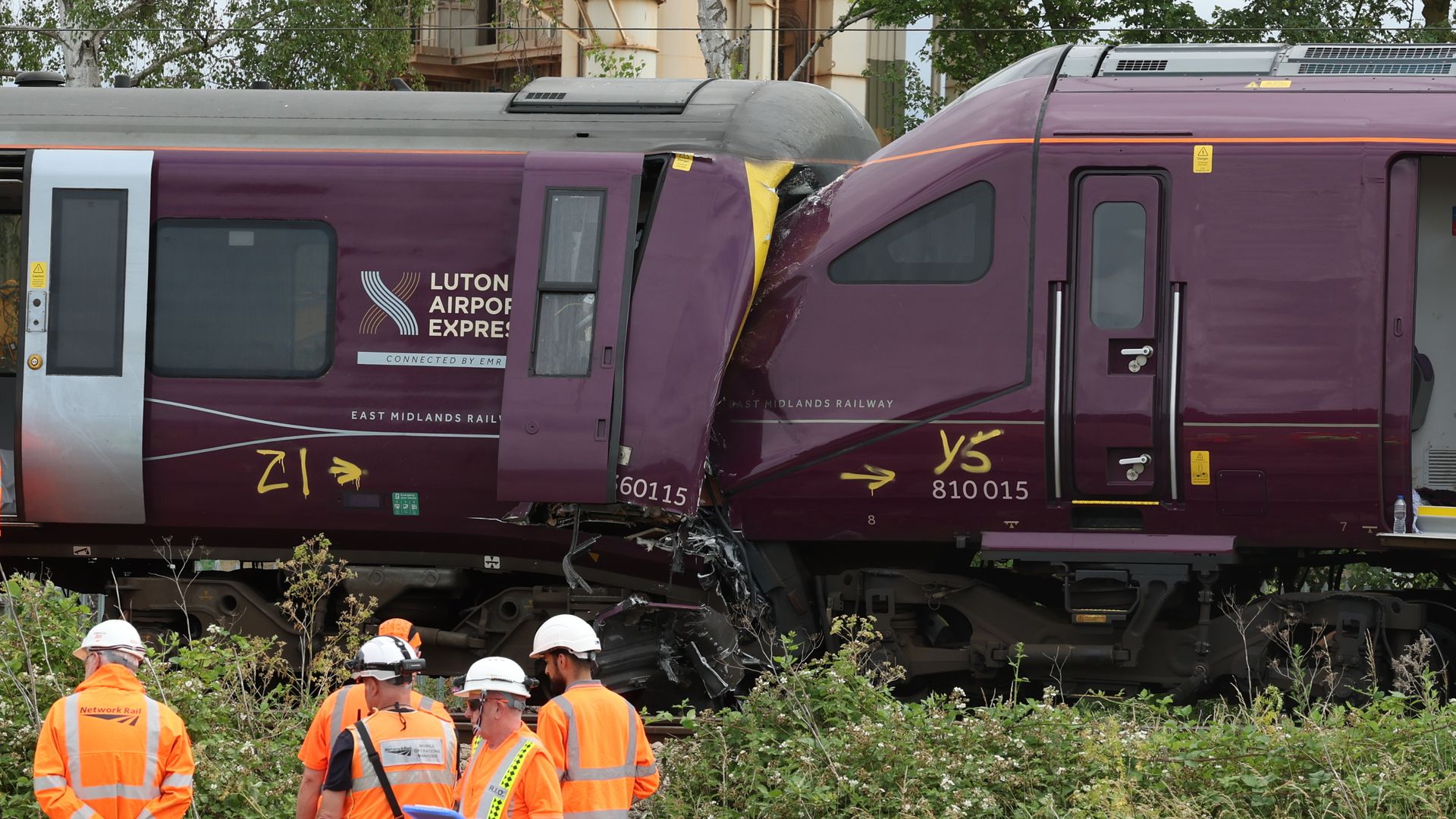
The metal cabin of a commuter train at dusk is a world measured in rhythm. Click-clack. Click-clack. It is a sensory loop that lulls the hundreds of passengers riding behind the engine into a state of absolute trust. They are reading text messages, finishing work emails, or staring blankly at their own reflections in the darkened glass. They do not think about the thousands of tons of steel hurtling forward at eighty miles per hour. They do not think about the single human being at the controls.
Until the rhythm stops. For a closer look into similar topics, we suggest: this related article.
When a major rail collision occurs, the immediate aftermath is filled with cold, clinical language. Investigating agencies release preliminary reports. Media outlets flash breaking news banners. The vocabulary is rigidly standardized: technical failure, human error, collision vectors, and the phrase that carries a heavy weight in the aftermath of rail disasters—Signal Passed At Danger.
To the public, that phrase sounds like a deliberate act of defiance. It evokes an image of someone willfully ignoring a bright red warning light. The reality of the rail network, however, is a complex interaction between human psychology and heavy machinery. Understanding what happens in the cab during those final, critical moments requires looking past the stark headlines to examine the invisible pressure points of modern transit. To get more background on this topic, comprehensive reporting can also be found on Reuters.
The Anatomy of the Green Line
Every day, millions of commuters hand over their safety to an intricate web of signals and track circuits. Imagine a system where safety depends entirely on absolute spatial awareness. Steel tracks are divided into blocks. Only one train should occupy a block at any given time. Signals act as the gatekeepers of these blocks, shifting from green to yellow to red based on the movement of traffic miles ahead.
For a driver, the view through the front windshield is a repetitive sequence of these lights, flashing past hour after hour, shift after shift.
Psychologists call it the monotony effect. When an operator sees hundreds of green lights over days and weeks, the brain naturally begins to predict the next light will be green too. It is a flaw in human design, an evolutionary shortcut. The mind conserves energy by anticipating consistency.
When that expectation breaks, the consequences are immediate. A train cannot stop like a car. A sudden brake application on a massive commuter train requires thousands of feet to find purchase against the smooth steel rails. If an operator misjudges a signal by even a few seconds, the physical laws of momentum take over. The distance required to avert disaster simply vanishes.
The Silent Safety Net
Modern rail networks do not rely solely on human eyes. Automated safety systems are designed to act as a digital co-pilot, monitoring the train’s speed and its approach to restrictive signals. In many regions, systems like Automatic Train Protection or positive control mechanisms are built specifically to intervene when a driver fails to respond to a warning.
Consider what happens next when these systems are challenged by real-world variables:
The train approaches a warning marker. An audible alert sounds inside the cabin. The driver must acknowledge the alert within a tight window, usually by pressing a button or adjusting the throttle. If the driver responds, the system assumes the human is in control and steps back.
But acknowledgment is not the same as correction. A driver can reflexively acknowledge a warning out of pure habit while their focus is momentarily pulled elsewhere. If the train continues forward without sufficient braking, the system will eventually trigger an emergency application of the brakes. Yet, even with automated intervention, the laws of physics remain unyielding. If the intervention occurs too late because of high speeds or heavy loads, the train will still slide past the marker into danger.
The vulnerability is clear. Technology can back up human judgment, but it cannot entirely replace the necessity of instant, accurate human decision-making. When both the human mind and the mechanical backup fall out of alignment by just a fraction of a mile, the margin for safety collapses.
The Human Cost of Momentum
The investigation into a collision that leaves dozens injured and a driver lost in the wreckage is a meticulous reconstruction of fragments. Data loggers—the black boxes of the rails—are pulled from the crushed metal. Investigators map out the exact sequence of throttle adjustments, brake pressures, and signal statuses down to the millisecond.
The data reveals the hard facts: the speed of the train, the exact location where the signal was breached, and the point of impact. What the data cannot capture is the internal state of the cabin in those final moments. Was it a sudden medical emergency? A momentary distraction caused by an unusual glare on the glass? A fleeting second of fatigue at the end of a long, demanding shift?
For the passengers who survived the impact, the memory is defined by the sudden, violent disruption of their routine. The screech of locking wheels, the terrifying force of deceleration, and the chaotic silence that follows a crash. They are left with questions that a simple timeline of events cannot fully satisfy.
Investigating these events is not merely about assigning blame to a voice that can no longer defend itself. It is about identifying the gaps in our infrastructure. If a system allows a single human error to result in a catastrophic failure, the system itself demands scrutiny. True safety is found when the infrastructure is resilient enough to absorb a mistake, ensuring that a broken second of human focus does not end in tragedy.