The strategic objective of deep-strike asymmetric warfare is not the absolute destruction of enemy assets, but the compounding inflation of operational costs. Recent Ukrainian drone strikes targeting Russian oil facilities demonstrate a shift from symbolic cross-border harassment to a systematic campaign aimed at critical nodes within Russia’s energy supply chain. By analyzing these kinetic actions through the lens of industrial bottlenecks, infrastructure vulnerability, and air defense economics, we can map the true efficacy of this campaign far beyond the immediate tactical metrics of single casualties or localized fires.
The standard media reporting of these events focuses heavily on human-interest angles or localized panic. This obscures the structural reality: a single successful strike on an oil refinery or storage terminal triggers a cascading failure across refining capacity, logistics, and domestic market stability.
The Three Pillars of Infrastructure Vulnerability
To quantify the impact of these strikes, the target system must be deconstructed into its core vulnerabilities. Energy infrastructure is inherently rigid, meaning it relies on fixed pathways and highly specialized components that cannot be easily rerouted or replaced.
1. Thermal and Kinetic Distillation Bottlenecks
Refineries and storage depots are not uniform blocks of industrial steel; they are highly integrated networks where specific components dictate total operational capacity. The most critical vulnerability sits within the atmospheric and vacuum distillation units. These towers process crude oil into primary fractions. Because they operate under extreme thermal and pressure conditions, they require specialized metallurgy and complex control systems.
A drone strike that punctures or ignites a distillation column halts the entire facility’s processing capabilities. Unlike localized pipeline damage, which can be bypassed or patched within 48 hours, a compromised distillation tower requires custom fabrication, logistics coordination, and highly technical engineering oversight to repair. Under international sanctions regimes, acquiring the precise components to rebuild these units introduces severe delays, turning a low-cost drone deployment into a long-term capital liability for the target state.
2. Volumetric Storage Deprivation
When a strike hits a tank farm or oil depot—resulting in the highly visible fires often documented on social media—the immediate loss is measured in barrels of oil or refined product. The secondary, more permanent loss is volumetric storage capacity.
Industrial storage tanks are designed with complex fire suppression, venting, and floating roof systems to manage volatile organic compounds. Once a tank undergoes sustained thermal warping from a petroleum fire, its structural integrity is destroyed. The facility loses the buffer capacity required to balance fluctuations between crude supply and transport logistics. This forces upstream producers to throttle extraction because there is nowhere to store excess volume, translating localized kinetic damage directly into macroeconomic supply constraints.
3. Logistical Friction and Supply Chain Displacement
Energy products move via highly optimized pathways: pipelines, rail networks, and maritime tankers. When a terminal or depot is neutralized, the entire regional distribution network suffers a displacement shock. Refined products must be rerouted through alternative, less efficient transit modalities. This increases the load on rail infrastructure, consumes precious rolling stock, and drives up the per-barrel transport cost. The friction created by this displacement acts as an invisible tax on the state’s economy, draining labor, fuel, and transport capacity away from other critical sectors.
The Asymmetric Cost Function of Air Defense
The foundational economic principle driving Ukraine’s long-range drone strategy is cost asymmetry. This can be mathematically modeled by comparing the marginal cost of offensive delivery systems against the marginal cost of defensive interception and the capital value of the target asset.
Consider the baseline variables governing this equation:
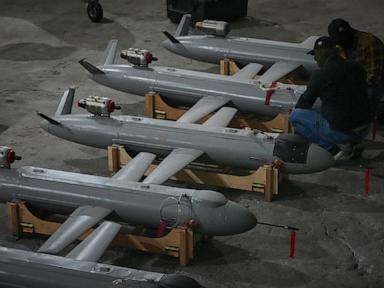
- Offensive Unit Cost ($C_o$): Long-range one-way attack drones utilizes off-the-shelf carbon fiber, commercial GPS/inertial navigation systems, and small, mass-produced internal combustion engines. The per-unit cost frequently ranges between $20,000 and $50,000.
- Defensive Interception Cost ($C_d$): Modern surface-to-air missile (SAM) systems rely on highly sophisticated radar guidance, solid-fuel rocket motors, and advanced kinetic warheads. A single interceptor missile from a system like a Pantsir-S1 or Tor-M2 can cost anywhere from $100,000 to over $1,000,000 per launch.
- Target Asset Value ($V_t$): The value of a fully operational refinery or a primary distribution hub extends from hundreds of millions to billions of dollars in replacement costs and lost economic output.
This creates an unsustainable defensive dilemma for Russian military planners:
$$\text{Systemic Attrition Ratio} = \frac{C_d \times \text{Interception Rate}}{C_o \times \text{Volume}}$$
If Russia chooses to defend every high-value energy asset across its vast western territory, it must deploy scarce SAM batteries away from the active frontline. This thins out air defense coverage over military concentrations, logistics hubs, and command nodes. Conversely, if these batteries remain deployed at the front, industrial infrastructure is left exposed to swarm attacks where even a 10% saturation rate (where 1 in 10 drones penetrates defenses) yields a catastrophic economic return on investment for the attacker.
The secondary defensive cost involves human capital and early warning tracking. To counter low-altitude, low-radar-cross-section drones, air defense crews must maintain constant vigilance, accelerating personnel burnout and radar hardware degradation. This induces systemic fatigue across the entire defensive network.
Cascading Economic Effects: From Fire to Market Panic
The immediate tactical consequence of a strike is a fire; the systemic consequence is market distortion. The Russian energy sector operates on tight margins of domestic supply stability, particularly regarding high-quality fuels like gasoline and diesel required for agricultural, industrial, and military use.
When a strike occurs, the immediate reaction function follows a predictable sequence:
- Production Stoppage: The targeted facility goes into emergency shutdown. Even uninjured units are offline during damage assessment and active firefighting operations.
- Wholesale Price Spikes: Commodity traders anticipate regional shortages, driving up wholesale prices on domestic exchanges.
- Logistical Hoarding: Regional distributors increase orders to secure dwindling supplies, artificially inflating demand and creating localized shortages at the pump.
- Export Diversion or Restrictions: To stabilize the domestic market and prevent public discontent, the state is forced to implement export bans or divert crude oil originally destined for international markets into functioning domestic refineries.
This final step directly impacts state revenues. When crude oil or refined products cannot be exported, the state loses hard currency inflows. Furthermore, if crude oil cannot be refined domestically due to damaged distillation units, and cannot be exported due to logistical bottlenecks or sanctions, production wells must be shut in.
Shutting in a production well in permafrost or geologically challenging regions is not a simple valve turn. It carries a high risk of permanent reservoir damage, reducing the long-term extraction capacity of the well field even after the geopolitical conflict resolves.
Strategic Limits and Tactical Countermeasures
A objective analysis must acknowledge the built-in limitations of a drone-led attrition strategy. Drones are not a silver bullet capable of collapsing a major industrial economy overnight.
First, the payload capacity of a long-range drone is fundamentally limited by its maximum takeoff weight and fuel capacity. Most models carry warheads ranging from 10 to 50 kilograms of explosives. Compared to a traditional cruise missile or heavy artillery shell, this is a modest payload. It requires precise targeting—relying on high-fidelity intelligence regarding the exact coordinates of vulnerable infrastructure components—to achieve anything beyond superficial cosmetic damage.
Second, the defensive side of the equation evolves continuously. Russia has increasingly relied on non-kinetic countermeasures, deploying localized electronic warfare (EW) umbrellas around major industrial sites. These systems jam GPS and GLONASS frequencies, spoof navigation telemetry, and disrupt command links. When effective, EW causes drones to drift off course, crashing harmlessly into empty fields or lower-value structures.
Furthermore, industrial facilities are adapting by constructing physical defenses, such as heavy steel netting around critical distillation columns and gas fractionators, designed to detonate drone warheads before they make contact with sensitive infrastructure.
The Strategic Projection
The future trajectory of this campaign depends on Ukraine's ability to scale manufacturing volume and integrate autonomous terminal guidance systems that bypass electronic warfare. If drone production achieves true mass scale, allowing for simultaneous multi-directional salvos of 50 or more airframes against single targets, the defensive capacity of localized EW and point-defense SAMs will be structurally overwhelmed.
Russia will be forced into an asymmetric resource allocation trap. It must either withdraw frontline air defense assets to protect its economic engine, accepting heightened military vulnerability in the theater of war, or allow its refining capacity to be methodically degraded piece by piece.
The structural play for Ukrainian planners is to maintain a relentless, high-tempo targeting cycle focused specifically on distillation assets and maritime export terminals. By forcing Russia to continuously reallocate capital, engineering talent, and military assets toward internal defense, the drone campaign systematically hollows out the structural stability of the Russian state's primary economic engine. This is not war won by decisive battlefield maneuvers; it is war won by the cold, calculated optimization of industrial friction.