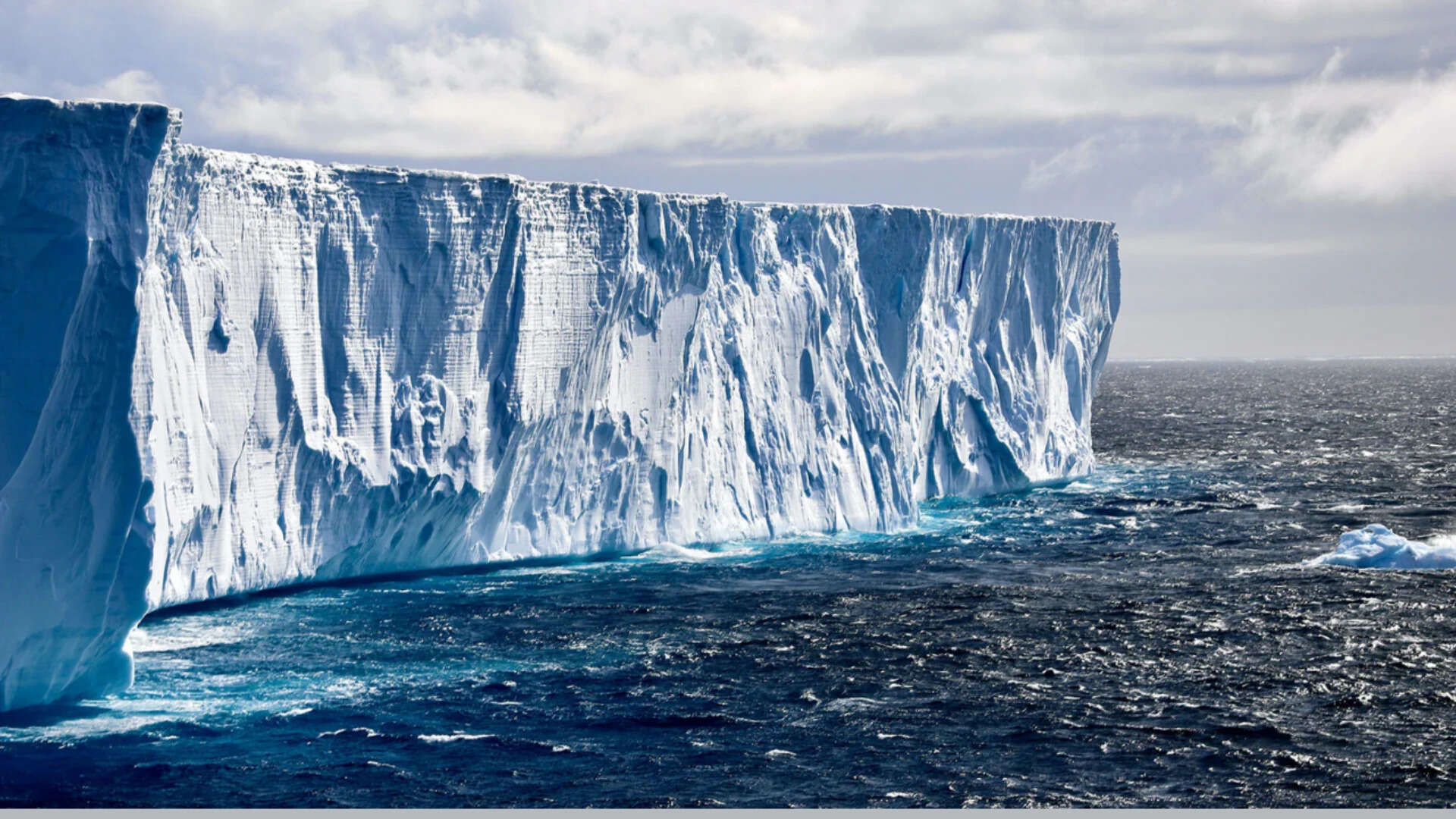
The detection of nanoplastics—specifically tyre-wear particles—in Antarctic soil confirms that atmospheric transport has bypassed the geographical isolation of the Southern Ocean. This is not merely an environmental milestone; it is a proof of concept for global aerosol distribution models. The presence of these sub-micron synthetic polymers in the most remote terrestrial sinks indicates that no geographic barrier is immune to micro- and nanoplastic (MNP) infiltration. Understanding this phenomenon requires moving past generalized alarmism and dissecting the precise physical, chemical, and meteorological vectors that drive long-range atmospheric transport (LRAT) and subsequent cryosphere deposition.
The core systemic issue lies in the life cycle of elastomeric compounds and synthetic polymers. While macro-plastic pollution relies heavily on fluvial and oceanic currents for distribution, nanoplastics operate within the laws of atmospheric fluid dynamics. This analysis deconstructs the mechanics of generation, transport, and soil matrix integration of nanoplastics in polar regions, establishing a framework for assessing global synthetic particle flux.
The Generation and Aerodynamic Profile of Tyre Wear Particles
To understand how synthetic particles reach the Antarctic interior, the analysis must begin at the point of origin: the friction interface between vehicular tyres and pavement surfaces. Tyre-wear particles (TWPs) are not pure rubber; they are complex heteropolymers composed of elastomeric matrices—primarily styrene-butadiene rubber (SBR) and natural rubber—cross-linked with sulfur and heavily filled with carbon black or silica.
The mechanical shear stress of braking and acceleration generates particles across a wide size spectrum. While larger fragments (10 to 100 micrometers) settle rapidly near the roadway due to gravitational sedimentation, the high-energy friction also produces a significant volume of sub-micron particles, ranging from 10 to 500 nanometers. These ultrafine particles form the highly mobile fraction of TWPs.
[Mechanical Friction at Roadway]
       │
       ├─► Macro-particles (>10 µm)  ──► Localized Sedimentation (Soil/Runoff)
       │
       └─► Nanoparticles (<1 µm)     ──► Aerosolization & Boundary Layer Injection
The aerodynamic behavior of these particles determines their atmospheric residence time. In the nanometer range, particles behave less like solid debris and more like high-molecular-weight gas molecules or stable aerosols. The sedimentation velocity of a 100-nanometer particle is negligible compared to the ambient turbulent mixing forces in the planetary boundary layer. Consequently, these particles are easily lofted into the free troposphere, where horizontal wind velocities are significantly higher and geographical obstacles are absent.
The Atmospheric Vector: Transport Mechanics Across the Southern Ocean
The isolation of Antarctica is maintained by the Antarctic Circumpolar Current and the associated polar vortex—a persistent, large-scale cyclonic circulation pattern. For decades, these systems acted as effective thermal and physical barriers against lower-latitude air masses. The presence of TWPs in Antarctic soil reveals specific atmospheric leakage pathways that overcome these barriers.
Three distinct meteorological phases govern this transport architecture:
- Boundary Layer Injection: High-density urban and industrial centers in the Southern Hemisphere (primarily South America, South Africa, and Australia) act as continuous point sources for aerosolized TWPs. Convective lifting and frontal systems elevate these nanoplastics out of the localized surface boundary layer into the upper troposphere.
- Tropospheric Jet Stream Convection: Once in the free troposphere, particles are captured by zonal wind systems, such as the mid-latitude westerlies. Because nanoplastics exhibit high resistance to photo-oxidation and UV degradation when shielded by atmospheric moisture or carbon black structures, their chemical integrity remains intact during trans-oceanic transit.
- Polar Vortex Ingress: The polar vortex is not entirely impermeable. Planetary-scale waves and tropospheric folding events create periodic mass exchanges between mid-latitude air and polar air. During these atmospheric disturbances, air masses laden with mid-latitude synthetic aerosols penetrate the polar front, bringing nanoplastics into the Antarctic interior.
The transport efficiency is further enhanced by the phenomenon of aging. As nanoplastics travel through the atmosphere, they interact with volatile organic compounds (VOCs), sea spray aerosols, and anthropogenic pollutants like sulfur dioxide. This process changes the surface chemistry of the particles, coating them in hydrophilic layers that alter their aerodynamic diameter and wet deposition potential.
Mechanics of Deposition and Soil Matrix Integration
Once nanoplastics cross the polar front, their removal from the atmosphere occurs through two primary deposition mechanisms: dry deposition via turbulent diffusion and gravitational settling, and wet deposition via precipitation scavenging. In the Antarctic interior, where liquid precipitation is virtually non-existent, wet deposition occurs through snow accumulation. Nanoplastics act as cloud condensation nuclei or ice-nucleating particles; water vapor condenses around the polymer core, and the particle is brought to the surface within snowfall.
Once deposited on the snowpack, the transition from the cryosphere to the terrestrial soil matrix follows a seasonal thermal cycle.
[Atmospheric Nanoplastics]
       │
       ▼ (Wet Deposition via Snowfall)
[Snowpack Reservoir]
       │
       ▼ (Ablation & Seasonal Melt)
[Hydrological Infiltration]
       │
       ▼ (Adsorption to Soil Grain Surface)
[Lithospheric Sink]
The Accumulation Phase
During the austral winter, nanoplastics remain locked within the stratified layers of the snowpack. The cold, dry conditions prevent vertical mobility, effectively freezing the atmospheric flux in situ.
The Ablation and Melt Phase
During the brief austral summer, solar radiation causes surface ablation and melting of the upper snow layers. This process creates a concentrated pulse of meltwater. Because nanoplastics are hydrophobic yet light enough to be suspended in water, they move downward through the firn layer and drain into exposed ice-free soils, which account for less than one percent of the Antarctic continent.
The Lithospheric Adsorption Phase
Upon entering the soil matrix—typically poorly developed, coarse-grained cryosols—the nanoplastics interact with mineral surfaces. Unlike temperate soils rich in organic matter, Antarctic soils lack complex humic acids that can encapsulate particles. Instead, nanoplastics bind directly to the mineral grain surfaces through electrostatic forces and van der Waals interactions.
The structural configuration of Antarctic cryosols creates a highly porous medium. The physical freeze-thaw cycles (cryoturbation) act as a mechanical pump, driving the sub-micron particles deeper into the soil profile over successive seasons. This process creates a long-term subsurface reservoir, masking the true scale of surface deposition.
Analytical Limitations and Detection Bottlenecks
Quantifying nanoplastics in polar matrices presents significant analytical challenges. The historical reliance on visual identification and micro-Raman or Fourier-transform infrared (FTIR) spectroscopy is ineffective for particles below the 1-micrometer threshold due to the diffraction limit of light.
Current validation requires highly specialized thermal desorption and mass spectrometry workflows, each with distinct operational limitations:
┌─────────────────────────────────┬─────────────────────────────────┐
│ Analytical Methodology          │ Operational Bottleneck          │
├─────────────────────────────────┼─────────────────────────────────┤
│ Pyrolysis-Gas Chromatography-   │ Destructive technique; destroys │
│ Mass Spectrometry (Py-GC-MS)    │ morphology; high risk of        │
│                                 │ background polymer contamination│
├─────────────────────────────────┼─────────────────────────────────┤
│ Thermal Desorption GC-MS        │ Limited sample size volume;     │
│ (TD-GC-MS)                      │ quantification relies on        │
│                                 │ proxy indicator ions            │
├─────────────────────────────────┼─────────────────────────────────┤
│ Field-Flow Fractionation (FFF)  │ Requires intensive matrix       │
│ paired with ICP-MS              │ extraction; risk of particle    │
│                                 │ loss during filtration steps    │
└─────────────────────────────────┴─────────────────────────────────┘
The primary analytical bottleneck is sample contamination. Because synthetic polymers are ubiquitous in scientific equipment, protective clothing, and laboratory air filtration systems, establishing an absolute blank value is exceptionally difficult. Field sampling in Antarctica requires ultra-clean protocols, including the use of all-metal sampling gear, pre-combusted glass containers, and positive-pressure cleanrooms on-site. The data confirming TWPs in Antarctic soil must therefore be viewed through the lens of these intensive extraction limits; the identified concentrations likely represent a conservative lower bound of actual environmental accumulation.
The Ecological Dynamics of Polar Cryosols
The insertion of synthetic elastomeric compounds into an ecosystem that has evolved in near-total isolation introduces a series of chemical and physical disruptions. While the long-term toxicological thresholds remain unquantified, the fundamental mechanisms of impact can be categorized into physical alterations of the soil matrix and chemical leaching of additive packages.
On a physical level, the accumulation of nanoplastics modifies the hydro-physical properties of cryosols. Nanoplastics alter the soil's pore-size distribution and capillary water retention. In an environment where liquid water is a critical limiting factor for terrestrial life—such as nematodes, tardigrades, and micro-arthropods—changes in soil moisture retention can alter localized habitats. Furthermore, dark-colored particles like tyre-wear fragments, which contain significant amounts of carbon black, have a lower albedo than surrounding mineral grains. When concentrated near the surface, these particles absorb solar radiation, warming the micro-environment and accelerating localized permafrost degradation.
On a chemical level, tyre-wear particles act as vectors for complex mixtures of additives, stabilizers, and processing oils. These include compounds such as zinc oxide, polycyclic aromatic hydrocarbons (PAHs), and vulcanization accelerators like 2-mercaptobenzothiazole. In aquatic ecosystems, the transformation product of the antioxidant 6PPD (known as 6PPD-quinone) has demonstrated acute toxicity in specific organism profiles at parts-per-trillion levels. The cold temperatures of Antarctica slow down the microbial and photochemical degradation of these leached chemicals, extending their lifespan within the ecosystem and allowing them to persist far longer than they would in temperate climates.
Strategic Framework for Global Mitigation
The empirical confirmation of nanoplastic migration to Antarctica demonstrates that local containment strategies are ineffective against global atmospheric transport loop systems. Mitigating this transboundary pollution requires an approach that targets the source of generation rather than the remote points of deposition.
A viable strategic framework must focus on three primary intervention points:
- Material Science Innovation: Developing alternative elastomers for vehicular tyres that maintain safety performance characteristics while exhibiting accelerated biodegradability when shed as sub-micron particles. This involves shifting from traditional petroleum-derived SBR blocks to bio-synthetic rubbers engineered to break down via ambient hydrolytic or photochemical pathways.
- Infrastructure Optimization: Implementing advanced stormwater and urban runoff capture systems in high-density areas is insufficient for the aerosolized fraction. Mitigation must include the deployable optimization of road sweeping and urban canopy designs engineered to capture ultrafine particles before they leave the localized boundary layer.
- Regulatory Restructuring: Current international frameworks for polar protection, such as the Antarctic Treaty System and the Madrid Protocol, lack the jurisdiction to regulate emissions generated within sovereign territories outside the Antarctic zone. Addressing this gap requires integrating atmospheric nanoplastics into international air pollution treaties, treating synthetic micro-aerosols with the same regulatory severity as black carbon or persistent organic pollutants (POPs).
Relying on the geographical isolation of remote regions to protect them from industrial waste streams is no longer a viable strategy. The global atmospheric conveyor belt is actively redistributing synthetic material across the planet, transforming a localized urban waste issue into a permanent component of the global geological record.


