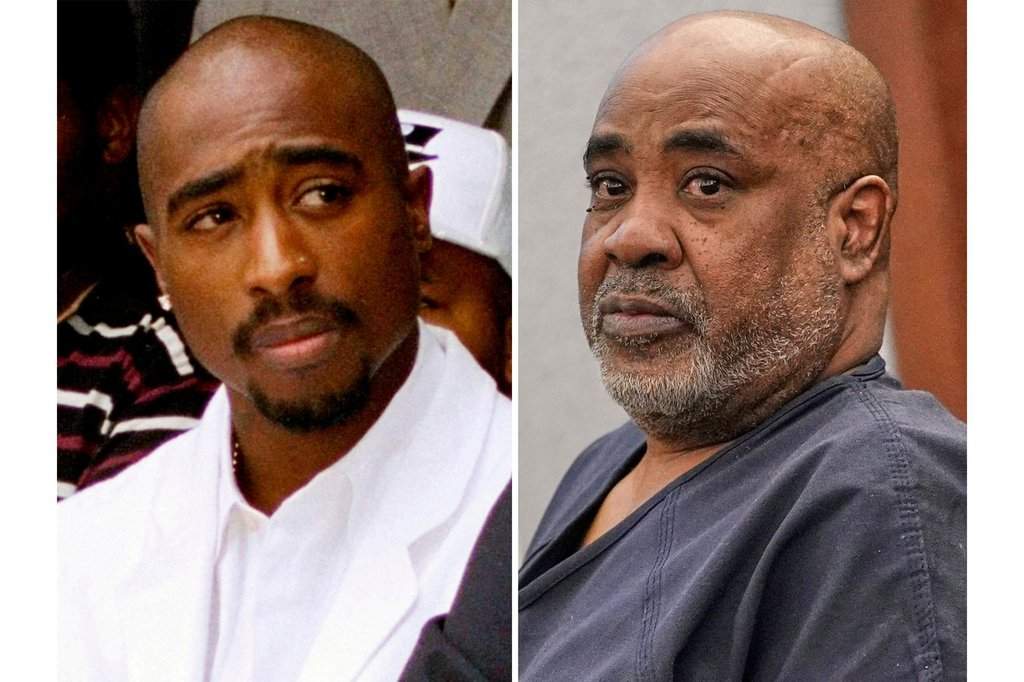
The judicial resolution of a thirty-year-old homicide offers a clinical study in how self-incrimination, historical documentation, and structural liability intersect under criminal law. The conviction of Duane Davis for first-degree murder in the 1996 killing of Tupac Shakur represents a rare instance where an aging cold case transitioned into a successful prosecution without direct forensic matches to the shooter. Instead of relying on physical evidence from a compromised 1990s crime scene, the state built its case on a structural framework of command responsibility, public admissions, and premeditated coordination. Deconstructing the mechanics of this trial reveals how modern prosecutors utilize a suspect's own historical footprint to bridge a three-decade evidentiary gap.
The Triangulation of Liability
In prosecuting an individual who did not pull the trigger, the state relied on accomplice liability and conspiracy doctrines. Under Nevada law, an individual who procures the weapon, orchestrates the movement of assets, and directs personnel toward a target carries identical culpability to the principal actor. The prosecution established this through three distinct variables: Recently making news lately: Measuring Heritage Loss Why Institutional Failure Destroys Minority Assets.
- The Provocation Window: The physical altercation inside the MGM Grand hotel lobby hours prior to the shooting established the motive and a compressed timeline for retaliation.
- The Asset Acquisition: The procurement of a firearm immediately following the casino altercation transformed a spontaneous street dispute into a premeditated operational response.
- The Spatial Presence: Consistent placement of the defendant inside the specific vehicle utilized during the drive-by attack established operational control.
Rather than attempting to reconstruct missing ballistic fragments or degraded 1996-era hotel surveillance tapes, the evidentiary model focused entirely on behavioral patterns and verbal admissions accumulated over decades.
The Cost Function of Public Confessions
The primary vulnerability for the defense centered on the defendant's own extensive media footprint. Over the years, the accused had openly discussed the logistics of the night in police interviews, documentary features, and a 2019 memoir titled Compton Street Legend. Additional details regarding the matter are explored by NPR.
The defense argued that these admissions were commercial exaggerations—fabricated narratives designed to generate financial yield and cultural notoriety within the true-crime ecosystem. From an analytical perspective, this defense failed because it miscalculated the risk-reward ratio of notoriety. The defendant traded legal insulation for commercial relevance.
The prosecution countered this argument by isolating immutable constants across the defendant's shifting narratives. While peripheral details regarding specific actors fluctuated depending on the interview medium or publication, the core logistical architecture remained invariant: the acquisition of the weapon, the pursuit of the vehicle carrying the victims, and the presence within the white Cadillac. The legal system treated these public accounts not as promotional hyperbole, but as a compounding trail of admissions against interest.
The Operational Limits of Cold Case Prosecution
Attempting to secure a conviction nearly thirty years after an offense introduces extreme operational friction. Institutional memory degrades, primary witnesses pass away, and physical archives scatter or deteriorate. In this instance, the actual gunman, Orlando Anderson, was killed in an unrelated incident in 1998, removing the primary principal from the judicial equation.
To overcome this vacuum, the state deployed structural substitution, utilizing expert testimony on gang hierarchies to explain how a senior figure exercises operational control without executing the physical act. This shifts the focus from physical forensics to organizational sociology. The jury was asked to understand the defendant not merely as an individual present at a crime, but as a node in a structured hierarchy where orders dictated movement.
Strategic Assessment of the Legal Precedent
The outcome demonstrates a definitive shift in how historical high-profile investigations are brought to closure. When physical evidence degrades beyond forensic utility, modern prosecutors bypass traditional crime-scene reconstruction in favor of behavioral dossier analysis.
By weaponizing the subject's memoirs, recorded interviews, and social posturing, the state inverted the value of the media narrative, turning self-published myth-making into legal liability. Future legal strategies involving legacy cases will increasingly look to digital footprints, published retrospectives, and unsealed historical archives to construct liability when traditional witnesses and physical artifacts are no longer available.