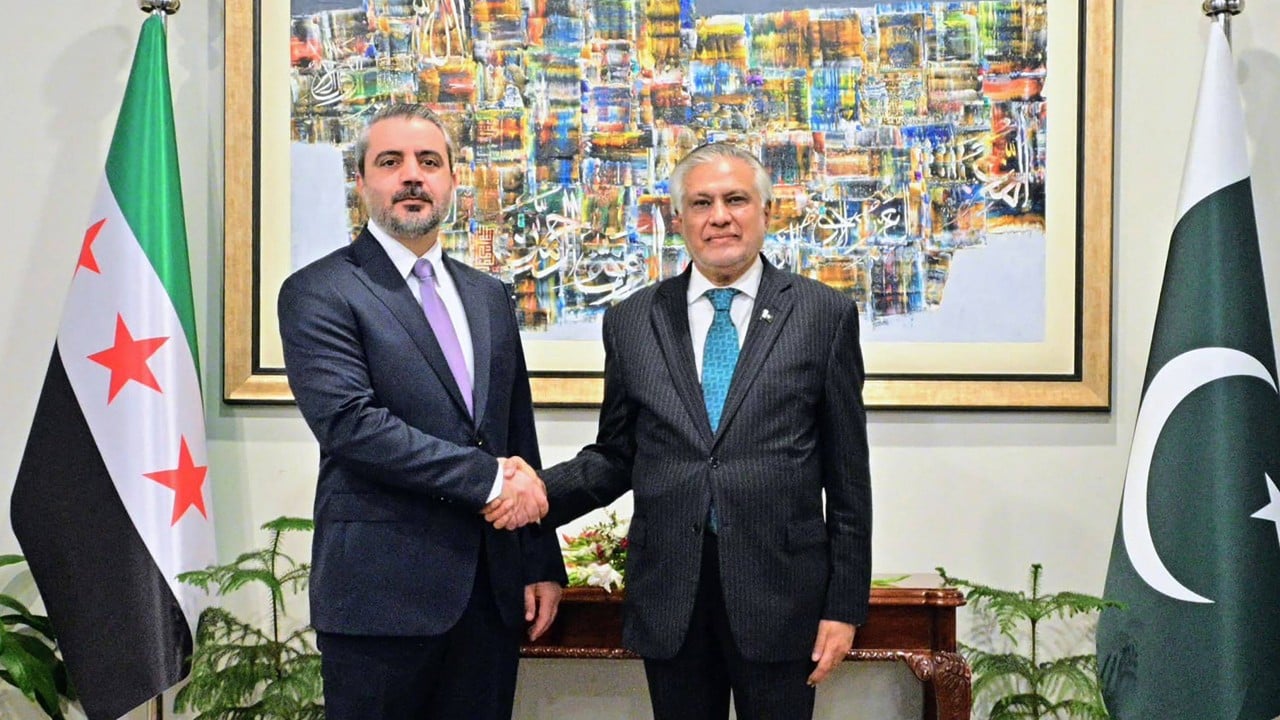
Recent Israeli airstrikes targeting the disused Abu Duhur airbase in northwestern Syria have laid bare a dangerous strategic miscalculation in Jerusalem. By attempting to preemptively block Turkish military cooperation with Syria’s transitional government, Israel has inadvertently accelerated a geopolitical alignment it fears most: pushing Damascus straight toward membership in the newly minted Mecca Joint Defence Agreement.
For years, Israeli security doctrine in post-Assad Syria relied on maintaining total freedom of aerial movement and preventing hostile regional actors from embedding themselves along its northern frontier. Yet, the August 2026 strikes on the Idlib facility, justified by Prime Minister Benjamin Netanyahu’s office as a necessary response to an alleged unauthorized Turkish troop deployment, achieved the exact opposite of their intended deterrent effect. Instead of cowing Damascus or convincing Ankara to scale back its footprint, the kinetic messaging triggered high-stakes diplomatic fallout in Jordan and brought the region to the precipice of a direct Turkish-Israeli collision.
The Anatomy of a Miscalculated Escalation
The sequence of events leading up to the Abu Duhur bombing reveals deep friction between Israel's uncompromising security demands and Syria’s desperate need for state reconstruction. Following the collapse of Bashar al-Assad's regime, Syria’s new leadership under Ahmed al-Sharaa has walked a tightrope. Damascus wants sanctions lifted, territory recovered, and its shattered military rebuilt. To achieve this, it has leaned heavily on Turkey for training, logistical support, and defense equipment.
Israel views this burgeoning partnership through a strictly zero-sum lens. Israeli military planners argue that a permanent Turkish military footprint inside Syria introduces a hostile great power directly onto its border, threatening its strategic depth and freedom of action.
However, dropping bombs on Syrian runways without prior coordination with Washington or Ankara ignored the broader diplomatic architecture taking shape across the Muslim world. The Mecca Joint Defence Agreement—signed by Saudi Arabia, Turkey, and Pakistan—was originally engineered to provide collective economic and industrial security against southern and eastern disruptions. Yet, its mutual defense clauses and burgeoning military-industrial frameworks offer an increasingly attractive umbrella for middle powers seeking insulation from unilateral Western or Israeli military coercion.
If Israel continues to treat Syrian sovereignty as a blank slate for punitive raids, Damascus will find that non-alignment is a luxury it can no longer afford.
The Mechanics of the Mecca Pact
To understand why Syrian accession to the Mecca Pact is a realistic outcome rather than a hollow threat, one must examine what the agreement actually entails. Modeled loosely on collective security principles, the pact binds Ankara, Riyadh, and Islamabad into deep defense-industrial cooperation, technology sharing, and mutual political backing.
For Saudi Arabia, the pact offers strategic diversification without abandoning its Western security partnerships. For Turkey, it solidifies Ankara's status as the indispensable security anchor of the Levant. For Pakistan, it enhances regional diplomatic capital.
If Syria is formally integrated into this framework—or even granted associate security guarantees under Turkish sponsorship—the strategic calculus for Israel shifts overnight. Striking a sovereign Syrian military installation currently carries a localized cost. Striking a facility protected by a pan-regional defense architecture backed by Turkish air power and Saudi financial might introduces the terrifying prospect of horizontal escalation.
The Diplomatic Fallout in Amman
The immediate aftermath of the Abu Duhur strikes underscores how quickly the crisis moved from kinetic action to frantic diplomacy. High-level delegations from Syria and Israel met in Jordan under American mediation to establish emergency deconfliction channels.
These talks in Amman highlight a profound irony. Israel sought to use military force to prove that Turkish expansion in Syria would not be tolerated. Instead, the raid forced the international community to formally institutionalize Turkey’s role in Israeli-Syrian security discussions. Ankara is no longer a peripheral actor whose presence Damascus can quietly manage; it is now central to the diplomatic agenda.
Damascus enters these negotiations demanding a complete Israeli withdrawal from the buffer zone seized after Assad's fall and an end to unilateral airstrikes. Israel demands the permanent demilitarization of southern Syria and a total ban on Turkish military infrastructure nationwide. These positions are fundamentally irreconcilable through bilateral coercion alone.
The Brink of a Wider Axis
When regional states perceive that a local hegemon can violate borders with impunity, they naturally seek collective shelter. The Mecca Pact was designed to address systemic vulnerabilities in a shifting Middle East. By treating Syrian territory as an open hunting ground for anti-Iran and anti-Turkey operations, Israeli defense planners are actively manufacturing the external threats necessary to bind Syria tightly to the Mecca framework.
The cold reality is that containment strategies built solely on air supremacy have a shelf life. Every missile that cratered an Idlib runway chipped away at the diplomatic goodwill necessary to keep Syria neutral. If the cost of rebuilding a state is constant humiliation from the air, Damascus will inevitably trade its nominal independence for the collective deterrence of a broader regional alliance. The architects of Israel's northern strategy wanted to prevent a hostile buildup. They may end up accomplishing the exact opposite by driving Syria permanently into the arms of the Mecca Pact.