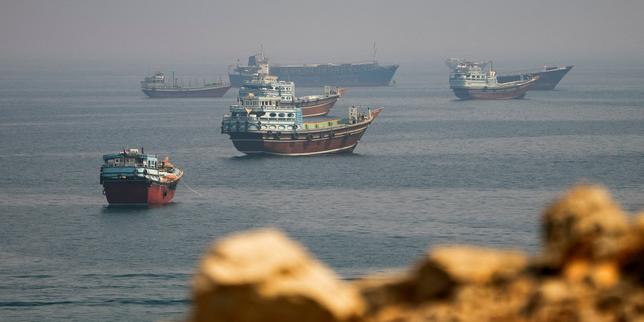
Geopolitical coercion operates through structural dependencies. When a major security guarantor demands out-of-theater military contributions, secondary allies possessing high resource vulnerability face a constrained optimization problem. South Korea imports approximately seventy percent of its crude oil and a substantial share of its liquefied natural gas through the Strait of Hormuz. This physical chokepoint ties the domestic industrial base directly to Middle Eastern maritime stability. Simultaneously, Washington exerts intense pressure on Seoul to deploy naval and aerial assets to secure the corridor. The intersection of bilateral alliance management, energy security, and domestic military readiness creates a complex strategic calculus that requires rigorous deconstruction.
The structural dilemma confronting the South Korean administration centers on resource allocation and alliance friction. On one side, the White House demands active allied participation in securing Middle Eastern shipping lanes, explicitly linking this cooperation to broader bilateral negotiations, tariff structures, and joint military posture adjustments on the Korean Peninsula. On the other side, any asset redeployment away from the northern border introduces tactical risks given the persistent threat matrix posed by North Korea. The presidential office in Seoul must navigate these competing vectors without destabilizing domestic defense capabilities or alienating its primary security partner.
Evaluating the true exposure of South Korea requires analyzing its energy import mechanics. The national economy functions as an export-driven manufacturing powerhouse operating on tight energy margins. Because ninety percent of primary energy is imported, sustained disruptions in the Persian Gulf cascade rapidly through domestic electricity generation, petrochemical processing, and heavy industrial output. The economic vulnerability is asymmetrical compared to Western allies whose energy baskets are more geographically diversified. Consequently, maintaining open shipping lanes is an existential economic imperative rather than a discretionary foreign policy choice.
The operational options under review by Seoul span distinct capability tiers. Reports indicate that military planners are evaluating the deployment of specific assets designed for maritime surveillance and defensive support.
The deployment of a maritime patrol aircraft, specifically models configured for anti-submarine and surface tracking, offers a high-visibility contribution with minimal footprint. This asset class minimizes personnel exposure while providing critical intelligence, surveillance, and reconnaissance capabilities to the multinational coalition operating in the region.
Logistics support vessels represent a lower-intensity engagement vector. Providing rear-support ships allows Seoul to satisfy alliance expectations of burden-sharing without committing combatants to high-threat zones. This option balances political utility with operational safety, though it may fall short of what the coalition leadership expects.
Specialized explosive ordnance disposal teams and mine clearance units address the immediate hazard of maritime sabotage and unexploded ordnance in narrow shipping corridors. These technical detachments fulfill critical operational deficits in coalition forces while maintaining a restricted, task-specific mandate.
Each option carries distinct legal and political hurdles within South Korea's domestic framework. Unlike previous administrations that expanded the operational mandate of existing anti-piracy units through administrative adjustments, current legal interpretations and legislative scrutiny require explicit parliamentary approval for new deployments outside traditional operational zones. The national assembly becomes a critical vetting ground where opposition parties scrutinize the justification for out-of-theater engagement, especially when weighed against domestic security posture requirements.
The friction in the bilateral relationship with the United States extends beyond maritime security into industrial policy and economic commitments. Delays in executing agreed-upon large-scale investment packages in North American markets create additional leverage points for Washington. Strategic analysts recognize that demands for military contributions in the Middle East often function as instruments in broader economic negotiations. Seoul's reluctance to act swiftly is rooted in a calculated effort to decouple security obligations from industrial concessions, though this separation becomes increasingly difficult to maintain under direct political pressure from the White House.
The strategic risk matrix involves second-order consequences that extend past immediate deployment decisions. Committing assets to the Middle East alters the readiness calculus for the Korean Peninsula. Even if the dispatched units represent a fraction of total national defense capacity, any perception of weakened deterrence vis-a-vis Pyongyang introduces strategic instability. Furthermore, active participation in coalition operations risks entangling South Korea in regional rivalries that run counter to its traditional foreign policy posture of maintaining strategic ambiguity outside its immediate neighborhood.
Resolving this impasse requires a phased diplomatic and operational approach that aligns allied expectations with domestic political constraints. Seoul must calibrate its tangible contributions to match the minimum threshold required to satisfy alliance demands while strictly limiting asset exposure to defensive, non-combat roles. The ultimate strategic play involves establishing a formalized burden-sharing framework that explicitly ties out-of-theater naval cooperation to guarantees regarding the integrity and timing of bilateral economic and defense agreements on the Korean Peninsula.


