Geopolitical coercion rarely operates through kinetic force alone; it functions primarily through financial exclusion. When state-level actors face systemic military pressure coupled with comprehensive trade restrictions, their operational capacity depends entirely on liquidity access. Washington's current posture toward Tehran relies on a precise structural thesis: by shutting off sovereign access to external capital markets and restricting petroleum revenue streams, the target state is forced into a terminal liquidity crisis. Examining this dynamic requires breaking down the mechanisms of sovereign insolvency, the elasticity of restricted oil exports, and the direct relationship between strategic military threats and macroeconomic isolation.
The Mechanics of Sovereign Liquidity Denial
Sovereign states fund operations, debt servicing, and internal stability through two primary vectors: tax generation from domestic economic activity and external debt issuance. When an economy suffers from compounding currency depreciation, structural inflation, and shrinking GDP, internal tax yields collapse in real terms. Under these conditions, external borrowing acts as the sole functional bridge for balance-of-payments deficits.
The declaration that a target state cannot borrow money is not merely a rhetorical flourish; it represents an enforcement mechanism of international financial isolation. Primary market access requires clearing houses, correspondent banking networks, and institutional investor confidence. By maintaining secondary sanctions and threatening severe penalties on any external entity providing capital lines, Washington enforces a hard capital ceiling.
Without access to international bond markets or multilateral lending facilities, a government must finance its operational deficit entirely through domestic money creation or reserve depletion. This shifts the macroeconomic burden directly onto domestic price stability. When foreign exchange reserves dwindle due to compressed hydrocarbon export volumes—dropping from historical baselines above one million barrels per day down to marginal operational thresholds—the central bank loses its capacity to defend the local currency.
The Energy Export Bottleneck
The structural vulnerability of the target economy stems from its reliance on a single primary export commodity. Hydrocarbon extraction constitutes the foundational input of the state budget. Strategic military campaigns and naval interdiction protocols target this precise revenue node.
Export volume reductions directly correlate with fiscal contraction. The economic transmission mechanism operates through three distinct stages:
- Volume restriction through maritime monitoring and port blockades, which physically limits the physical evacuation of crude oil.
- Discounted pricing pressures required to move product through illicit or gray-market channels, shrinking per-barrel revenue yields even when volume slips past enforcement mechanisms.
- Transaction friction caused by the exclusion of national banking institutions from secure messaging and settlement systems, forcing reliance on high-cost, high-risk settlement workarounds.
When these three factors compound, the state budget experiences an immediate deficit shock. The administration in Tehran faces a fiscal environment where traditional revenue collection is eclipsed by wartime expenditures and maintenance costs for degraded infrastructure.
The Cost Function of Retaliatory Deterrence
State actors caught in asymmetric conflicts frequently rely on proxy networks and localized deterrence strategies to compensate for conventional military inferiority. However, maintaining these operational networks incurs a high recurring cost function. Every defensive missile battery, naval maneuver in constrained maritime chokepoints like the Strait of Hormuz, and reconstruction effort at hardened underground sites requires capital input.
When external borrowing channels are legally and operationally sealed, the state must internalize these costs through severe austerity or hyperinflationary financing. This creates an internal feedback loop. The population bears the cost through surging consumer prices and restricted access to medical imports and basic goods, which deepens domestic friction.
Washington leverages this internal friction as a strategic forcing mechanism. The theory dictates that prolonged economic asphyxiation will narrow the strategic window for negotiators, compelling a total capitulation on nuclear enrichment and regional projection capabilities. Diplomatic pauses and intermittent negotiations function under this exact pressure framework. The core calculation assumes that the target leadership cannot sustain the financial bleed indefinitely without major structural concessions.
Strategic Execution and Market Realities
The persistence of this strategy depends entirely on maintaining the integrity of the financial blockade. Any loophole in capital restrictions or oil enforcement diminishes the efficacy of the squeeze. Simultaneously, the broader economic fallout—including elevated global interest rates and lingering inflationary pressures—demonstrates that sovereign financial exclusion carries systemic costs that ripple across international markets.
The definitive strategic play requires sustaining the capital embargo while keeping enforcement mechanisms rigid across maritime supply chains. If the target state cannot secure debt financing or recover hydrocarbon export volumes, its structural capacity to project power degrades past the point of recovery. The timeline of the conflict is ultimately governed by the depletion rate of foreign reserves versus the domestic threshold for economic endurance.
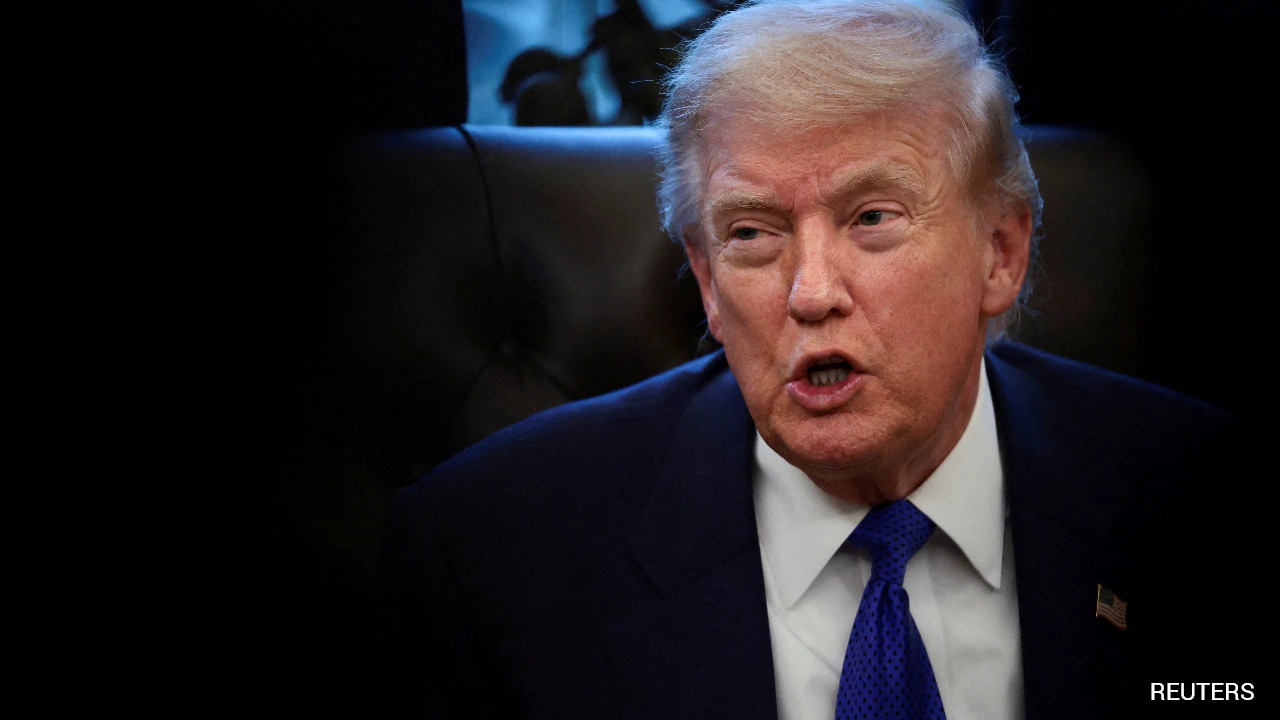
Donald Trump says he will reject any plans to unfreeze Iranian assets
This report provides context on the administration's strict financial enforcement and refusal to ease capital restrictions or unfreeze state assets during ongoing diplomatic negotiations.