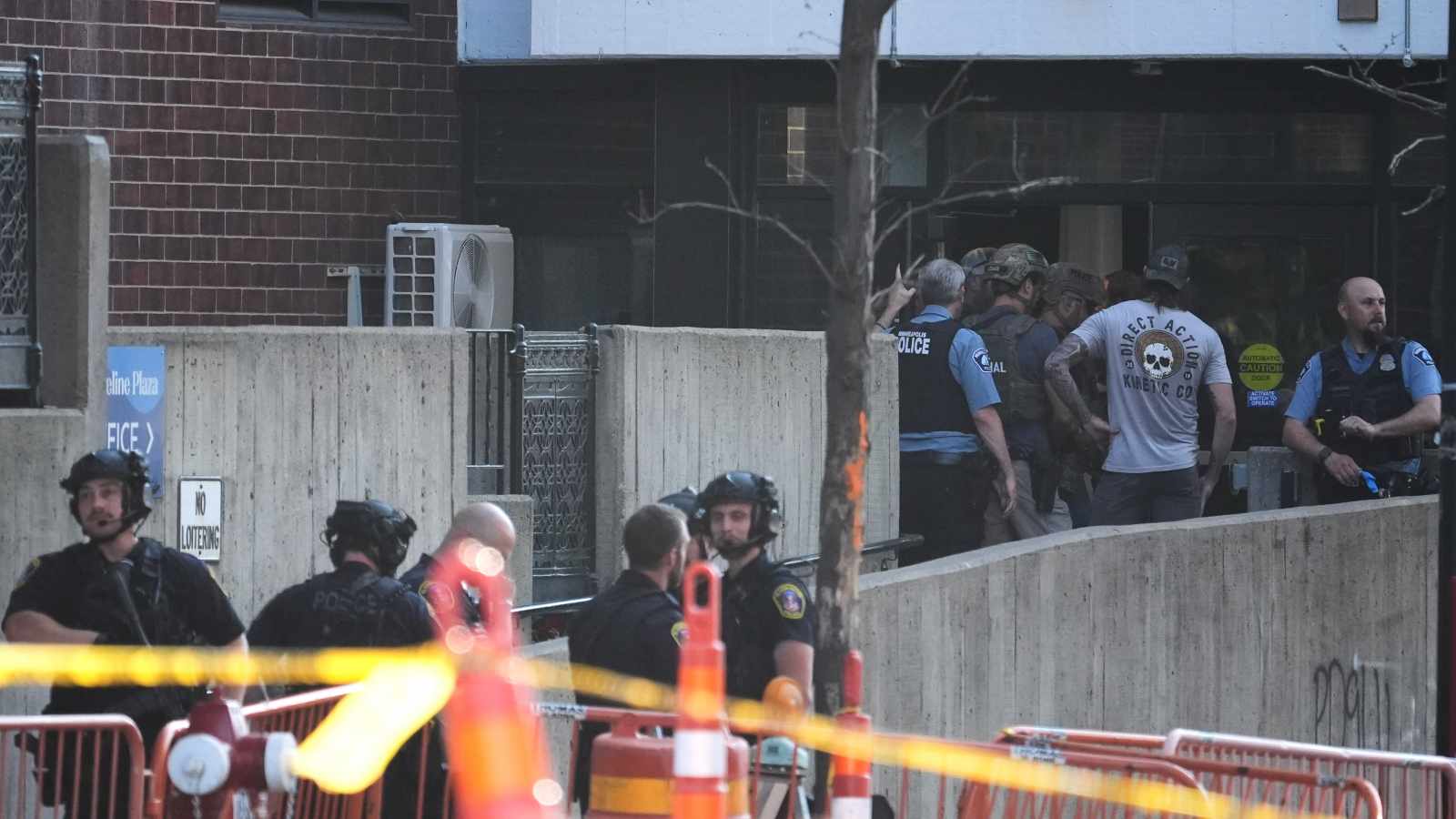
Urban high-density real estate complexes present unique tactical challenges when violent operational failures occur within vertical residential corridors. The shooting incident at a multi-story apartment structure near Grant Street in downtown Minneapolis, which resulted in multiple fatalities including the suspect and injuries to three responding officers, demands an analytical breakdown of emergency response speed, environmental visibility constraints, and institutional warning indicators. Evaluating this event requires stripping away descriptive journalism to examine the structural mechanics of tactical intervention, vertical containment protocols, and life-safety architecture.
The Response Velocity Vector
When emergency dispatch received a 911 call reporting gunfire at approximately 4:30 PM, the primary variable dictating loss mitigation was response velocity. Tactical units arrived on location and breached the structure within three minutes. This compressed timeline prevented the escalation of casualties that typically characterizes uncontrolled active shooter scenarios in closed environments.
The operational mechanics of this initial entry followed a distinct escalation model:
- Dispatch ingestion and resource allocation executed within baseline urban thresholds.
- Physical transit and perimeter establishment completed in under 180 seconds.
- Internal vertical navigation driven by acoustic triangulation of active gunfire.
Officers faced immediate environmental impedance upon reaching the upper floors. Reports of a dense atmospheric haze severely restricted visual acquisition, forcing responders to rely on acoustic signatures rather than direct line-of-sight identification. This friction point highlights a major vulnerability in high-rise interior defense: smoke, dust, or particulate dispersal from discharge events drastically reduces tactical awareness, increasing the cognitive load on entry teams.
The Structural Failure of Predictive Intervention
A critical component of institutional risk analysis involves evaluating pre-incident indicators. Witness testimonies from building residents established that the suspected individual had exhibited erratic behaviors, brandished firearms openly in common areas, and accumulated documented tenant complaints regarding threats. Furthermore, operational intelligence indicated that the suspect faced eviction proceedings stemming from gun-related intimidation.
This sequence maps a classic institutional blind spot where administrative property management and municipal law enforcement jurisdictions intersect:
- Property management logs verbal or minor physical complaints but lacks enforcement jurisdiction.
- Tenants report weapon displays without triggering immediate crisis intervention protocols.
- Legal frameworks governing evictions create a high-friction window between housing displacement and acute behavioral decompensation.
The transition from chronic nuisance reporting to active violence represents a failure of early-stage threat mitigation systems. When an individual demonstrates persistent violent indicators inside a confined residential ecosystem, standard property management protocols lack the feedback loops necessary to trigger mandatory psychiatric or law enforcement intervention before a catastrophic threshold is crossed.
Tactical Resource Distribution and Casualty Mechanics
The engagement resulted in three injured police officers, two of whom sustained direct ballistic trauma while a third suffered secondary injuries. The medical triage model deployed at the scene illustrates the strain placed on local trauma centers, specifically Hennepin Healthcare, which received multiple casualties simultaneously.
Urban tactical engagement within an apartment complex imposes severe geometrical constraints. Corridors limit tactical maneuvering, and stairwells create choke points. The convergence of local police departments, state coordination via the governor’s office, and federal resource integration through the FBI demonstrates a multi-tiered command structure. However, the initial seconds of the event relied entirely on the localized unit's capacity to absorb ambiguity, neutralize visual impairment, and establish internal control of the vertical axis.
Implement continuous acoustic sensor deployment linked directly to computer-aided dispatch within high-risk residential complexes to eliminate reporting latency. Property management entities must establish direct telemetry channels with municipal threat assessment units the moment a tenant introduces lethal instrumentation into shared common spaces.