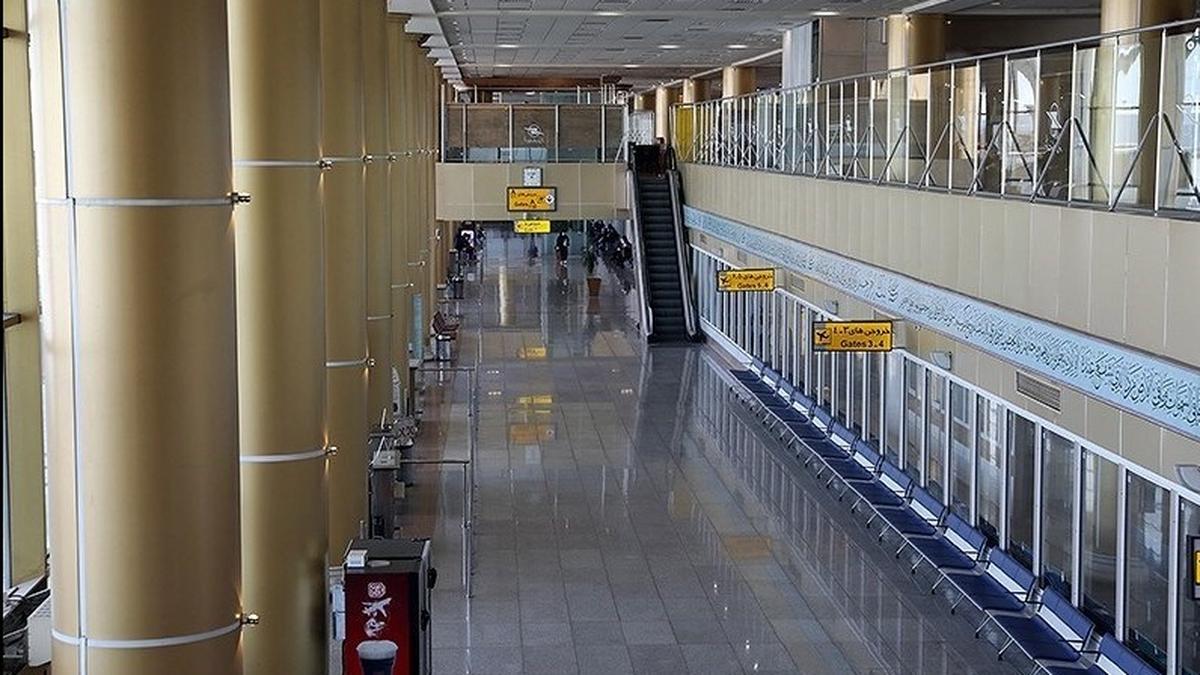
The headlines are chirping the same tired tune again. Mashhad’s Hasheminejad International Airport is resuming international flights on April 20. On paper, it looks like a recovery. In reality, it’s a desperate paint job on a crumbling fuselage. If you think a few flight paths opening up signifies a return to regional stability or an aviation "rebound," you aren't paying attention to the mechanics of the industry or the geopolitical pressure cooker.
Resuming flights isn't an achievement. It’s a maintenance requirement.
The Myth of Connectivity
Mainstream reporting focuses on the "restoration of ties." They want you to believe that because a plane can now fly from Mashhad to Istanbul or Dubai, the friction of the last several weeks has evaporated. This is a fundamental misunderstanding of how aviation works in high-tension zones.
Aviation isn't just about runways and jet fuel; it’s about insurance risk profiles and Notice to Air Missions (NOTAMs). When an airport like Mashhad "resumes" operations after a period of high-alert closure, the global insurance markets don't just reset to zero. They hike premiums. They re-evaluate the risk of "collateral interference." Every takeoff from Mashhad right now carries a hidden tax of uncertainty that the average traveler—and the average journalist—completely ignores.
The "consensus" view treats this reopening as a green light. Smart money treats it as a flashing yellow. We are seeing a forced normalization. The Iranian authorities need the optics of a functioning international hub to project internal stability. But look at the fleet being used. These aren't the state-of-the-art long-haulers of the West. This is a collection of aging airframes kept alive by "cannibalization"—the practice of stripping one plane for parts to keep another in the air.
The Cannibalization Economy
I have watched aviation markets navigate sanctions for decades. There is a specific type of rot that sets in when an industry is cut off from the global supply chain. You don't see it in the terminal’s duty-free shop. You see it in the maintenance logs.
Iran's civil aviation sector is operating on borrowed time. The "resumption" of flights from Mashhad is being executed with a fleet where the average age is often double the global standard. When Boeing and Airbus are legally barred from sending even a specialized screw to Tehran, "international flights" become a high-stakes gamble on domestic engineering.
To call this a "resumption of service" is like saying a man with a wooden leg is ready to run a marathon because he stood up.
Why the "People Also Ask" Sections Are Wrong
People are asking: Is it safe to fly to Mashhad right now?
The honest answer isn't a "yes" or "no." It's a "how much risk can you stomach?" Safety in aviation is an aggregate of redundant systems. In a sanctioned environment, those redundancies are the first thing to go. You aren't just flying; you are participating in a massive experiment in operational resilience under duress.
People are asking: Will this lower ticket prices in the region?
Absolutely not. Supply does not dictate price when the cost of operation is astronomical. Between the plummeting value of the Rial and the sheer difficulty of sourcing jet parts on the black market, these flights are priced for the elite and the desperate.
The Geopolitical Buffer Zone
Mashhad occupies a specific niche. It isn't just a city; it’s a religious and strategic outpost. Its proximity to Afghanistan and Turkmenistan makes it a vital node for regional intelligence and soft power. Reopening the airport isn't about vacationers going to see the Imam Reza Shrine. It’s about maintaining a corridor for the "shadow economy."
The "lazy consensus" says this is about tourism. The reality is that Mashhad is a pressure valve for a regime that needs to move people and assets without relying solely on the capital's infrastructure. By spreading the operational load to Mashhad, they create a decentralized target. If Tehran’s airspace becomes "hot" again, Mashhad serves as the backup. This isn't a travel update. It's a strategic repositioning of assets under the guise of civil aviation.
The Failure of "De-escalation" Rhetoric
The media loves the word "de-escalation." They see a flight schedule and think the missiles have been packed away. This is a dangerous delusion. In the Middle East, civil aviation has frequently been used as a human shield for military movements.
Look at the timing. April 20. This follows a period of unprecedented "shadow war" activity. Opening the skies is a move to dare the opposition to strike. It’s a "human shield" strategy applied to the stratosphere. If you put civilian liners in the air, you complicate the targeting math for any adversary.
I’ve seen this play out in other conflict zones. You announce a "return to normalcy" to force the other side to be the one that breaks the peace. It’s cynical, it’s effective, and it’s exactly what is happening here.
Your Move: The Reality Check
If you are a business traveler or an NGO worker looking at these Mashhad flight updates, stop reading the travel brochures. Start reading the Joint Resolution 2231 updates and the latest OFAC (Office of Foreign Assets Control) advisories.
- Audit your insurance: Most standard travel insurance policies have "war and civil unrest" exclusions that are triggered the moment a NOTAM is issued for a region. Reopening doesn't mean those exclusions disappear.
- Track the tail numbers: Don't just look at the airline. Look at the specific aircraft. If that plane has spent the last five years flying domestic routes in a sanctioned country, its maintenance history is a black box.
- Recognize the volatility: An airport that can be closed in an hour can be closed for a month. Do not book a flight through Mashhad unless you have a secondary way out of the country that doesn't involve an airplane.
The Invisible Ceiling
There is a hard limit to how much "recovery" can happen in Mashhad. That limit is the lack of modern Air Traffic Control (ATC) integration. While the rest of the world moves toward satellite-based navigation and AI-driven traffic management, Iran is largely stuck with aging radar tech.
When you increase the volume of international flights into an aging ATC environment, you increase the "Margin of Error." In a high-stress environment where the military is also active in the same airspace, that margin of error can be fatal. We saw it with PS752. The hardware didn't fail; the system of communication between civil and military sectors failed. Reopening Mashhad doesn't fix that system. It just puts more targets in the sky.
This isn't a story about a "resumption." It's a story about a regime trying to prove it can still breathe while the world has its hands around its throat.
Stop looking at the flight board and start looking at the radar. The planes are back, but the sky is still falling.