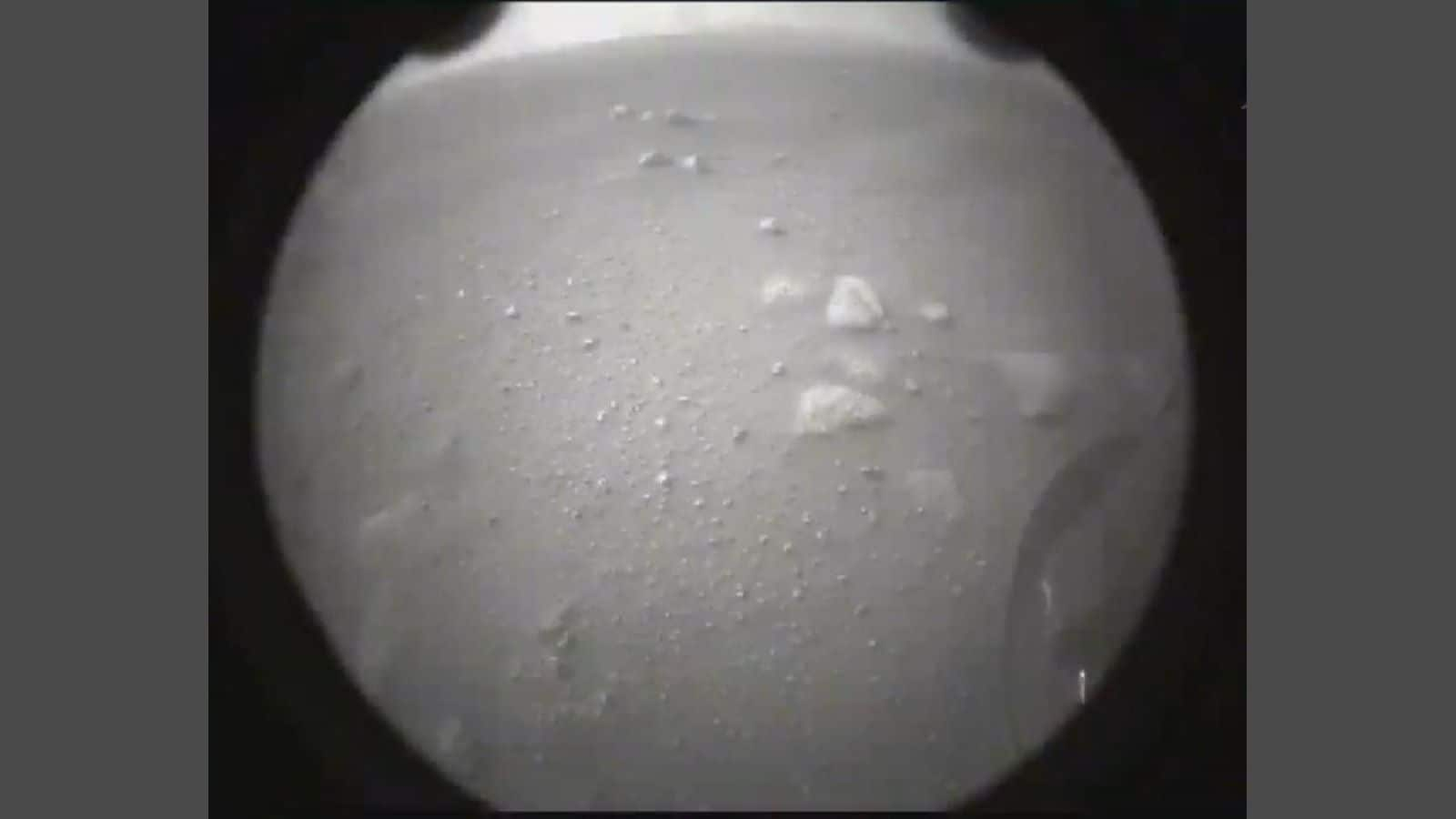
For years, planetary scientists operated under a tidy assumption. They looked at orbiters spinning above the Red Planet, mapped out ancient lakebeds like Jezero Crater, and figured Mars had a straightforward, single-act story with water. Water pools, water dries up, planet becomes a desert. Case closed.
Except Mars refuses to play by simple rules. For another look, consider: this related article.
Recent data beamed back by NASA's Perseverance rover blows that neat narrative wide open. Working its way along the inner edge of Jezero Crater in a geological band called the Margin Unit, the rover found that the rocks didn't just sit in a peaceful ancient lake. Instead, they went through a brutal, multi-stage makeover involving groundwater, surface lakes, and surging hot hydrothermal fluids.
If you want to understand how planets evolve, you have to look past orbital imagery and get your robotic wheels dirty in the dust. Related insight on this matter has been shared by MIT Technology Review.
What the Margin Unit Actually Tells Us
When Perseverance crawled up to the Margin Unit—covering roughly 870 feet of elevation change—the science team expected typical sedimentary layers left behind by a receding lake.
Reality looked completely different.
At the higher elevations of this stretch, the rover encountered coarse, crystalline rocks jam-packed with olivine, a green-tinted iron and magnesium-rich mineral. Crucially, these upper rocks showed almost zero signs of water damage. Geologists quickly pieced together what happened: these rocks originally crystallized deep underground inside a massive pool of cooling magma, long before they were ever pushed up and exposed by erosion.
Drop lower down the slope toward the old lakebed, however, and the story changes dramatically.
The olivine-rich rocks there are smashed up, fractured, and chemically altered. Researchers studying the data published in Communications Earth & Environment identified at least three distinct phases where water interacted with these rocks. It wasn't just a lake sitting on top of them. It was a complex plumbing system featuring underground aquifers, surface water, and late-stage hot fluids rewriting the chemical makeup of the crater.
Why This Changes the Search for Ancient Life
You might wonder why a bunch of altered rocks in a crater matters to anyone outside of a geology lab.
It matters because this kind of complex water chemistry is basically a neon sign for potential ancient habitability. When water reacts with olivine on Earth, it kicks off chemical processes that generate heat, release hydrogen gas, and leave behind specific mineral footprints like carbonate and silica.
Hydrogen provides an energy source for certain types of microbial life. Meanwhile, carbonates and silica act like microscopic flypaper, trapping and preserving organic signatures of past life forms.
Because Jezero Crater holds one of the largest exposures of carbonate minerals found anywhere on Mars, what Perseverance is learning right now has massive implications for the entire planet. Multiple rounds of fluid movement mean the environment changed dynamically over time. Some zones sat comfortably below the water line, leaving behind heavy concentrations of silica, while other zones experienced intense thermal activity.
The Reality of Planetary Exploration
Orbital maps are great for picking landing sites, but they lie to you about the details. From space, Jezero looked like a simple crater lake. On the ground, Perseverance proves it was a bustling geological crossroads where multiple aqueous systems collided, separated, and returned over millions of years.
Every time a rover digs its drill bit into a new rock target using instruments like SuperCam to vaporize tiny patches into plasma for spectral analysis, we realize how little we actually know about early planetary climates.
Mars wasn't a one-trick pony that dried up overnight. It was a chaotic, wet, thermally active world that kept shifting gears. And until these samples are eventually scooped up and brought back to Earth laboratories for high-powered analysis, Perseverance will keep driving along the rim, hunting down the next big surprise hidden in plain sight.
Mars Had a More Complex Water History Than We Thought — Perseverance Found New Clues #shorts
This video provides a quick visual summary of how NASA's Perseverance rover uncovered multiple episodes of water activity altering rocks inside Jezero Crater.