The escalation of maritime friction between the United States and Iran has moved beyond diplomatic posturing into a defined theater of kinetic and economic containment. Tehran’s recent warnings regarding a "reciprocal" response to U.S.-led port blockades or tanker seizures represent a calculated strategic doctrine: the conversion of geographic advantages into a counter-containment mechanism. To understand the viability of this threat, one must look past the political rhetoric and analyze the operational constraints of the Strait of Hormuz, the legal ambiguities of international waters, and the economic friction points of global energy transit.
The Doctrine of Asymmetric Reciprocity
Iran’s strategic posture rests on a framework of asymmetric reciprocity. This is not a mirror-image response where Iran attempts to blockade U.S. domestic ports; rather, it is a localized application of pressure designed to equalize the economic pain felt by Tehran. The doctrine functions on three specific pillars:
- Geographic Chokepoint Leverage: The Strait of Hormuz serves as a natural valve. Approximately 20% of the world’s liquid petroleum gas and oil passes through this 21-mile-wide passage daily.
- Proxy and Hybrid Interdiction: Utilizing fast-attack craft (FAC) and unmanned aerial vehicles (UAVs) to disrupt commercial shipping without triggering a full-scale naval engagement.
- Legal Grey-Zone Operations: Framing seizures as "regulatory enforcements" or "environmental inspections" to complicate the international legal justification for military intervention.
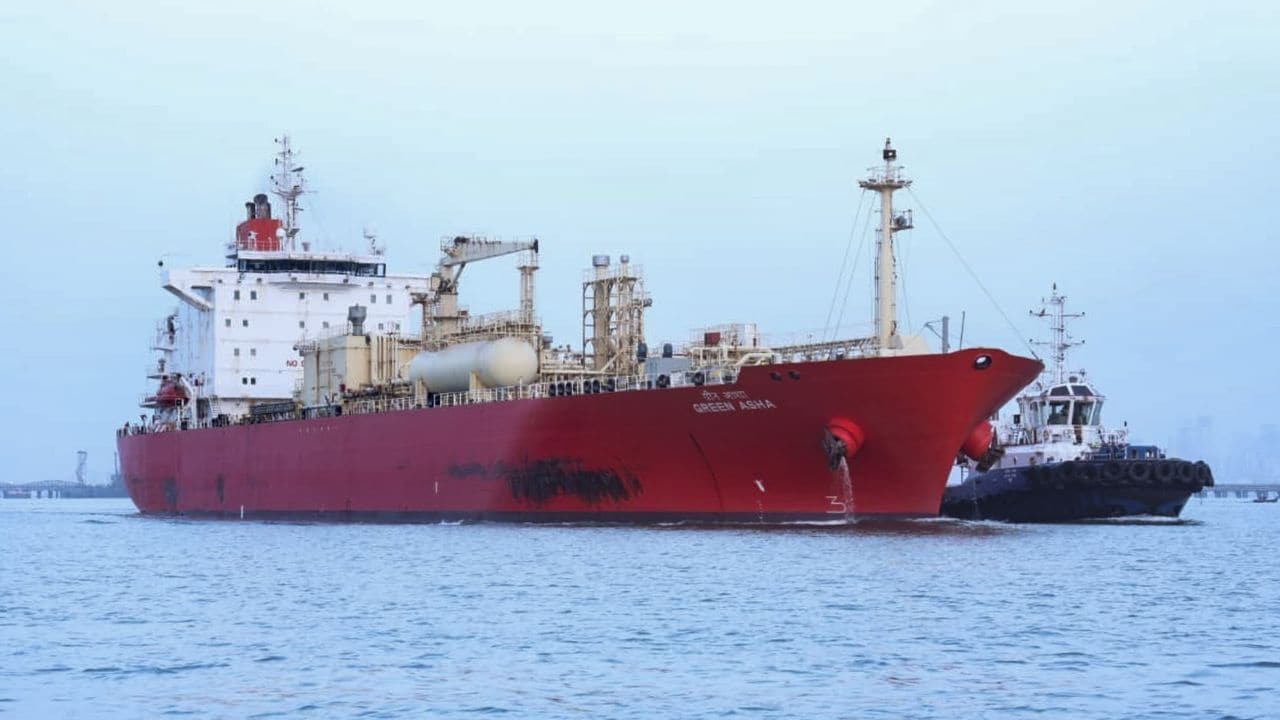
The U.S. strategy of "maximum pressure" relies on the secondary sanctions regime to dry up Iranian port revenues. When the U.S. intercepts Iranian-flagged tankers—often citing the International Emergency Economic Powers Act (IEEPA)—it creates a precedent that Tehran interprets through the lens of maritime "tit-for-tat."
The Mechanics of a Port Blockade
A formal blockade is an act of war under international law. However, modern blockades often take the form of "maritime exclusion zones" or aggressive inspection regimes. The United States maintains the capability to execute a "soft blockade" through:
- Financial De-platforming: Cutting off the P&I (Protection and Indemnity) insurance clubs that allow Iranian ships to dock at international ports.
- AIS Manipulation Tracking: Using satellite imagery and RF (Radio Frequency) signal analysis to identify "ghost" tankers attempting to bypass sanctions.
- Physical Interception: The boarding and seizure of vessels suspected of carrying sanctioned petroleum products in international waters.
Iran’s counter-strategy focuses on the Cost Function of Transit. By making the transit of the Persian Gulf prohibitively expensive via high insurance premiums and security risks, Tehran aims to force the international community to pressure Washington into easing its restrictive stance. The logic is simple: if Iranian oil cannot reach the market, the security of all oil leaving the Gulf is compromised.
Structural Vulnerabilities in Global Energy Supply Chains
The global energy market is sensitive to the "fear premium." Every time a threat of reciprocal action is issued, the Brent crude futures market reacts. The relationship between maritime security in the Persian Gulf and global inflation is direct and measurable.
The Buffer Capacity Problem
Most analysts overlook the lack of alternative routes. While Saudi Arabia and the UAE have pipelines (such as the East-West Pipeline and the ADCOP pipeline) that can bypass the Strait of Hormuz, their combined capacity is roughly 6.5 million barrels per day. This leaves a deficit of over 10 million barrels per day that must pass through the Strait. A reciprocal Iranian blockade—even a partial one—creates a supply-side shock that cannot be mitigated by current infrastructure.
The Insurance Feedback Loop
Insurance for commercial vessels is predicated on risk assessment. The Joint War Committee (JWC) in London designates high-risk areas. An Iranian threat of reciprocity triggers:
- War Risk Surcharges: Immediate spikes in the cost of insuring hulls and cargo.
- Operational Delays: Ships moving in convoys or rerouting to avoid Iranian territorial waters, increasing fuel burn and time-to-market.
- Contractual Force Majeure: Enabling suppliers to cancel deliveries without penalty, further destabilizing the market.
Tactical Realities of Naval Engagement
A direct naval confrontation between the U.S. 5th Fleet and the Islamic Republic of Iran Navy (IRIN) or the IRGC Navy (IRGCN) would be characterized by a disparity in tonnage but a parity in localized lethality.
The U.S. employs a "Blue Water" strategy, utilizing Carrier Strike Groups (CSGs) and advanced Aegis-equipped destroyers. These platforms are designed for high-end, open-ocean combat. Conversely, Iran utilizes a "Brown Water" or "Green Water" strategy. They favor "swarming" tactics where dozens of small, highly maneuverable craft equipped with anti-ship cruise missiles (ASCMs) overwhelm the defensive systems of a single, larger vessel.
The limitation of the Iranian threat lies in its sustainability. While Iran can cause significant short-term disruption, it lacks the logistical depth to maintain a protracted blockade against a coalition of Western powers. The second limitation is economic self-interest: Iran’s own economy, though crippled by sanctions, still relies on the functioning of its ports for non-oil trade and humanitarian imports.
The Legal Framework of Maritime Seizure
The conflict is largely fought in the "grey zone" of the United Nations Convention on the Law of the Sea (UNCLOS). Although the U.S. is not a signatory to UNCLOS, it recognizes it as a codification of customary international law.
Iran frequently cites "innocent passage" violations to justify its reciprocal actions. Under Article 19 of UNCLOS, passage is not innocent if the ship engages in "any act of willful and serious pollution" or "any other activity not having a direct bearing on passage." Tehran uses these broad definitions to detain tankers, claiming environmental risks or technical violations. This creates a legal stalemate where both sides claim the moral and legal high ground, while the underlying motivation remains purely geopolitical.
Quantifying the Impact of Reciprocal Action
If Iran follows through on its "reciprocal action," the impact can be categorized into three tiers of severity:
- Tier 1: Harassment and Delay: Occasional boardings and "show of force" maneuvers. This maintains the fear premium without triggering a kinetic response.
- Tier 2: Targeted Seizures: Detaining vessels specifically linked to countries that support U.S. sanctions. This creates diplomatic fractures among U.S. allies.
- Tier 3: Closure of the Strait: Deploying naval mines and land-based ASCMs to shut down all traffic. This is a "suicide option" that would lead to total war and the destruction of Iranian naval assets.
Evidence suggests Tehran prefers Tier 2. It allows for a calibrated response that signals resolve to its domestic audience and regional adversaries without crossing the threshold that would necessitate a massive U.S. military strike on Iranian soil.
Strategic Divergence: The Role of Non-State Actors
An overlooked variable in the U.S.-Iran maritime standoff is the role of the "Axis of Resistance." Iran’s ability to project power is not limited to its official navy. Through groups like the Houthis in Yemen, Iran can pressure maritime traffic in the Red Sea and the Bab el-Mandeb strait simultaneously. This "Multi-Front Maritime Pressure" forces the U.S. and its allies to thin their naval presence across two critical chokepoints rather than focusing on the Persian Gulf alone.
This creates a strategic dilemma for Washington. To protect shipping in both the Gulf and the Red Sea, the U.S. must commit a disproportionate amount of its global naval capacity to the Middle East, potentially leaving vulnerabilities in the Indo-Pacific theater.
The Friction of Energy Transition
The long-term efficacy of a U.S. port blockade is decreasing as global energy markets shift. As China and India—the primary consumers of Iranian oil—develop sophisticated "dark fleet" logistics and non-dollar payment systems (such as the CIPS or petro-yuan), the ability of the U.S. to enforce a total blockade via financial systems diminishes. Iran is betting that the transition to a multipolar world will eventually render U.S. maritime sanctions toothless.
However, the immediate reality remains one of extreme volatility. The U.S. maintains the world's most sophisticated maritime surveillance and interdiction network. Iran maintains the world's most sophisticated asymmetric coastal defense system.
The strategic play for any actor involved in the Gulf—be it a shipping conglomerate or a sovereign state—is to assume that the "freedom of navigation" is no longer a guaranteed global norm, but a contested privilege. Stability in the region will not be achieved through more aggressive blockades or louder threats of reciprocity. Instead, it requires a new maritime security architecture that recognizes the reality of Iranian coastal influence while safeguarding the global necessity of unhindered energy flow. Until such a framework exists, the Persian Gulf will remain a theater of tactical maneuvers where a single miscalculation in "reciprocal action" could trigger a systemic collapse of global trade liquidity.