The Sound of the Shoreline
Water remembers nothing of the boundaries humans draw across its surface. Stand on the gravelly, wind-whipped shore near Kingston on a Tuesday morning in late autumn, and the horizon offers no clues about sovereignty. The waves roll in with the same cold, grey indifference whether they crash against New York limestone or Ontario granite. Gulls wheel overhead, utterly indifferent to treaties, tariffs, or the quiet anxieties of diplomats in Ottawa and Washington.
Yet, maps are stubborn things. They are inked by people who need to know where they begin and where the stranger ends.
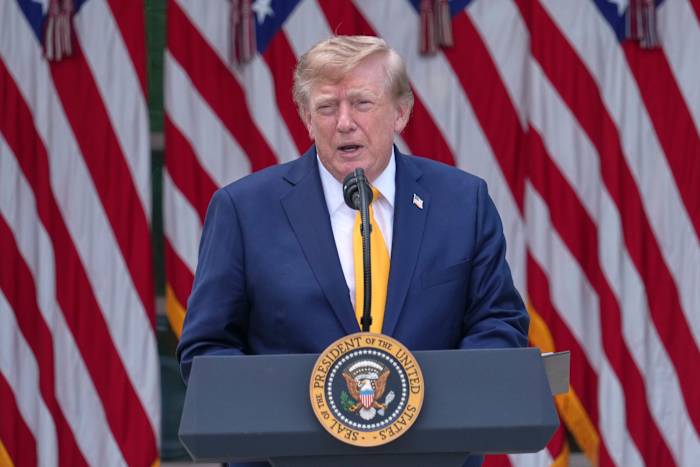
Recently, a suggestion drifted across the border like an unseasonable gale. Donald Trump, ever prone to renaming things in his own image, mused aloud about a grand cartographic rebranding. Lake Ontario, that massive inland sea shared by two nations, should perhaps be known as Lake America.
Across the water, the reaction was not merely annoyance. It was a sharp, collective intake of breath. Canadians balked. They did not balk with violent rage, but with the quiet, bruised exasperation of a neighbor whose front gate has just been casually unhinged by someone convinced they own the whole fence line.
To understand why a name matters so intensely, you have to look past the political theatre. You have to look at what names actually do. They are anchors for memory. When you change the name of a body of water that has sustained Indigenous nations for millennia and defined a shared frontier for centuries, you aren't just altering letters on a parchment. You are rewriting a shared history, erasing the other side of the conversation, and claiming the horizon entirely for yourself.
A Geography of Shared Tides
Consider what Lake Ontario actually is. It is the eastern anchor of the Great Lakes system, a vast basin holding over four hundred cubic miles of fresh water. It is a highway of commerce, a moderating force for local vineyards, and a fragile ecosystem that took twelve thousand years to settle into its current banks.
More than that, it is a border. Not a wall, but a shared seam.
Down in Rochester, the water smells of old industry and autumn leaves. Up in Cobourg, it smells of salt spray and pine, even though no ocean is near. Millions of people live within sight of its shores, drawing their drinking water from its depths, casting lines into its freezing bays, and watching tankers crawl like mechanical water beetles toward the St. Lawrence Seaway.
When the idea of renaming the lake surfaced, it struck a raw nerve because it touched upon a quiet, persistent Canadian fear: the fear of being swallowed whole by the cultural and economic gravity of the giant living directly to the south.
Imagine living next door to a person who plays their music twice as loud, owns twice as much property, and occasionally forgets your name. Most days, you smile over the hedge, share a beer, and pretend the size difference doesn't matter. But when your neighbor starts casually sketching their property line across your back porch, the neighborly smile freezes.
That is what the Lake America proposal felt like north of the border. It wasn't just a political soundbite. It was a reminder of how easily the identity of the smaller partner can be eclipsed by the sheer, deafening volume of the larger one.
The Weight of Words
Words carry gravity. Indigenous peoples called this water Ontariio, meaning lake of shining waters, or variations of it pointing to the great beauty of its expanse. French explorers and British cartographers struggled with the spelling, but they kept the spirit of the indigenous syllables. The name belongs to the land, not to any single administration.
When a politician floats a new label, it is rarely just about semantics. It is an assertion of ownership. It is an attempt to make the landscape reflect the ego of the viewer.
If you call it Lake America, what happens to the Canadians who look out at the exact same sunset from Toronto or Prince Edward County? Are they suddenly gazing across an American lake? Do their memories of childhood summers spent skipping stones on those beaches become retroactively annexed?
Of course not physically. But psychology is a powerful architect. Names tell us who we are allowed to be in a given space. To strip away a shared designation is to declare that the partnership no longer requires the consent of both partners.
Look at how international waters are managed. Look at the complex treaties governing the Great Lakes, agreements forged over decades to prevent pollution, manage fisheries, and share hydroelectric power. These are not romantic documents; they are bureaucratic, hard-fought, and delicate. They require both nations to see each other as equals across the table.
When you start renaming shared geography unilaterally, you signal a breakdown in that equality. You signal that collaboration has been replaced by conquest, even if the conquest is only conceptual.
The Neighborly Resurgence
The response from north of the border was swift, steady, and uniquely Canadian. There were no riots, no grand protests in the streets. Instead, there was a quiet, stubborn mobilization of cultural pride. Social media filled with historical maps, indigenous names, and quiet reminders of the Battle of 13 colonies, the War of 1812, and two centuries of peaceful, complicated coexistence.
Canadians began posting pictures of their favorite hidden coves along the northern shore, tagging them not with political slogans, but with local names. Cobourg. Kingston. Toronto. The Thousand Islands. Each post was a small, defiant anchor dropped into the digital ether, saying: We are here. We have always been here. And the water flows both ways.
It is easy to dismiss these verbal skirmishes as modern noise. We live in an era where politicians throw ideas against the wall simply to watch them slide down, generating headlines and distracting from deeper structural failures. Yet, the words we tolerate shape the world we eventually inhabit.
If we accept that a shared natural wonder can be casually rebranded to satisfy the nationalist impulses of a single leader, we accept that might makes right in the realm of geography. We accept that shared heritage is up for grabs to the highest bidder of attention.
The Horizon Remains
The sun sets over Lake Ontario with a fiery, bruising intensity that turns the water the color of hammered copper. On the south shore in New York, a fisherman packs up his gear, his breath pluming in the cold air. On the north shore in Ontario, a woman walks her dog along the boardwalk, listening to the rhythmic slap of the waves against the concrete.
They are looking at the same water. They are breathing the same air. The lake does not know where the international boundary line sits, and it certainly does not care what name is printed on the latest map in Washington or Ottawa.
The proposal to rename it will likely fade into the vast archive of forgotten political hyperbole, eclipsed by the next news cycle, the next election, the next crisis. But the reaction it provoked remains instructive. It revealed the quiet, nervous vigilance of a borderland that never quite stops watching the giant to the south. It proved that identity is not a passive inheritance. It is something people are willing to defend, one shoreline at a time, simply by remembering who they are when the wind blows off the water.