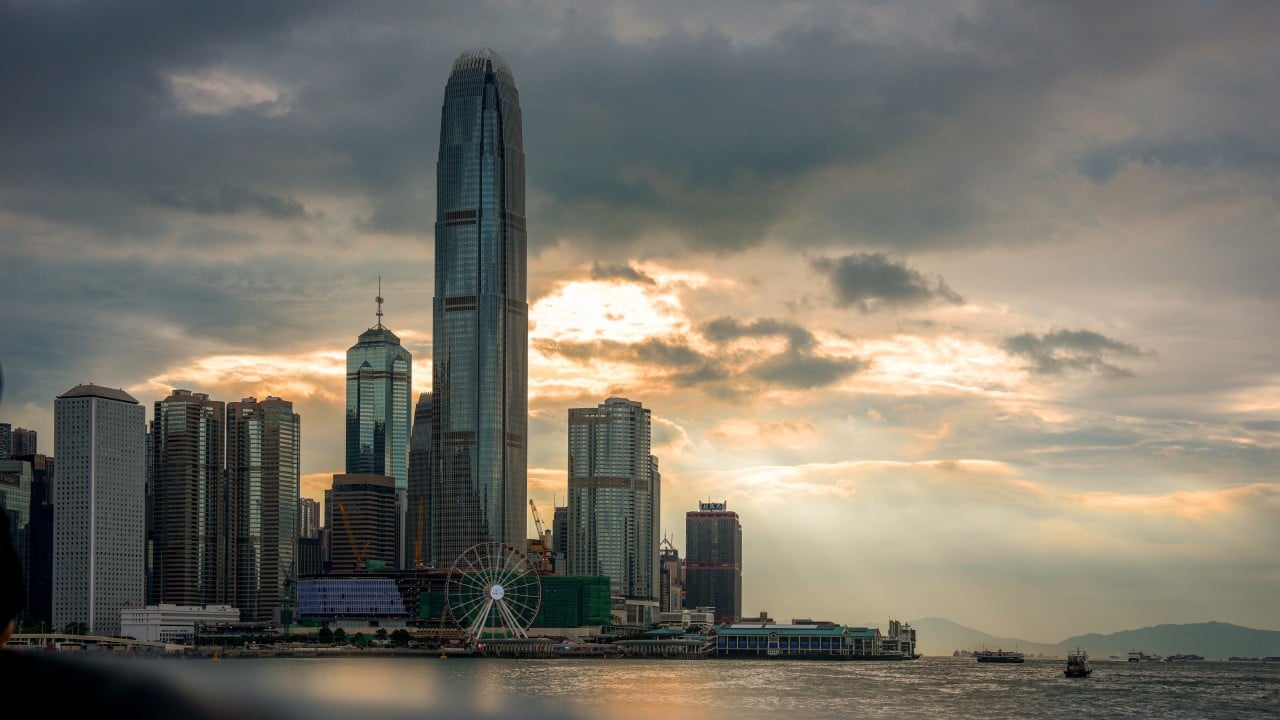
The coffee in the glass-walled tower overlooking Victoria Harbour is bitter, and Chen knows it. He has spent the last fourteen hours staring at a spreadsheet that represents three billion dollars worth of steel, concrete, and ambition stretching from the deserts of Central Asia to the ports of Southeast Asia. Chen is a hypothetical compliance officer, but his desk, his panic, and his calculations are entirely real. He works for a mainland enterprise trying to plant its flag overseas. To do that safely, he needs a translator, a legal arbiter, a risk assessor, and a banker who speaks three financial dialects fluently.
He needs Hong Kong.
For decades, the world watched maps redraw themselves through grand geopolitical declarations. But money does not care about speeches. Money cares about friction. Every border crossed is a tax paid, a regulation misunderstood, a delay measured in millions of lost dollars.
Consider what happens next: On a Wednesday morning at the Hong Kong Convention and Exhibition Centre in Wan Chai, thousands of delegates will file past security for the annual Belt and Road Summit. They are not arriving to wave flags. They are arriving to count yuan, structure debt, and find out why infrastructure firms from Almaty to Abu Dhabi are quietly lining up to list their assets on a trading floor in a city that refuses to stand still.
Financial Secretary Paul Chan Mo-po calls it market expansion. That is the bureaucratic phrase for a tectonic shift. Behind the policy memos lies a hard numerical reality: over the past five years, the combined trade share of ASEAN, Middle Eastern, and Central Asian markets within Hong Kong's orbit has climbed to roughly 17 percent, compounding at a yearly rate near 10 percent. Direct investment into ASEAN alone touched 16.5 billion dollars last year, a 140 percent leap from half a decade prior.
These are not abstract statistics. They are ships leaving ports. They are sovereign bonds issued in offshore renminbi—like the massive dim sum bond footprints carved out by Indonesia and Kazakhstan.
Trillions.
Yet, the macro picture misses the human terror of execution. Imagine standing in a boardroom in Shenzhen, looking at a map of a foreign country where you have zero contacts, unfamiliar labor laws, and a banking system that operates on entirely different frequencies. A company can have the best artificial intelligence or green energy technology on earth, but without a secure corridor to commercialize it abroad, it stays trapped at home.
This is the invisible architecture that Hong Kong provides. Through mechanisms like the government's GoGlobal Task Force—which has already ushered more than 300 mainland corporations into international expansion setups locally—the city acts as a professional services pressure valve. It absorbs regulatory shock. It provides a neutral, internationally aligned legal framework where contracts can be signed without fear of sudden judicial weather changes.
Look closer at the upcoming summit's itinerary. For the first time, a dedicated Go Global Chapter will pull back the curtain on how mainland enterprises can export their capabilities without stumbling into foreign compliance traps. Alongside discussions on low-altitude aviation economies, artificial intelligence, and urban transitions, the real product being traded is trust.
Over 100 Belt and Road enterprises are already listed on the local stock exchange, commanding a market valuation north of 340 billion dollars. Eighty-two bonds from those same regions have raised over 470 billion dollars in capital. Gulf banking institutions are planting heavy flags in local offices, recognizing that if you want to finance a road through the mountains of Central Asia or a smart city in the Middle East, you do not go directly to New York or London. You go where the liquidity meets the bridge.
Back at his desk, Chen finally hits save on his spreadsheet. His company is opening an office in Wan Chai. The risk hasn’t vanished, but the runway is clear.
The harbor outside turns the color of hammered copper as the sun dips behind the peak. Somewhere down below, a container ship slides past the piers, carrying a cargo manifest written in multiple languages, financed by a currency that bridges hemispheres, moving steadily toward a future built by design, not by chance.

/voters-voting-in-polling-place-138711480-87a09f220a71438dbdff698a643c8cf1.jpg)