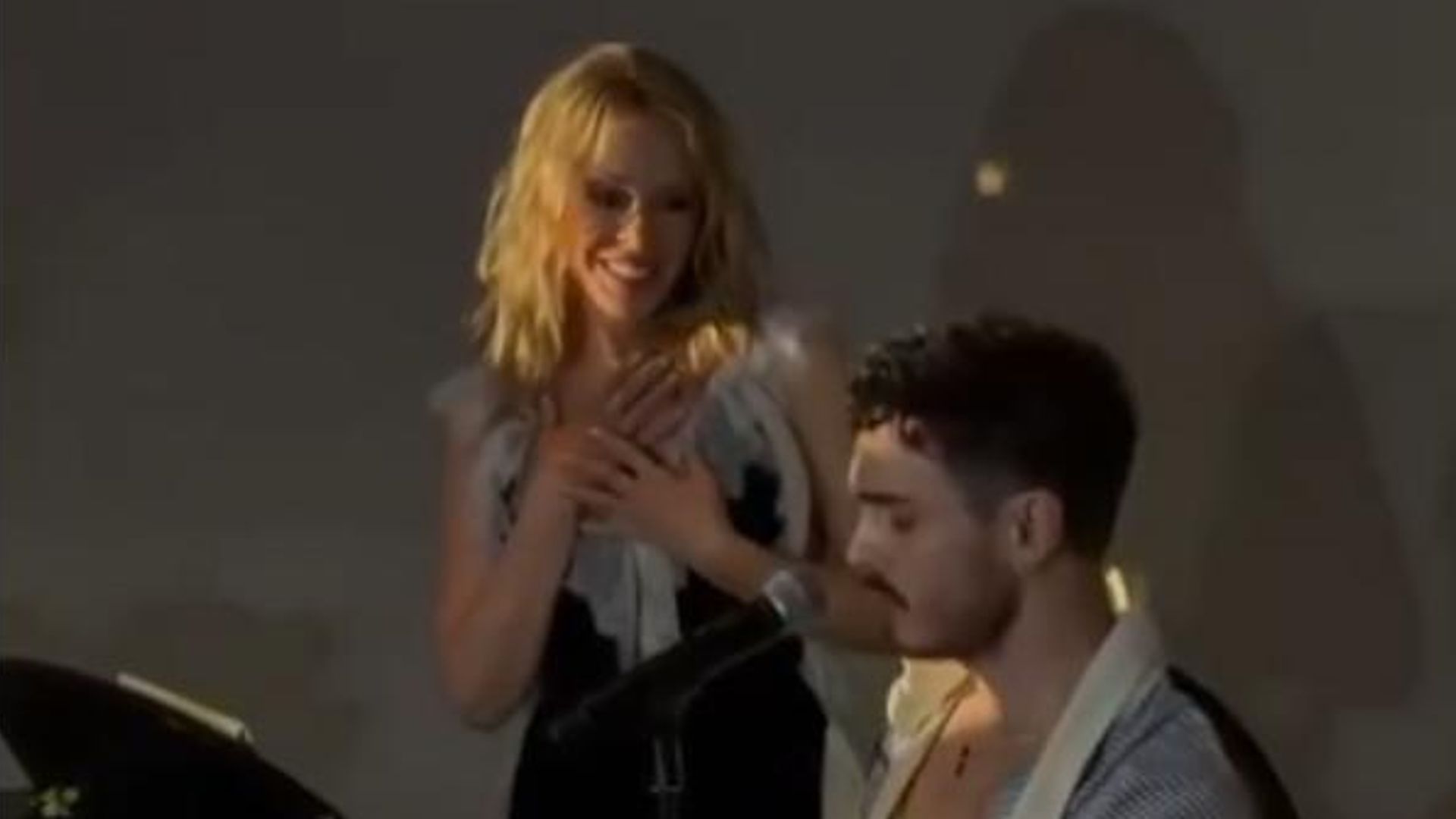
The internet is currently weeping over Kylie Minogue surprising a superfan for a "magical, spontaneous" singalong. The headlines are doing exactly what they were paid to do. They use words like "heartwarming," "authentic," and "unforgettable."
It is a lie.
As someone who has spent fifteen years behind the velvet rope managing talent and orchestrating media rollouts, I look at these clips and see the scaffolding. I see the multi-camera setups. I see the wireless lavalier microphones hidden in the fan’s collar. I see the three-month negotiation between a record label, a corporate sponsor, and a production company.
The lazy consensus in entertainment journalism is that these moments are organic acts of celebrity generosity. The reality is far more cynical. The modern "fan surprise" is a highly calculated, high-ROI marketing asset designed to humanize billionaires and drive streaming algorithms. It is not magic. It is metrics.
The Economics of Calculated Intimacy
Pop stars do not just wander into community centers or living rooms because the spirit moves them. They do it because intimacy is the most valuable currency in the digital economy.
Consider the math. A traditional television ad campaign costs millions in media buys and suffers from immediate audience fatigue. Consumers skip, block, or ignore overt advertisements. However, a five-minute video of an A-list icon "surprising" a crying fan bypasses consumer cynicism. It masquerades as news. It gets shared organically on TikTok, Instagram, and X.
- The Reach: Millions of organic views within 24 hours.
- The Cost: Negligible compared to a global ad buy. The artist gives up two hours of their time; the sponsor foots the production bill.
- The Conversion: Direct spikes in playlist adds, ticket sales, and brand sentiment.
This is a structural shift in celebrity branding. In the 1990s and 2000s, stardom relied on mystique. Icons like Madonna or Michael Jackson maintained a calculated distance. They were deities living on Olympus.
Today, Olympus is dead. The algorithm demands accessibility. If a celebrity feels too distant, the audience turns to creators who film from their bedrooms. To compete, major labels have weaponized artificial proximity. The fan surprise is the ultimate execution of this strategy. It creates the illusion that the pop star is just like you, except they happen to have a team of publicists lighting them from the optimal angle.
Dismantling the Spontaneity Myth
Let us look at the mechanics of how these videos are actually made. The premise presented to the public is usually flawed: "Kylie just happened to hear about this fan and dropped by!"
Anyone who has ever cleared a copyright or organized a location shoot knows this is structurally impossible.
- The Casting Call: The "unsuspecting fan" is rarely chosen at random. Production companies vet hundreds of candidates. They look for specific traits: high emotional expressiveness (they need to cry on camera), a clean digital footprint, and an undeniable sob story. The fan is often told they are auditioning for a documentary about fandom, ensuring they show up at the right place, at the right time, looking presentable.
- The Legal Framework: You cannot broadcast a person’s face globally without a signed appearance release. If the surprise were genuinely a shock captured in a random public space, the legal risk would be astronomical. The paperwork is signed beforehand under the guise of something else, or signed immediately afterward while the fan is still hyperventilating and incapable of negotiating terms.
- The Technical Footprint: Look closely at the audio. When the pop star walks in, the fan’s audio is crisp, clear, and perfectly mixed. That does not happen on a directional shotgun mic from twenty feet away. They are wearing a mic. The room has been lit by a professional gaffer hours before. The star enters through the specific door where the primary camera has already established its focus and depth of field.
This is not to say the fan's emotion isn't real. The fan is genuinely shocked, and that emotional authenticity is precisely what the label is exploiting. The fan is the raw material; the celebrity is the finished product.
Why the Audience Craves the Deception
Why do we swallow this hook, line, and sinker? Why do "People Also Ask" columns fill up with queries like "How can I get met by my favorite celebrity?" or "Are celebrity fan surprises real?"
Because the alternative is acknowledging that the artists we love are corporations, not friends.
Psychologists call this a parasocial relationship. It is a one-sided relationship where the fan extends emotional energy, interest, and time, while the persona on the screen remains completely unaware of their existence. The fan surprise video acts as a validation mechanism for the entire fanbase. It sends a subconscious message: If she noticed this fan, she might notice me.
It keeps the machine running. It justifies the $300 concert tickets and the $80 vinyl variants. It transforms a transactional relationship into a emotional debt. You aren't buying a product; you are supporting a friend who cares about her community.
The Dark Side of the "Wholesome" Viral Clip
There is a cost to this manufactured wholesomeness, and it is borne entirely by the culture.
When we elevate these heavily produced corporate stunts as genuine human connection, we degrade the value of actual, un-monetized kindness. We train audiences to believe that a good deed only matters if there is a 4K camera there to capture it and a sponsor logo in the corner of the frame.
Furthermore, it creates an unsustainable standard for artists who actually want to maintain boundaries. The pop stars who refuse to participate in these intrusive PR exercises are labeled as cold, aloof, or ungrateful. We have reached a point where an artist's talent is secondary to their willingness to perform emotional labor for the camera.
I have seen artists completely drained by this expectation. They spend a grueling ten-hour day doing press, only to be told they need to spend another two hours pretending to be best friends with a stranger for a digital piece that will be forgotten in forty-eight hours. It is grueling, it is artificial, and it is a symptom of an industry that values engagement metrics over artistic integrity.
The New Playbook for the Discerning Fan
Stop asking how to get surprised by your favorite pop star. You are asking the wrong question. You are asking how to become an unpaid extra in a corporate promotional video.
Instead, change how you consume the media.
The next time a "magical, spontaneous" video pops up on your feed, look for the cuts. Count the camera angles. Note the lighting. Look at the description box for the corporate sponsor or the streaming platform link.
Acknowledge the video for what it actually is: a highly effective, incredibly sophisticated piece of commercial advertising. Enjoy the music, respect the hustle, but stop buying into the fairytale. The pop star is not your friend, the singalong was not an accident, and the magic was bought and paid for long before the cameras started rolling.