The Glass Cage
Pixels glow in the dark room. A single notification blinks on a cracked screen, casting a cold blue hue across a tired face. Miles away, across oceans and borders, a server hums quietly in a rack, processing millions of whispers, secrets, encrypted confessions, and quiet revolutions.
We built a highway for human thought. Then we handed the keys to a ghost. For another perspective, see: this related article.
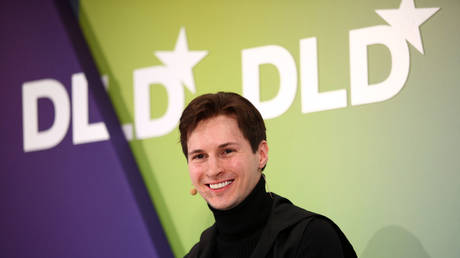
Pavel Durov does not wear the uniform of a typical billionaire. He avoids the tailored suits of Silicon Valley boardrooms, preferring the minimalist black of a monk or a traveler who travels light. He swims in icy Siberian rivers. He reads stoic philosophy. He projects an aura of absolute detachment. Yet, inside the pocket of this enigmatic digital ascetic sits an empire that bends governments, rattles intelligence agencies, and gives sanctuary to billions.
To understand Telegram is to understand the modern paradox of safety and freedom. Similar coverage regarding this has been provided by Ars Technica.
Think of a public park. In a traditional town square, you can shout your opinions from a soapbox. Anyone can listen. Anyone can argue. But if you walk into a private living room, close the heavy oak door, and whisper a conspiracy to your closest friends, the police cannot kick the door down without a warrant.
Durov built an entire planet made of closed living rooms.
The Architect of Exile
Long before his name dominated global headlines from the tarmac of a Paris airport, Durov was already running from history. In Saint Petersburg, he created VKontakte, the social network that became Russia's digital pulse. When the Kremlin demanded the keys to dissenters' profiles during the protests of 2011, Durov did not blink. He posted a picture of a dog in a hoodie sticking its tongue out.
That was his answer to the state. A canine mockery.
Refusal came with a cost. Agents with guns visited his office. Pressure mounted. Eventually, Durov realized his homeland had no room for unyielding defiance. He packed a single bag, converted much of his wealth into Bitcoin, and left Russia behind, declaring himself a citizen of the world. He became the digital nomad king, drifting from Berlin to Dubai, writing code that could not be read by prying eyes.
Telegram was born from this paranoia. It was forged as a weapon against authoritarian overreach.
Consider a hypothetical dissident sitting in a cramped apartment in Minsk or Tehran. The secret police monitor cellular networks. They tap phone lines. One wrong word written on a standard messaging app means a dawn raid and a one-way ticket to a black site. But when that dissident opens Telegram, activates end-to-end encryption in a secret chat, and hits send, the mathematics of advanced cryptography build an invisible concrete wall around their words.
Math does not care about national borders. Math does not take bribes. Math does not care if an autocratic regime wants names.
That is the hero's journey of Pavel Durov. He weaponized mathematics to protect the vulnerable. He gave the world an un-censorable voice.
The Shadow Side of Absolute Liberty
Every utopian dream eventually breeds its own nightmare.
Absolute privacy is a neutral tool. A lockmith who builds an unpickable lock sells it to the innocent homeowner seeking refuge from thieves, but the exact same lock can be bought by a smuggler hiding illicit cargo.
By refusing to moderate content aggressively, by maintaining a fiercely decentralized and hands-off corporate structure with a tiny staff, Telegram transformed from a sanctuary for dissidents into something vastly more complex.
Look closer at the channels.
Drug markets operate in broad daylight behind cheerful emojis. Financial scammers fleece retirees with promises of crypto riches. Terrorist networks coordinate logistics, share bomb-making manuals, and recruit disaffected youth in encrypted groups where no moderator ever treads.
Is this free speech? Or is this willful blindness wrapped in libertarian philosophy?
Here lies the friction that brought Durov down onto the cold tarmac of Le Bourget airport. European prosecutors did not arrest him because he loved freedom too much. They arrested him because, in their view, his platform's refusal to cooperate with law enforcement investigations into child exploitation, drug trafficking, and organized crime crossed the line from a champion of liberty to an accomplice by design.
We want our messages private, but we expect justice when evil walks the earth. We cannot easily have both.
The Cost of the Cipher
Durov understood something fundamental about human nature long before the rest of us caught up: people do not want convenience at the expense of control; they want absolute control disguised as convenience.
When WhatsApp changed its privacy terms years ago, millions fled to Telegram overnight. They did not care about the geopolitical implications. They just wanted an app that didn't feel like a corporate surveillance ledger. Durov played the role of the digital Robin Hood to perfection.
Yet, a billionaire living a nomadic lifestyle with a rotating cast of executives while running a platform used by nearly a billion people is no ordinary rebel. The architecture of Telegram is centralized, despite its decentralized image. The servers are controlled by a tiny, opaque inner circle. The keys to the kingdom rest in very few hands.
If a government wants to pressure Facebook or Google, they summon executives to Washington or Brussels. If a government wants to pressure Telegram, they find an empty desk. There is no corporate headquarters in Silicon Valley. There is only a ghost in the machine.
Consider what happens next when nations decide they will no longer tolerate digital lawlessness.
When France detained Durov, it sent a shockwave through the tech landscape. It was a clear, unambiguous signal: the era of the sovereign tech baron operating above international law is drawing to a close. States possess physical force. Code can hide, but servers live in buildings on physical soil. Engineers walk down physical streets.
The Final Threshold
We stand at a strange crossroads in human communication.
On one side lies the dystopian vision of total surveillance, where every keystroke is logged, analyzed, and filed away by algorithms designed to predict compliance. On the other lies the chaotic wilderness of Telegram, where total freedom protects both the brave journalist exposing corruption and the predator hunting in the dark.
Pavel Durov sits somewhere in the center of this storm, bruised, defiant, and inextricably bound to the creation that made him a legend.
The notification light still blinks in the dark room. The screen still glows. Millions of humans continue to type their fears, their jokes, their plans, and their secrets into the void, trusting an invisible algorithm to keep them safe.
The screen goes dark. The reflection in the glass is our own.