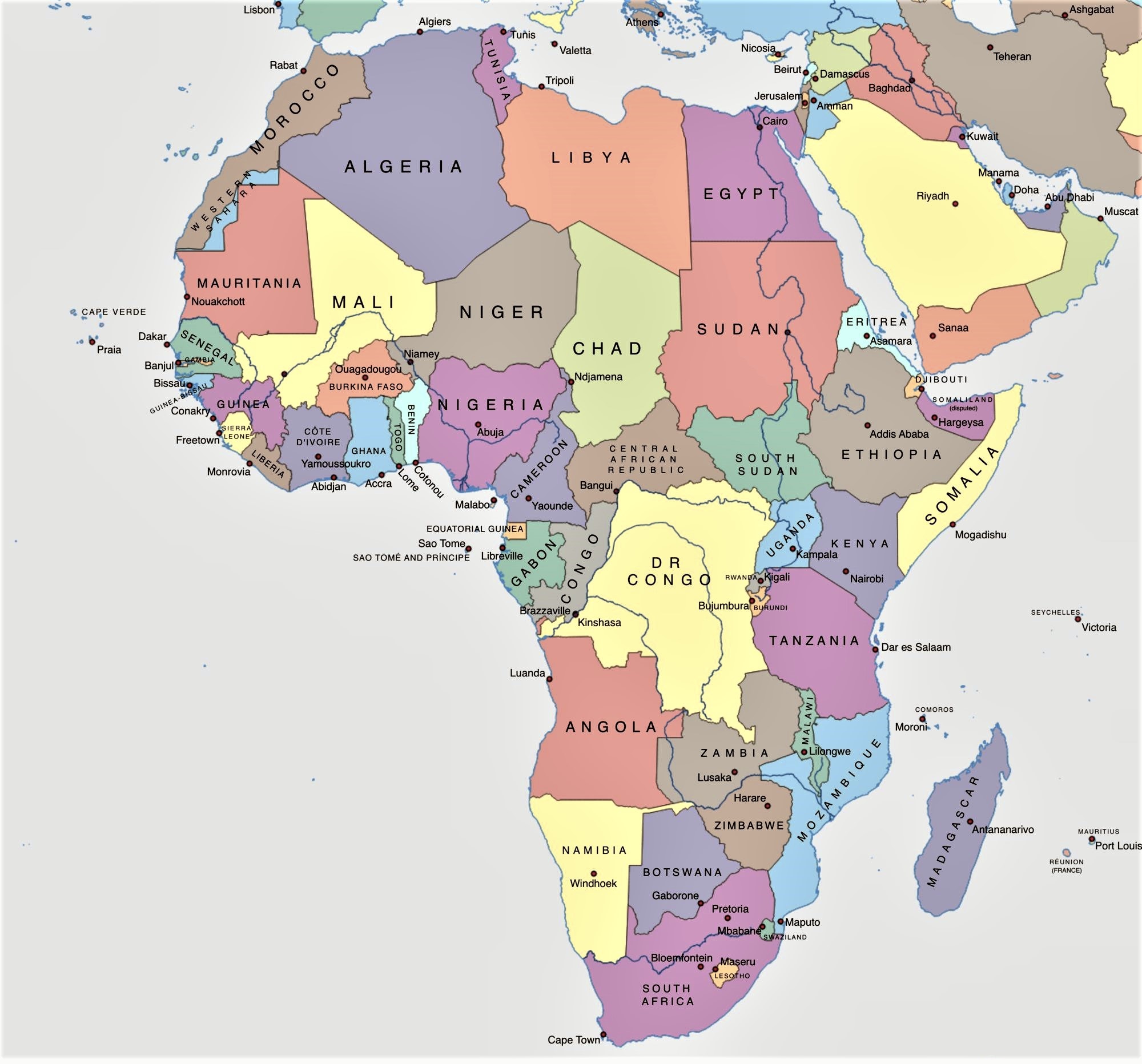
Every time a drone buzzes near a crude carrier in the Bab el-Mandeb Strait, financial media regurgitates the same tired playbook: Houthis Attack Tankers, Supply Chains at Risk, Crude Surges.
Traders hit the buy button. Financial commentators run graphics of burning ships. The narrative takes root before the smoke even clears.
It is a complete fundamental misunderstanding of modern maritime logistics, physical oil trading, and real-world supply elasticity.
I spent over a decade sitting on energy trading desks, watching junior analysts panic over headlines while physical traders quietly sold into every artificial bump. The headline-driven price spikes you see after Red Sea attacks are not reflecting real physical supply destruction. They are liquidity traps designed to transfer capital from anxious retail algorithmic traders to dry-powder physical desks.
Here is why the panic over Red Sea tanker strikes is built on a hollow premise, and what is actually happening when missiles fly in the strait.
The Red Sea Disruption Myth
The media treats the global oil supply as a fragile garden hose. In their worldview, if a Houthi missile crimps the hose in the Red Sea, less water comes out the other end, causing immediate scarcity.
Physical crude markets do not work like garden hoses. They function like vast, interconnected hydraulic networks with massive buffer tanks built into every node.
When a tanker is targeted off the coast of Yemen, physical crude does not vanish into thin air. At worst, the ship is re-routed around the Cape of Good Hope. Let us look at the actual arithmetic of that reroute:
- Suez Transit Time (Persian Gulf to Rotterdam): ~18–20 days.
- Cape of Good Hope Transit Time: ~30–34 days.
- Net Delays: 12 to 14 days of floating transit.
A two-week delay is an inventory timing issue, not a supply destruction event. The barrels still exist. They are still owned. They are still headed to refineries. The global market does not suddenly lack crude; it simply absorbs a one-time, two-week shift in delivery schedules.
Yet, algorithms price in a permanent loss of production. That disconnect is where intelligent money operates.
Insurance Premiums Are a Cost of Business, Not a Supply Shortage
The secondary argument pushed by commentary pieces is that skyrocketing War Risk Insurance rates will shut down maritime traffic entirely.
When risk premiums jump from 0.1% to 1.0% of a vessel's hull value, a single transit can cost an extra $500,000 to $1,000,000. Financial journalists run the numbers and declare the route economically unviable.
They forget basic transport economics.
A Very Large Crude Carrier (VLCC) carries roughly 2 million barrels of crude. Divide a $1 million insurance surcharge across 2,000,000 barrels.
The math comes out to $0.50 per barrel.
Read that again. Fifty cents.
When benchmark Brent crude trades in an $80 to $90 corridor, a fifty-cent transport premium is rounding error for a refiner facing tight margins. Tanker owners pass that cost straight down the chain, or they pay the extra fuel costs to burn around Africa. Neither outcome removes a single barrel of crude from global refining capacity.
+-------------------------------------------------------------------+
|              THE COST REALITY OF SUEZ VS. REROUTING               |
+-------------------------------------------------------------------+
| Route                | Transit Time | Risk Surcharge | Freight   |
+----------------------+--------------+----------------+-----------+
| Suez Transit         | ~18 Days     | High ($0.50/b) | Standard  |
| Cape of Good Hope    | ~32 Days     | Zero           | High Fuel |
+----------------------+--------------+----------------+-----------+
| Net Supply Lost: ZERO BARRELS. Total cost impact: < $1.50/barrel  |
+-------------------------------------------------------------------+
Russia and China Changed the Red Sea Equation
Here is the strategic detail that mainstream coverage routinely ignores: the Red Sea is not closed to everyone equally.
The Houthis are not firing blind weapons into random shipping lanes; they operate on specific targeted intelligence. Russian shadow-fleet vessels carrying Urals crude to India and China continue to move through the Bab el-Mandeb with near-total impunity. Iranian shipments move without hindrance. Chinese-flagged carriers trade through the region unmolested.
The real shift in maritime oil transport over the past few years is not a absolute shutdown of a global artery; it is a realignment of routes:
- Western-flagged carriers taking the long route around Africa to deliver Atlantic Basin crude to Asia.
- Eastern-flagged and non-sanctioned shadow vessels claiming the shorter, higher-risk Suez route to move Russian and Middle Eastern crude.
The net throughput of global oil remains effectively stable. The global fleet simply reshuffles its routes. If European refiners receive slightly less Persian Gulf crude via Suez, they compensate by picking up West African or US Gulf Coast barrels. The system self-balances within days.
People Also Ask: The Flawed Premise of Energy Crises
To understand why the public keeps falling for these narrative traps, look at the common questions surrounding maritime security and oil pricing. The questions themselves reveal how deeply the narrative has warped public perception.
"Will Red Sea attacks cause a global oil shortage?"
No. A shortage occurs when extraction stops or refining capacity drops off a cliff—think Gulf Coast hurricanes shutting down Texas refineries or political instability knocking out Libyan oilfields. Routing delays do not equal production outages.
"Why do gas prices immediately jump at the pump when Middle East tensions spike?"
Because retail fuel pricing relies on spot futures contracts, which are driven by speculative momentum traders rather than immediate physical delivery costs. Gas station operators raise prices instantly to protect their inventory replacement costs based on paper market movements, not because the crude in their underground tanks suddenly got more expensive to produce.
"Can naval escorts fully secure the Bab el-Mandeb?"
Naval operations like Operation Prosperity Guardian provide defensive coverage, but they do not need to intercept every single asymmetric drone to keep trade moving. Maritime trade depends on risk tolerance and freight rates. As long as the price differential between routes favors the risk, ships will sail.
The Real Winner: Tanker Equities, Not Crude Futures
If buying crude futures during a Red Sea crisis is a sucker's game, where is the trade?
Look at freight rates and tanker equities.
When ships are forced to take the long route around the Cape of Good Hope, transit times increase by roughly 40%. Longer transit times mean ships are occupied for twice as many days per voyage. That burns up available global vessel capacity.
This dynamic creates a artificial squeeze on ton-mile demand.
- Ton-mile demand measures the volume of cargo moved multiplied by the distance traveled.
- When distance increases, available shipping capacity drops.
- When capacity drops, Spot Charter Rates (Day Rates for tankers) shoot through the roof.
During major maritime diversions, crude oil futures might gain 2% before retracing within forty-eight hours. Meanwhile, clean and dirty tanker day-rates can explode by 100% to 200%.
I have watched fund managers burn capital buying crude call options on headline news, completely blind to the fact that the actual money was sitting in long positions on product tanker fleets. They traded the headline instead of the market mechanics.
Headline Event: Red Sea Transit Risk
 │
 ├──> Media Focus: Crude Futures (WTI / Brent) ──> Small Jump ──> Fast Retrace (Trap)
 │
 └──> Market Mechanic: Longer Routes ──> High Ton-Mile Demand ──> Tanker Rates Double (Real Yield)
The Vulnerability Nobody Is Watching
The obsession with the Red Sea hides a much darker, structural weakness in global energy delivery.
If you want to worry about maritime choke points, stop hyper-focusing on the Bab el-Mandeb. The Red Sea has a bypass: the Cape of Good Hope. It costs time and bunker fuel, but the route exists.
The true un-bypassable choke point on Earth is the Strait of Hormuz.
Through Hormuz flows roughly 20% of the world's petroleum consumption. There is no alternative route for the vast majority of Saudi, Iraqi, Kuwaiti, and UAE production. If Hormuz closes, crude does not take a two-week detour around Africa. It stays trapped in the Persian Gulf.
When the financial press panics over Red Sea skirmishes, they dilute the market's response to actual structural risks. They train investors to cry wolf over manageable logistics delays, leaving the market completely unprepared for a true supply disruption.
How to Trade the Next Escalation
The next time a headline hits the wire declaring that Middle Eastern maritime conflicts have set the oil market on fire, resist the urge to buy the panic.
Do this instead:
- Check the physical spreads. Look at the Brent prompt-month backwardation. If physical spreads are not blowing out alongside front-month futures, the physical market is ignoring the headline.
- Follow the freight, not the commodity. Look at spot rates for Aframax and Suezmax vessels. That is where the actual friction gets priced in.
- Fade the initial headline pop. Algorithmic buying programs are coded to trigger on key phrases like "tanker," "strike," and "Red Sea." Once those programs exhaust their buying power within six to twelve hours, short-term paper traders dump their positions to capture quick profits, dragging prices right back to fundamental levels.
Stop letting financial media sell you low-tier geopolitics disguised as market analysis. The physical market does not trade on drama; it trades on physical balance sheets, ton-mile math, and real-time logistics.
Next time the drones fly, leave the crude calls to the retail crowd. Watch the shipping rates, track the shadow fleet, and sell the fake panic.