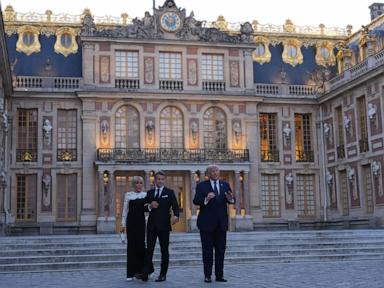
The mainstream foreign policy press is suffering from a severe case of wishful thinking. For months, the prevailing narrative has suggested that sophisticated European diplomacy—specifically the performative charm offensives of French President Emmanuel Macron—is successfully pulling Donald Trump closer to continental views on trade, security, and the North Atlantic treaty.
This is not just wrong. It is a dangerous misreading of structural global power dynamics.
The lazy consensus presumes that geopolitical alignment is a matter of interpersonal chemistry and clever rhetoric over dinner at Versailles. It assumes Trump can be "managed" by elite persuasion. In reality, Europe's frantic diplomatic theater achieves the exact opposite of its intent. It signals profound structural weakness. It proves that Europe remains completely dependent on American goodwill, cementing its role as a client continent rather than a sovereign global power.
While European leaders celebrate minor cosmetic concessions in joint communiqués, the underlying economic and military realities are moving in a completely different direction.
The Flawed Premise of the "Trump Whisperer"
Every major Western media outlet loves the narrative of the sophisticated European statesman guiding the volatile American populist. We saw it during Trump's first term, and we are seeing the same analytical failure repeated now. The thesis relies on a fundamental misunderstanding of transaction-based foreign policy.
When Macron uses flattering rhetoric or orchestrates high-profile bilateral summits, he is playing a 19th-century diplomatic game in a 21st-century transactional world. Washington does not alter its core national interests because of a well-choreographed photo-op.
Think about the mechanics of international trade and defense spending. The United States has a massive, structural trade deficit with the European Union. Washington views this through a simple lens: Europe uses American military protection to subsidize its social safety nets while simultaneously enacting digital regulations and green tariffs that target American corporations.
No amount of diplomatic framing changes that math. When European diplomats convince themselves they have "softened" American policy, they are misinterpreting a tactical pause for a strategic shift. The hard truth is that the American policy shift toward protectionism and burden-shifting is not a Trump quirk. It is a bipartisan consensus.
The Cost of the Transatlantic Subsidy
Let's look at the actual data. For decades, the intellectual elite in Brussels and Paris have talked about "European strategic autonomy." Yet, when you strip away the speeches, the dependence on the United States has actually increased over the last decade.
Consider the defense sector. According to NATO's own financial breakdowns, the United States still accounts for roughly two-thirds of the total defense expenditures of all alliance members combined. While more European nations are finally hitting the bare-minimum target of spending 2% of GDP on defense, their procurement pipelines remain thoroughly dependent on American defense contractors.
I have spent years analyzing defense procurement cycles and tracking how military budgets are actually allocated. When a European nation increases its defense budget, a massive portion of those euros immediately flows out of the continent to purchase American hardware—F-35 fighter jets, Patriot missile systems, and precision-guided munitions.
This creates a brutal paradox for European autonomy:
- Europe increases defense spending to prove its independence to Washington.
- Europe spends that money buying American weapons systems because its own domestic defense industrial base is fragmented and underfunded.
- This deepens Europe’s logistical and technical dependence on the Pentagon for maintenance, parts, and upgrades.
Macron’s diplomacy does nothing to solve this loop. In fact, by pretending that European persuasion can secure an American security guarantee, it removes the immediate, painful urgency required for Europe to build its own integrated defense supply chains.
Dismantling the "People Also Ask" Fables
Look at the standard questions driving the public discourse on this topic. They are based on flawed assumptions that need to be completely picked apart.
Does European diplomacy change US tariff policy?
No. The assumption that European leaders can talk Washington out of protectionism ignores the deep domestic political realignment inside America. The American working class, which decides elections in key swing states, views global free trade agreements as a disaster that hollowed out domestic manufacturing. Whether it is broad baseline tariffs or targeted measures, the direction of American trade policy is aggressively inward. European leaders who promise their domestic audiences that they can negotiate permanent exemptions are setting themselves up for a harsh awakening.
Can Macron convince the US to maintain its current commitment to NATO?
This is the wrong question entirely. The real question is: Why should the United States maintain an asymmetric commitment to a continent that refuses to field a self-sufficient military force? Washington's primary geopolitical focus has shifted irrevocably to the Indo-Pacific. The American foreign policy establishment, regardless of party, views the European theater as a distraction from the primary competition with Beijing. Macron’s diplomatic overtures do not change this geographic reality. They merely delay the day when Europe must face its own vulnerability.
The Downside of True Strategic Autonomy
To be intellectually honest, we must look at the alternative. If Europe stops relying on its ability to charm American presidents and actually pursues genuine strategic autonomy, the economic pain will be severe and immediate.
True independence cannot be achieved through speeches. It requires hundreds of billions of euros in sustained, long-term capital investment. It means European voters must accept a permanent reduction in public services and social welfare programs to fund massive military expansion and domestic industrial subsidies.
Imagine a scenario where France and Germany agree to completely federalize their defense industries, eliminating duplicate tank and fighter jet programs to achieve true scale. The political blowback would be immense. Domestic unions would strike over job losses. Local politicians would protest the closure of redundant military bases.
This is the uncomfortable reality that nobody in power wants to admit: Europe prefers the illusion of American protection—and the accompanying ritual of trying to influence it—because the alternative requires a level of political sacrifice that modern European leaders are entirely incapable of asking from their electorates.
Stop Negotiating, Start Building
The obsession with parsing the body language of bilateral meetings is a form of elite escapism. It allows European policymakers to feel like important global actors while their actual economic and military relevance shrinks on the world stage.
If European leaders want to be taken seriously in Washington, they need to stop booking flights to Washington. They need to stop believing that a warm relationship with an American president translates to structural leverage.
The only language that registers in a transactional world is raw power. Power means possessing a unified energy grid that does not rely on foreign adversaries. Power means having a venture capital ecosystem that can fund foundational technology companies locally, rather than watching every elite European tech founder move to Silicon Valley. Power means having combat-ready divisions that can deploy without relying on American heavy airlift and satellite intelligence.
Until Europe builds those capabilities, every diplomatic success celebrated by the press is just a temporary stay of execution. Stop trying to manage Washington. Fix your own continent.


